A complete issue · 36 pages · 1929
Life — December 20, 1929
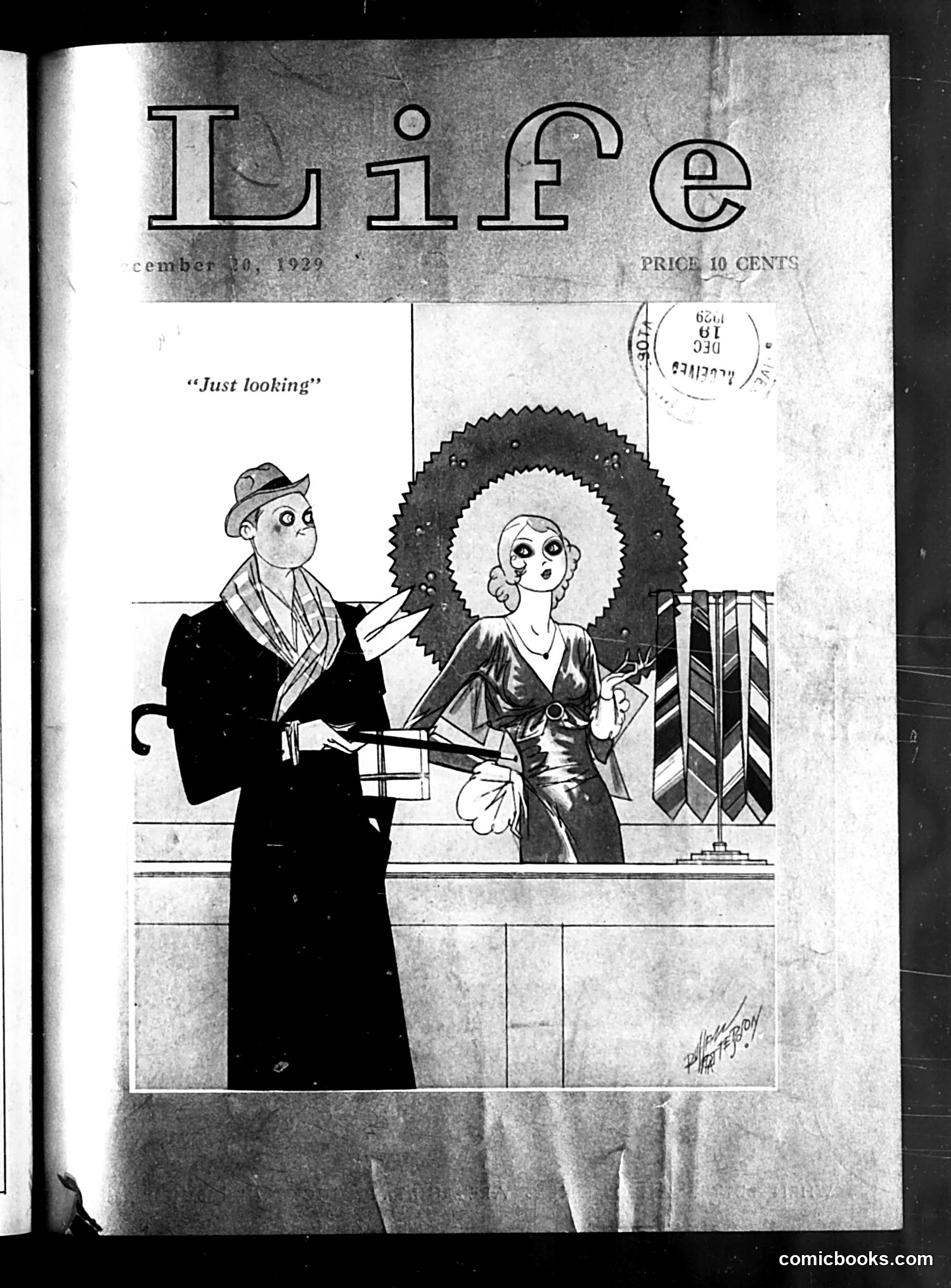
# Life Magazine, December 20, 1929 This cartoon's caption "Just looking" presents a satirical scene from a shop window display. A well-dressed man in a bowler hat and overcoat points toward merchandise while addressing a fashionably dressed woman wearing a large fur coat and hat. The setting appears to be a retail storefront with items displayed behind glass. The satire likely critiques consumer behavior and pretense during the period immediately following the 1929 stock market crash. The phrase "just looking" suggests window shopping or feigned interest without purchasing intent—a pointed commentary on Americans browsing goods they could no longer afford after the financial collapse. The couple's stylish appearance contrasts ironically with economic hardship, highlighting the disconnect between appearance and actual financial capacity during the Great Depression's early stages.
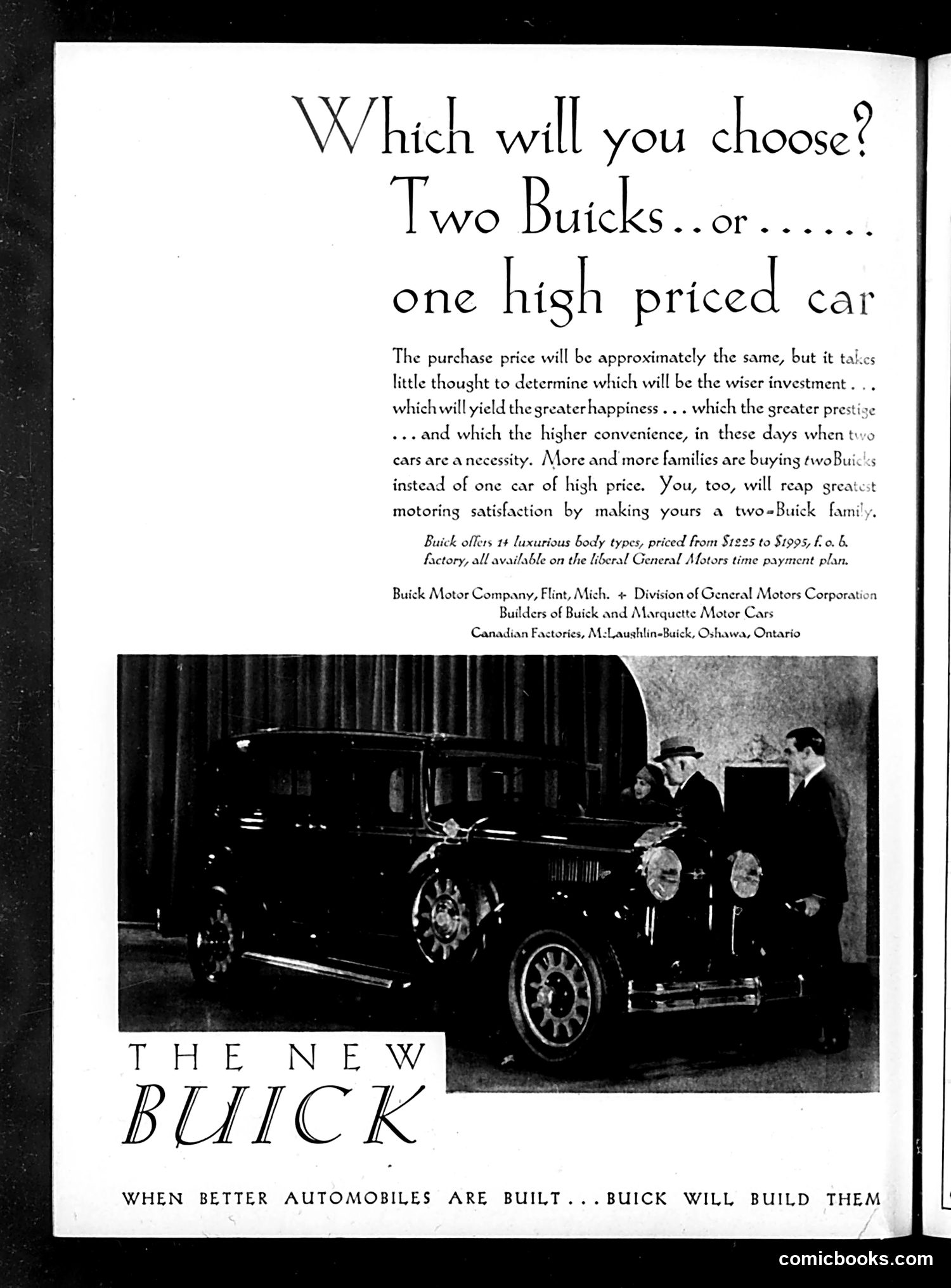
This is a **Buick automobile advertisement**, not satire or political commentary. The page presents a marketing argument: given similar purchase prices, why buy one expensive car when two moderately-priced Buicks offer greater practicality? The advertisement addresses a specific consumer concern of the era—the growing need for multiple vehicles in American families. It appeals to middle-class buyers by positioning two Buicks as a smarter investment than one luxury automobile, promising superior "happiness," "prestige," and "convenience." The photograph shows a well-dressed family examining a Buick, reinforcing aspirational messaging. The tagline—"When better automobiles are built... Buick will build them"—was Buick's actual slogan. This reflects post-WWI American car-buying trends and the rise of multi-car household ownership.
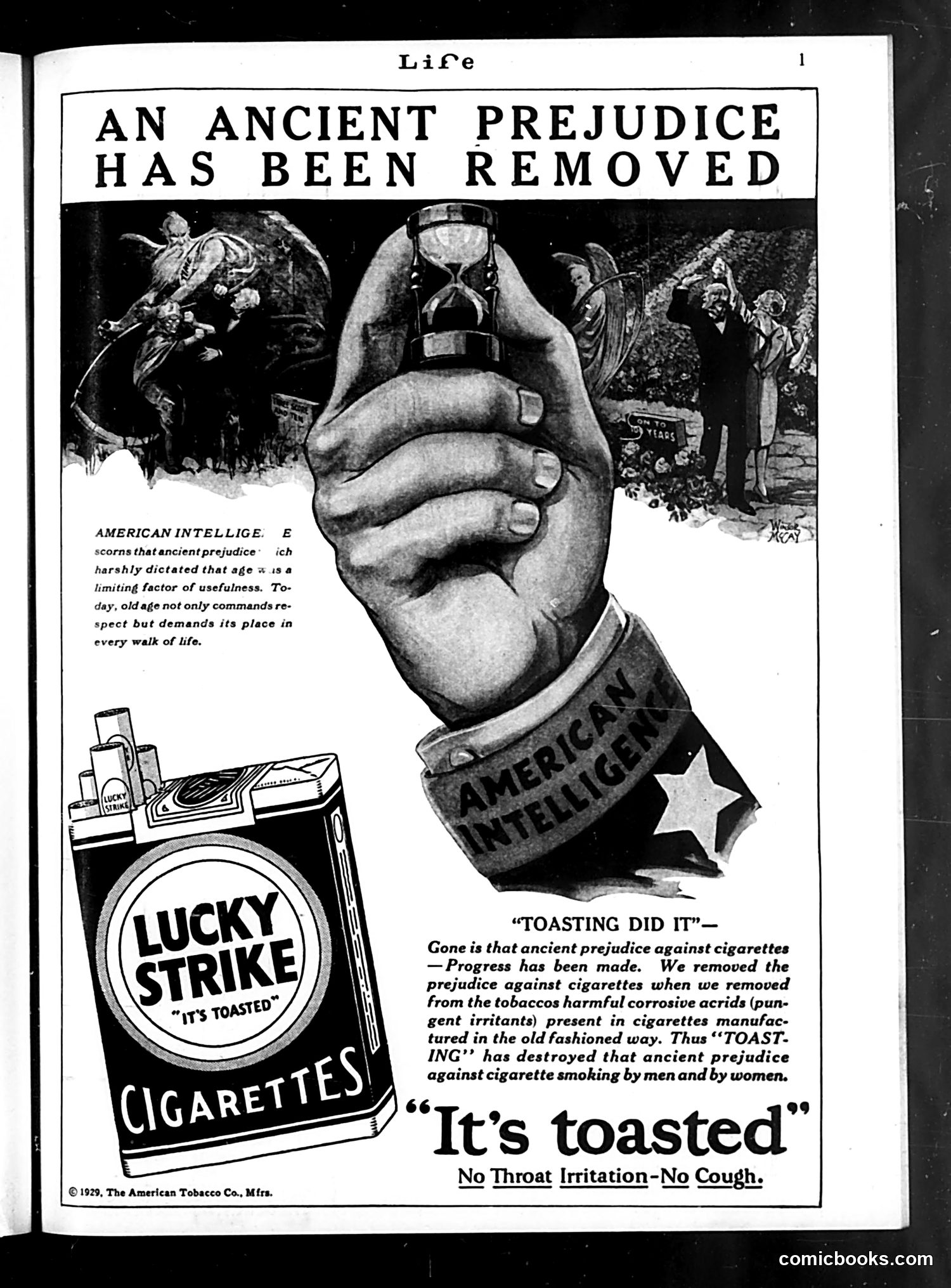
# Analysis This is a **Lucky Strike cigarette advertisement**, not satire or political commentary. The page uses the headline "An Ancient Prejudice Has Been Removed" to claim that the tobacco industry's "toasting" process eliminates harmful irritants previously associated with cigarettes. The imagery shows a hand holding a gas mask—the "ancient prejudice" being the belief that cigarettes cause throat irritation and cough. By removing this concern through toasting, Lucky Strike argues it has made smoking safe and socially acceptable "by men and by women." This represents early 20th-century tobacco marketing that falsely claimed health benefits. The "American Intelligence" branding attempts to associate the product with progress and modernity. The advertisement is misleading propaganda, not genuinely satirical content.
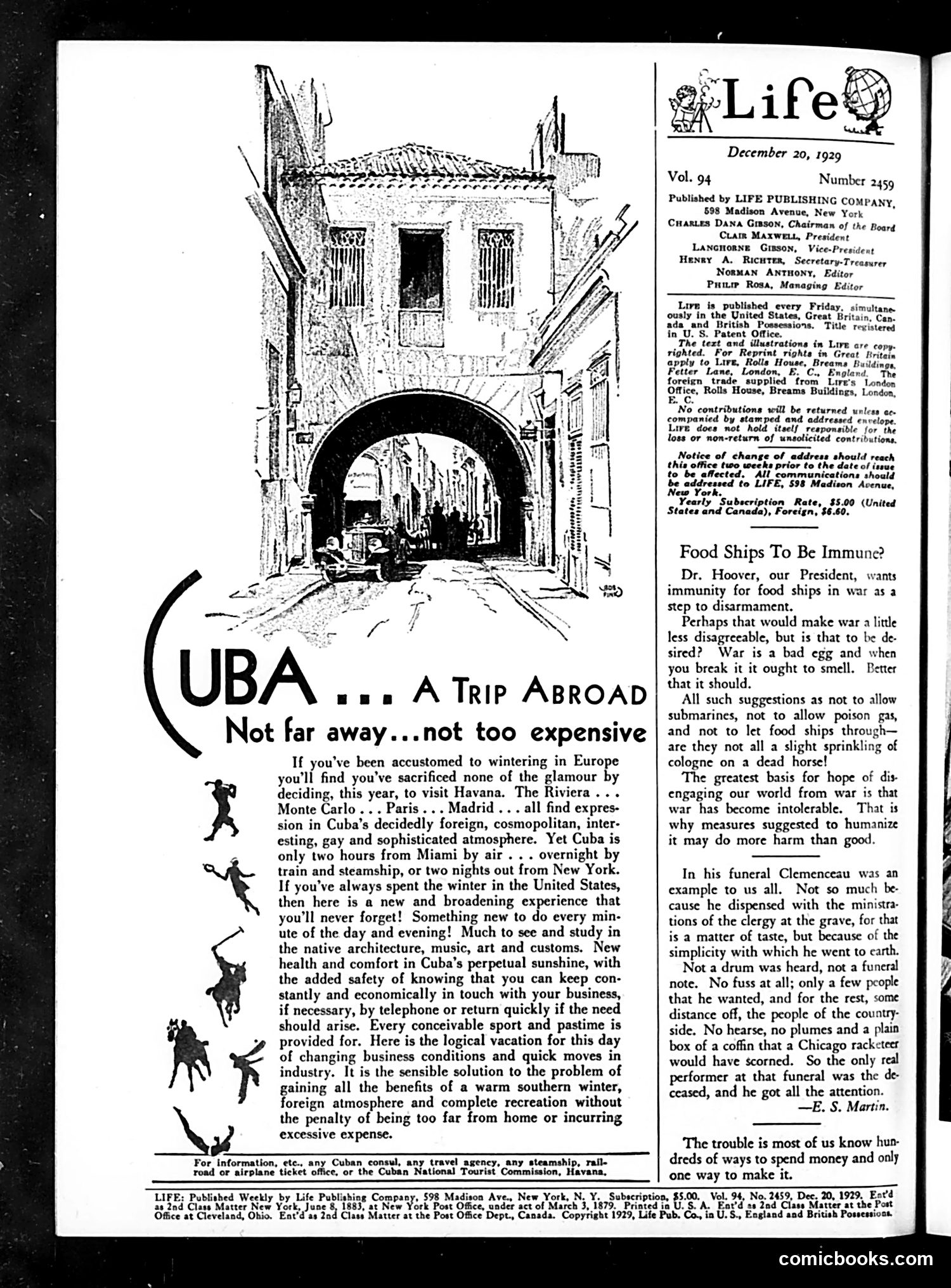
# Life Magazine, December 20, 1929 **The Cuba Advertisement:** This is a travel advertisement promoting Cuba as an affordable winter vacation destination. It emphasizes Cuba's accessibility—only two hours from New York by air or train—and its appeal as a sophisticated alternative to European travel. The silhouettes show people engaged in leisure activities (dancing, sports). The pitch stresses business convenience: vacationers can stay connected via telephone and return quickly if needed, making it an ideal "sensible solution" for taking a warm winter break without sacrificing professional obligations. **The Editorial:** The commentary critiques President Hoover's proposal to grant immunity to food ships during wartime as a disarmament measure. The author dismisses this as naive, arguing war itself is inherently brutal and that protecting supply lines won't meaningfully reduce conflict's horrors.
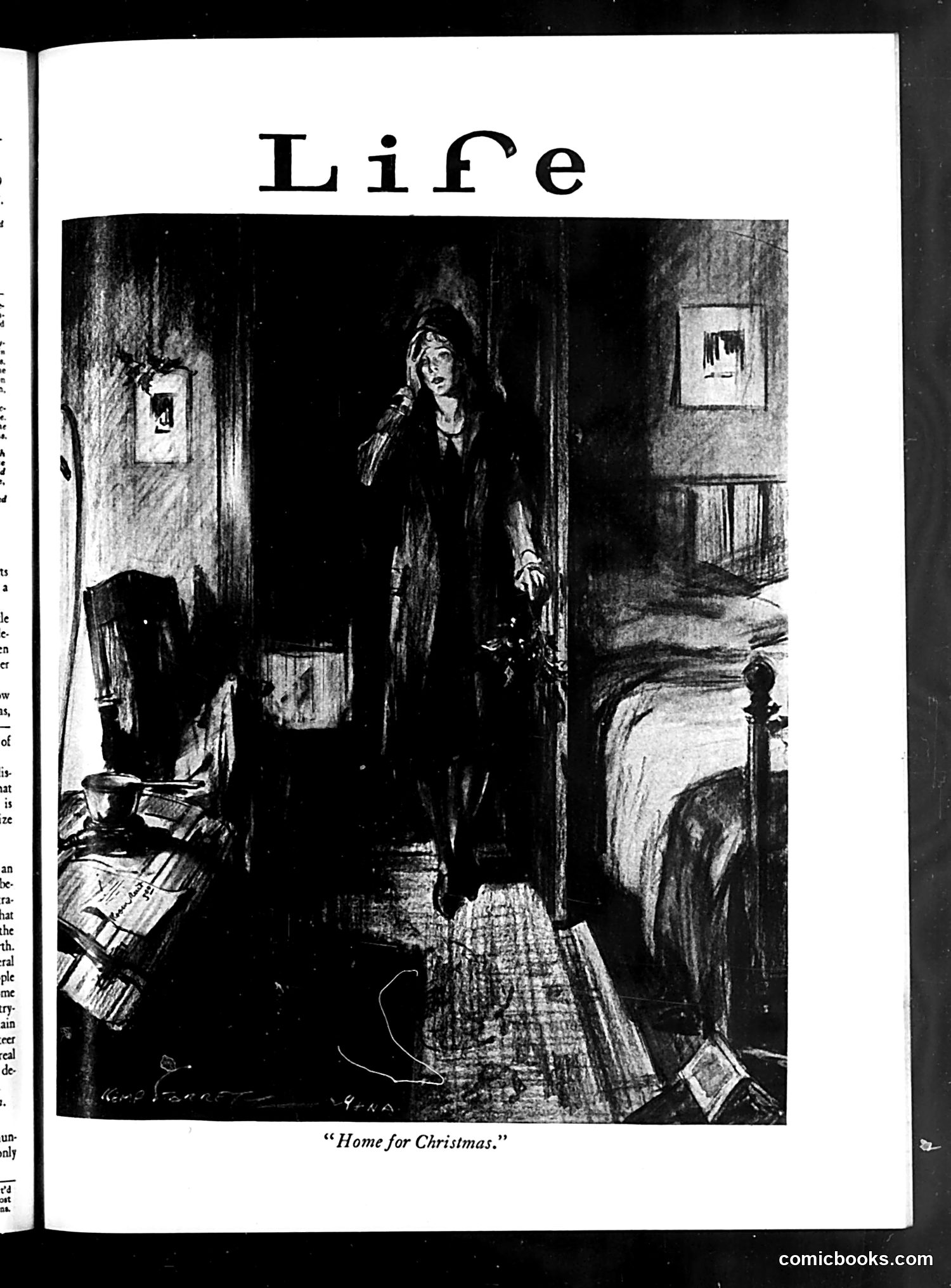
# Analysis This page from *Life* magazine features an illustration titled "Home for Christmas" showing a somber domestic scene. A figure in dark clothing stands in a modest bedroom, with a bed visible on the right and a chair on the left. The sparse furnishings and austere setting suggest modest or impoverished circumstances. The caption's ironic title—"Home for Christmas"—paired with the melancholic mood suggests social commentary on economic hardship during what appears to be a period of American financial difficulty, likely the Great Depression era. The contrast between the holiday sentiment and the grim domestic reality emphasizes the gap between celebratory ideals and harsh lived experience for struggling Americans. The satire critiques the disconnect between seasonal expectations and actual conditions facing working-class families.
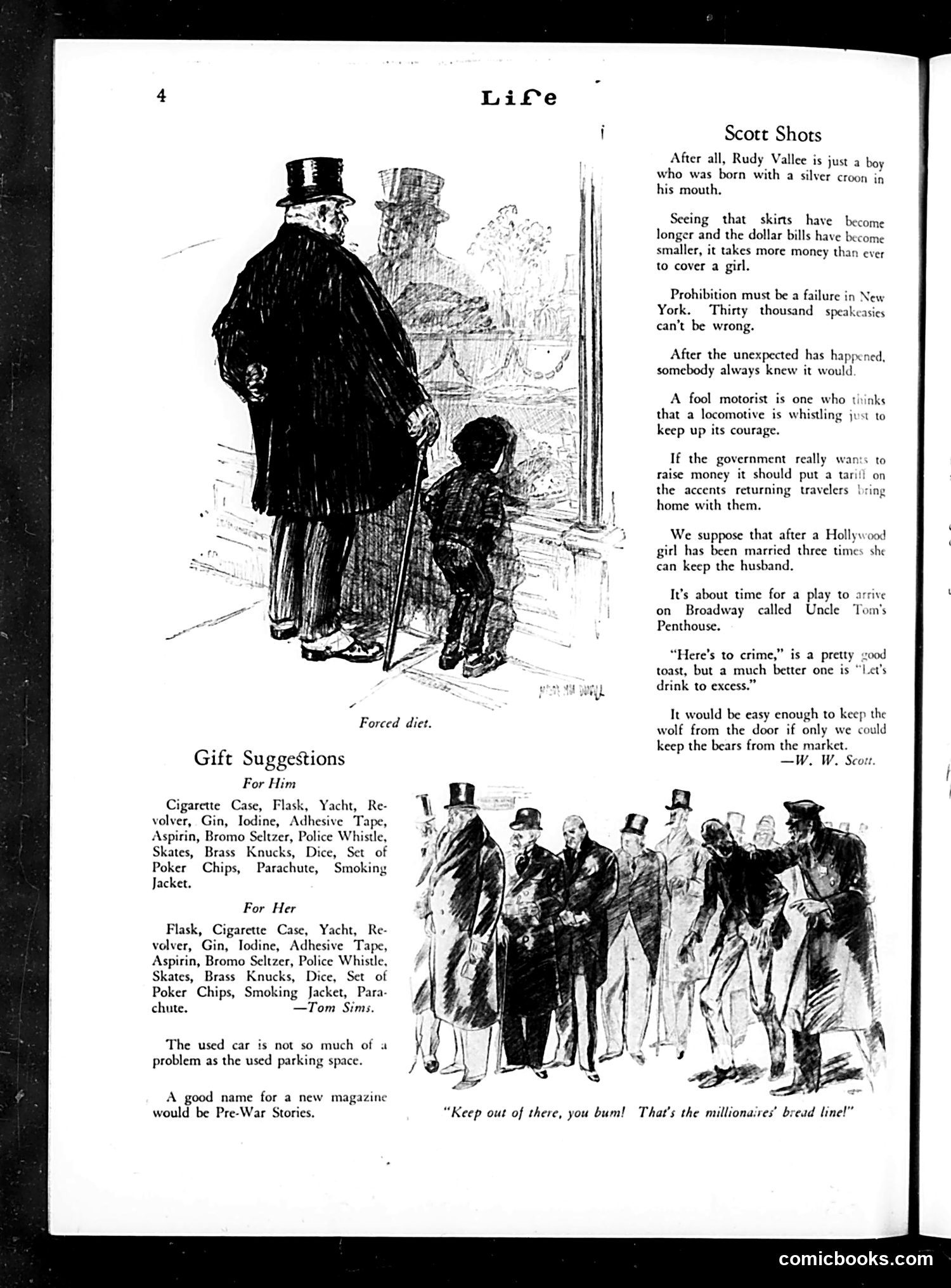
# Analysis of Life Magazine Page 4 This page contains satirical commentary by Scott Shorts and includes two cartoons. The first, titled "Forced diet," shows an elegantly dressed adult and child, likely satirizing wealth inequality during economic hardship—the "forced diet" referring to deprivation despite the adult's obvious affluence. The second cartoon depicts well-dressed men (likely wealthy businessmen or "millionaires") with the caption "Keep out of there, you bum! That's the millionaires' bread line!"—a pointed reference to bread lines during economic crisis, mocking the hypocrisy of wealthy individuals protecting their resources while poor citizens queue for basic sustenance. The "Gift Suggestions" section humorously lists identical items for both men and women, reflecting contemporary social commentary on gender equality or consumerism.
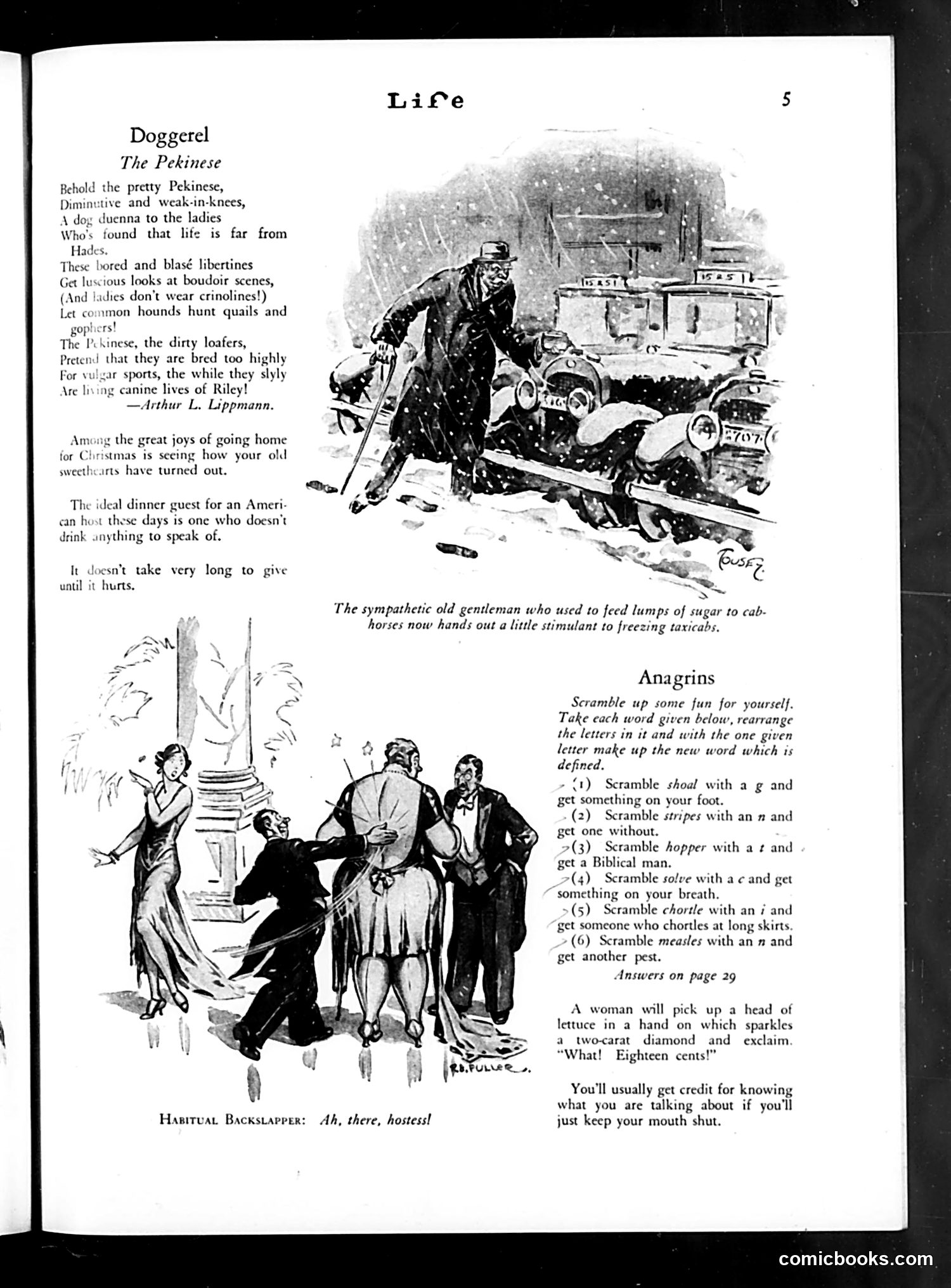
# Analysis of Life Magazine Page 5 This page contains three distinct pieces of satirical content: **"Doggerel: The Pekinese"** (poem by Arthur L. Lippmann) mocks small lap dogs as impractical status symbols for wealthy women, contrasting them with working hunting dogs. **Top cartoon** depicts an elderly gentleman helping a woman stuck in snow near a frozen taxi—satirizing changing social roles and the decline of chivalry in modern times, as automobiles replace horses. **"Habitual Backslapper"** cartoon ridicules a gregarious social type who inappropriately touches and overfamiliarizes with acquaintances in public settings. **"Anagrins"** is a word puzzle game where readers rearrange letters to form new words, described in the accompanying definitions. The page reflects 1920s-era concerns about changing manners, technology's social impact, and class-based humor about pet ownership and social behavior.
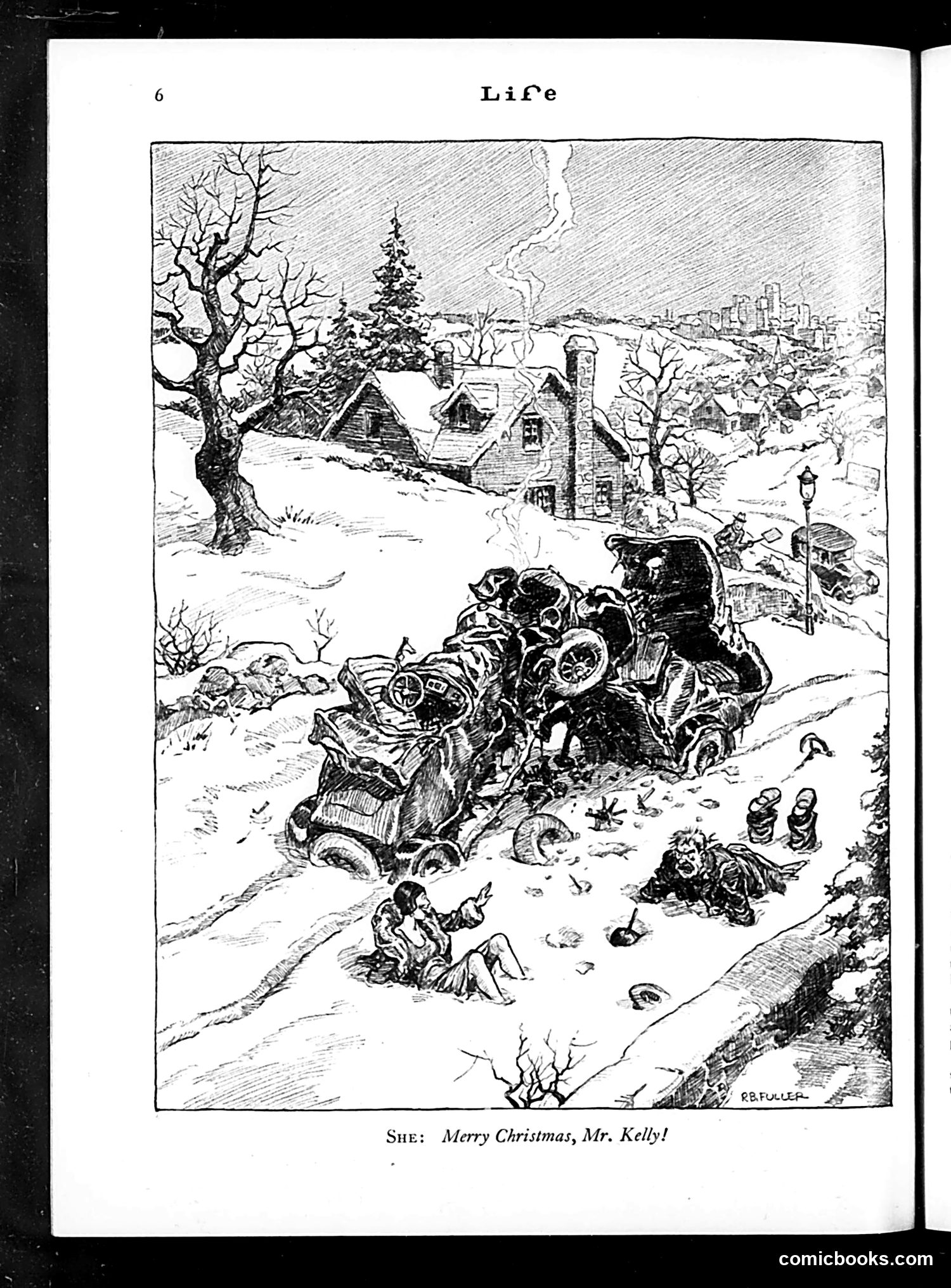
# Analysis This is a single-panel cartoon titled "Merry Christmas, Mr. Kelly!" showing a winter scene with a wrecked automobile piled with mechanical parts and debris in the foreground. The vehicle appears deliberately constructed or assembled from scrap materials rather than being a conventional car. The cartoon likely satirizes a specific public figure named Kelly, though without additional context it's unclear whether this references a politician, businessman, or other notable person from Life magazine's era. The wreckage and chaotic assembly suggest incompetence, failure, or mismanagement—the "joke" being a sarcastic Christmas greeting directed at someone whose endeavors have spectacularly fallen apart. The snowy rural setting with houses and a distant city contrasts the destruction in the foreground, emphasizing the disaster.
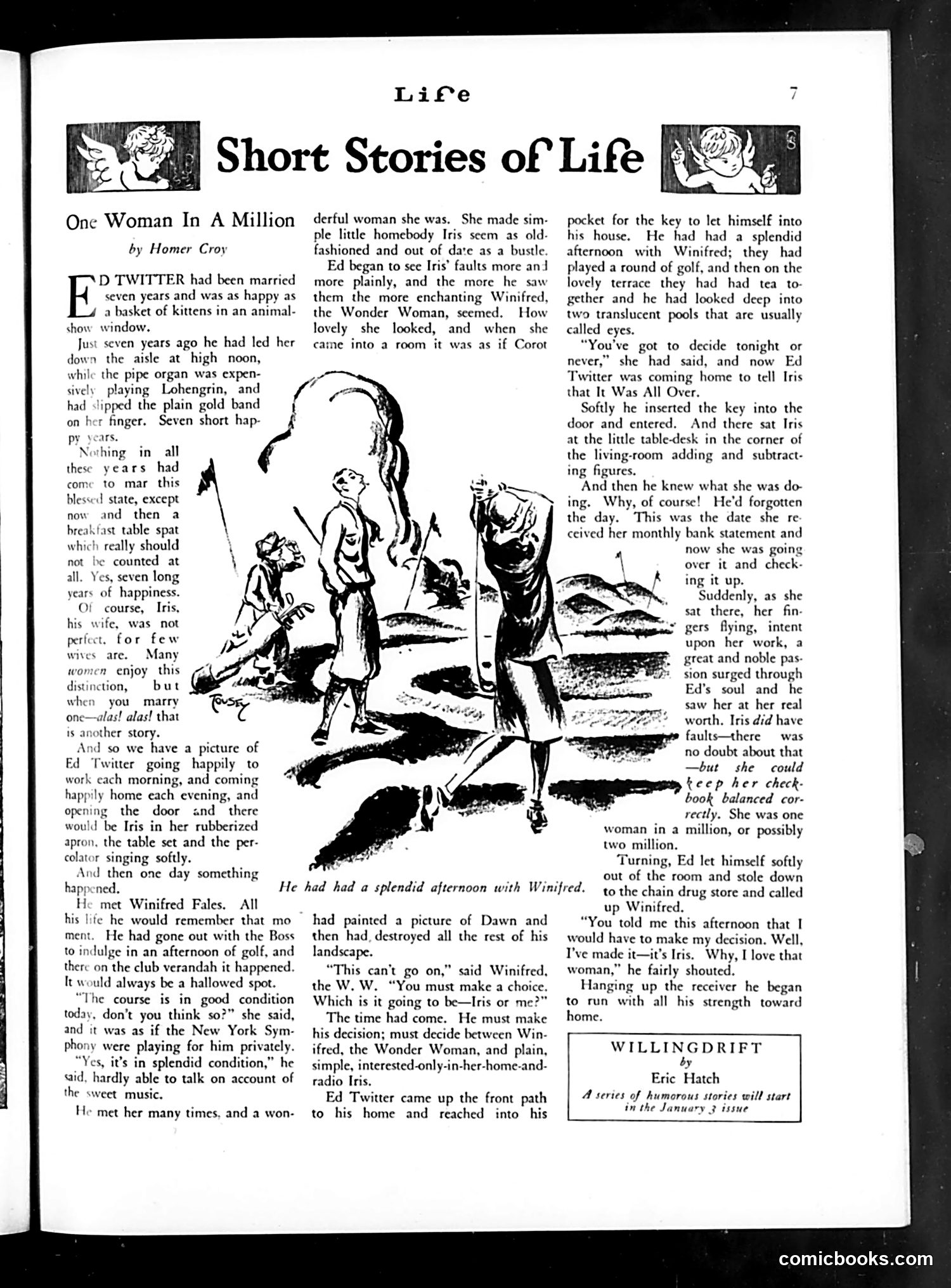
# "One Woman in a Million" by Homer Cray This story illustrates a common early-20th-century marital scenario: Ed Twitter, a comfortable husband, has grown complacent in his marriage to Iris. He meets an attractive woman named Winifred Fales and must choose between his plain, domestic wife and this exciting "Wonder Woman." The satire targets the male fantasy of trading up for a more glamorous partner. The illustration shows Iris as an ordinary homemaker while Winifred represents sophistication and allure. The story's ironic title—"One Woman in a Million"—sarcastically suggests Iris's supposedly unremarkable nature, though the narrative reveals her actual value: her fidelity and domestic competence that Ed nearly overlooks while chasing excitement.
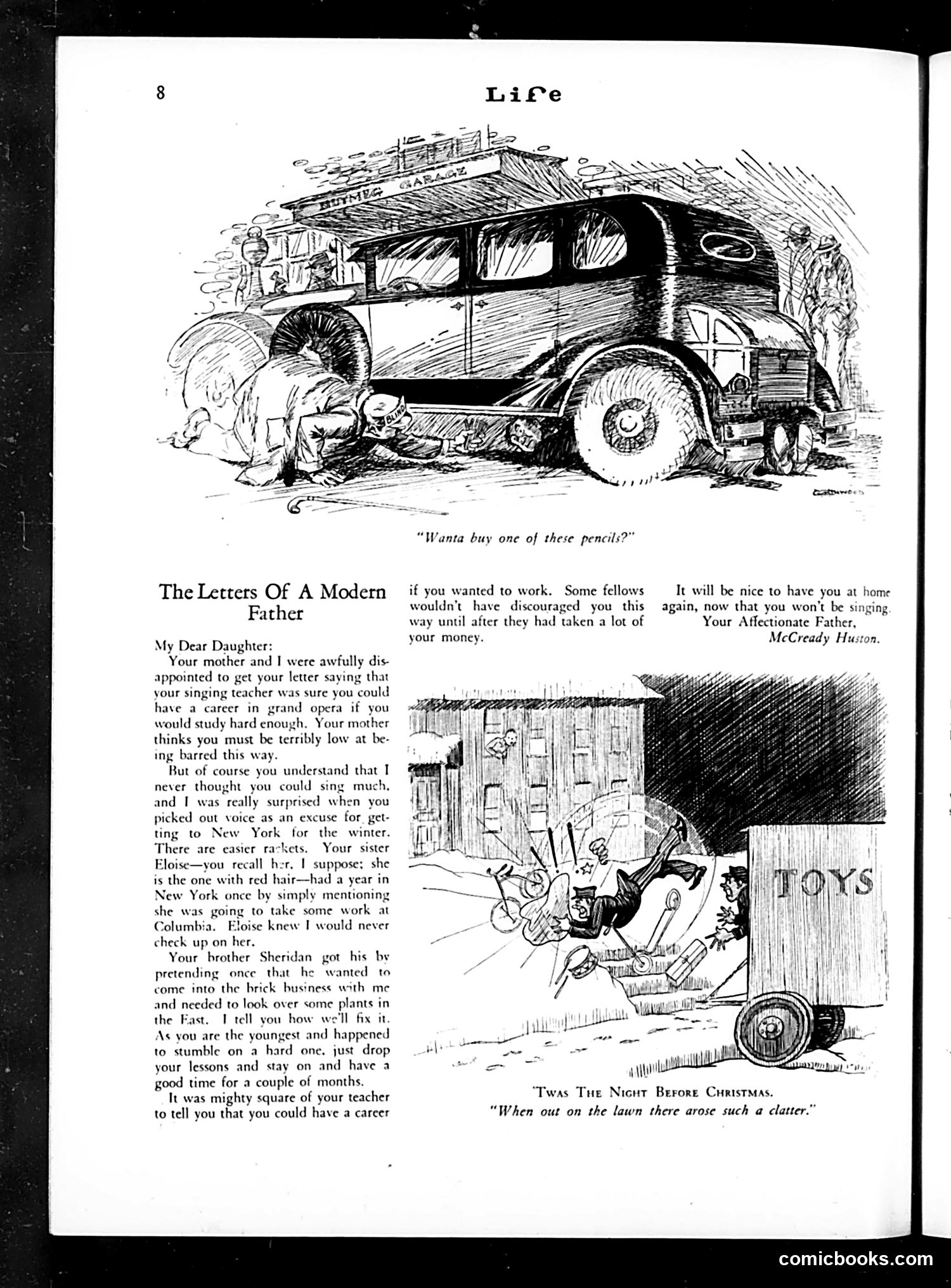
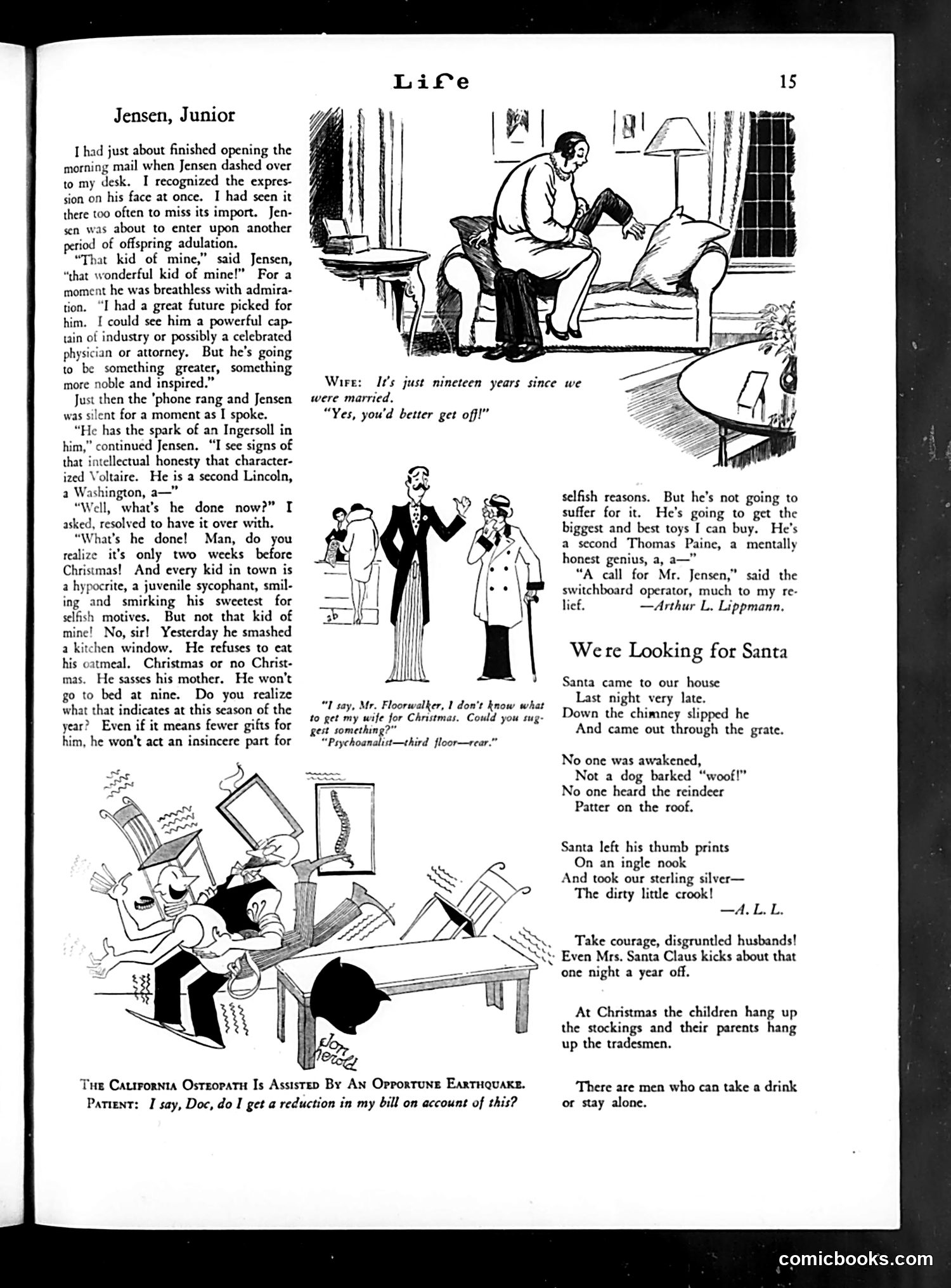
# Analysis of Life Magazine Page 8 This page contains "The Letters of a Modern Father," a humorous piece where a father writes to his daughter about her disappointed opera ambitions. The satire mocks both the daughter's unrealistic career expectations and parental condescension—the father suggests she should abandon dreams of grand opera, noting that even her sister Eloise succeeded through mentioning Columbia University rather than actual talent. The top cartoon shows a car salesman pitching pencils with the caption "Wanta buy one of these pencils?"—likely satirizing Depression-era hustle and makeshift entrepreneurship. The bottom illustration, "Twas the Night Before Christmas," depicts children destroying toys on Christmas Eve, captioned with chaos erupting "when out on the lawn there arose such a clatter." Together, these pieces humorously critique American ambition, class mobility, and consumer culture.
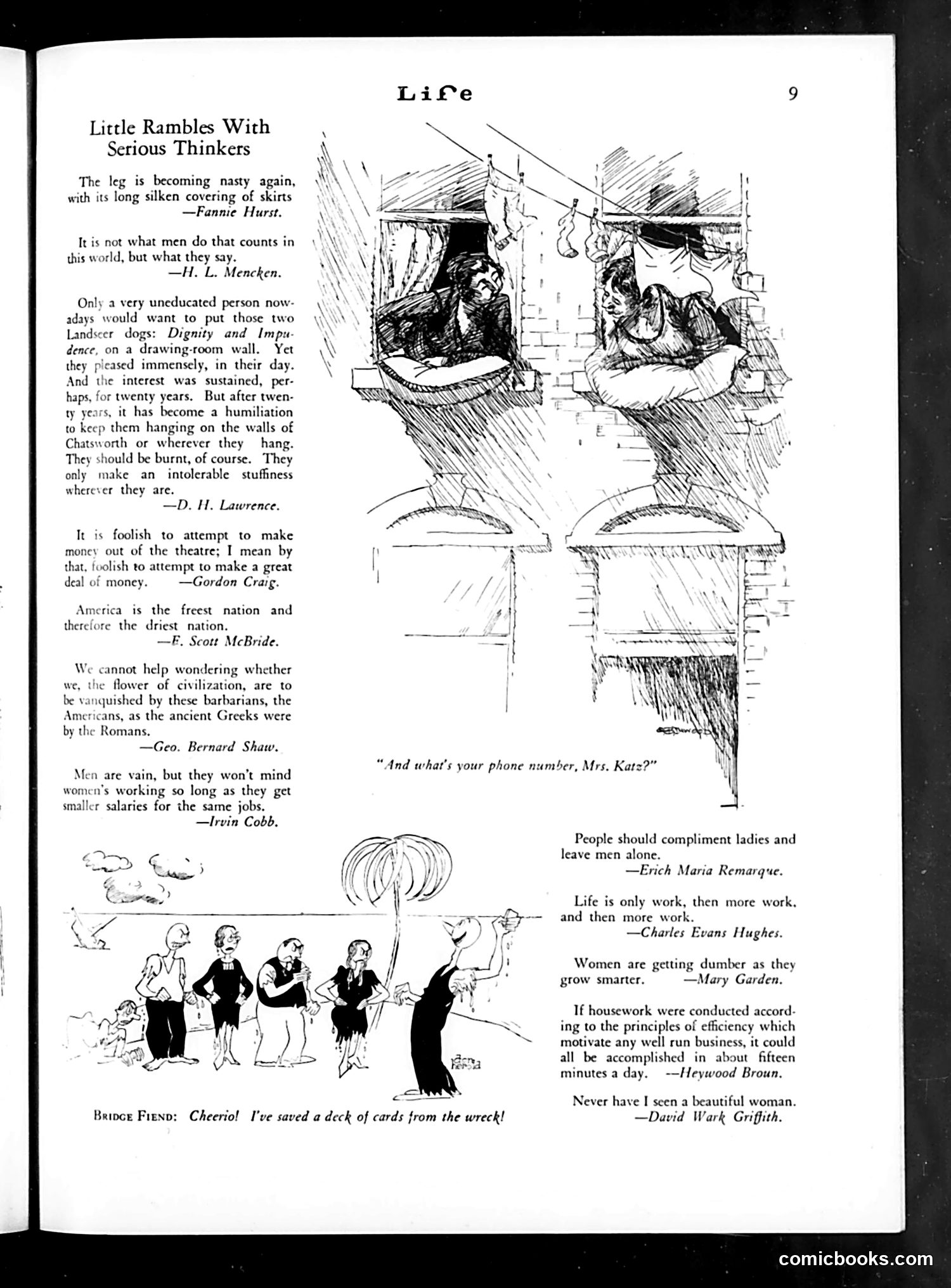
# Analysis of Life Magazine Page 9 This page combines philosophical quotes with satirical cartoons. The upper cartoon depicts two figures in what appears to be an attic or upper room, with the caption "And what's your phone number, Mrs. Katz?" — likely satirizing the modern intrusion of technology into private spaces or the awkwardness of collecting personal information. The lower cartoon shows a group of people gathered around a palm tree, with the caption "Bridge Friend: Cheerio! I've saved a deck of cards from the wreck!" This appears to mock upper-class priorities during an emergency—suggesting frivolous bridge players would prioritize their card game even after a disaster. The accompanying quotes from various authors address themes of gender, labor, beauty, and civilization, typical of Life's satirical commentary on contemporary social issues.
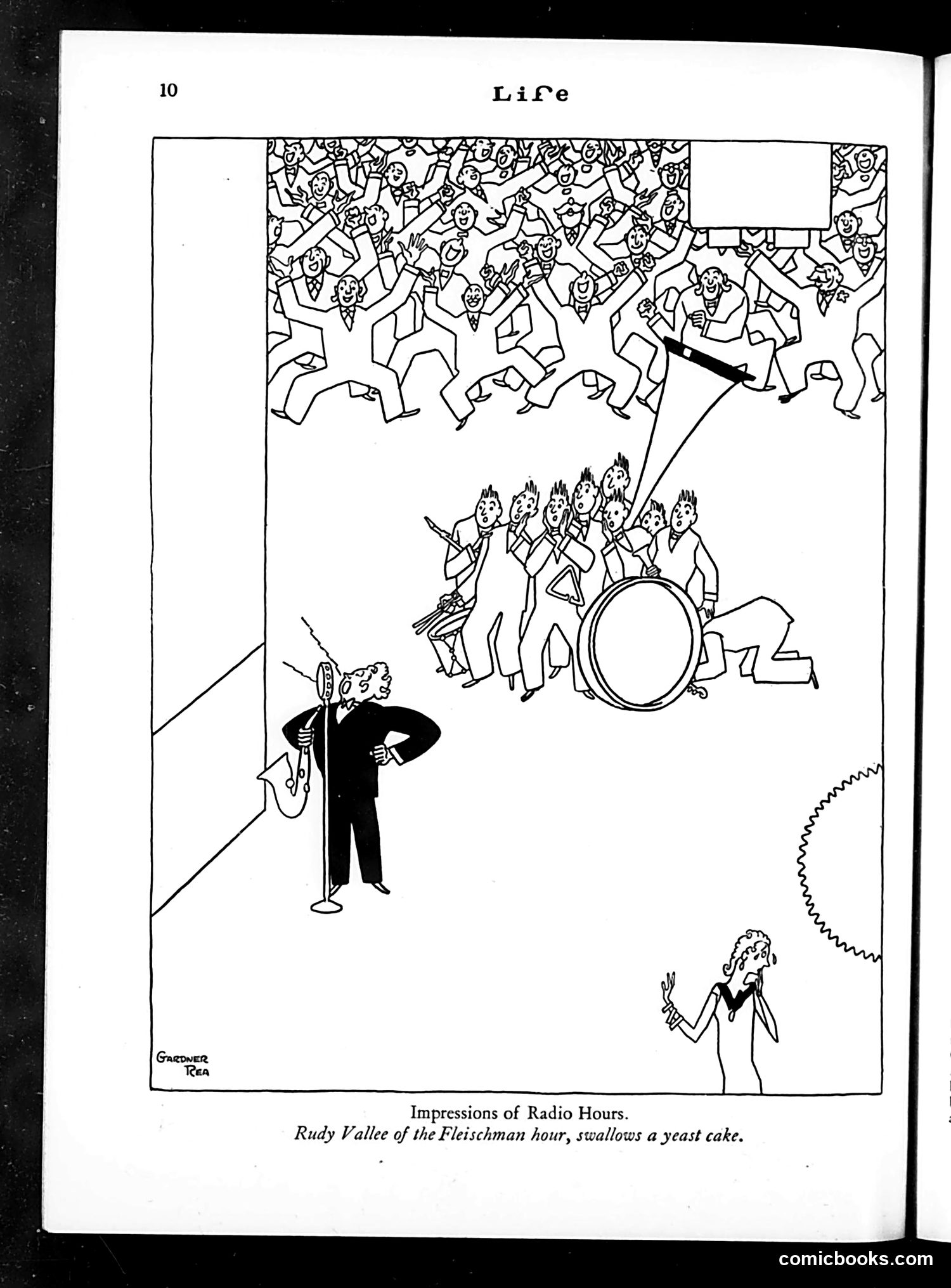
# "Impressions of Radio Hours" This cartoon satirizes early radio broadcasting, specifically mocking "Rudy Vallee of the Fleischman hour," a popular 1920s-30s radio program. The image shows a conductor addressing a large, enthusiastic studio audience above, while below, a lone listener sits eating cake—humorously depicting the contrast between the broadcaster's grand performance before a live crowd and the solitary domestic experience of the radio audience member. The satire suggests the disconnect between radio's theatrical presentation (designed for imagined masses) and the actual isolated listener experience. Rudy Vallee was a famous crooner of the era, and the "Fleischman hour" was a sponsored program. The yeast cake reference likely alludes to the show's commercial sponsor, Fleischman's yeast.