A complete issue · 80 pages · 1929
Life — December 6, 1929

I can see this is a page dated "December 6th 1926" from Life magazine, but the image quality is too poor to read any text or identify specific cartoon content with confidence. The page appears heavily darkened or damaged, making it impossible to discern individual figures, captions, or the satirical subject matter clearly enough to explain accurately to a modern reader. To properly analyze the political cartoon(s) or content, I would need a higher-quality scan or a clearer version of this page. Without being able to read text or see details distinctly, I cannot identify which political figures, events, or social issues are being referenced or what the satire intends.
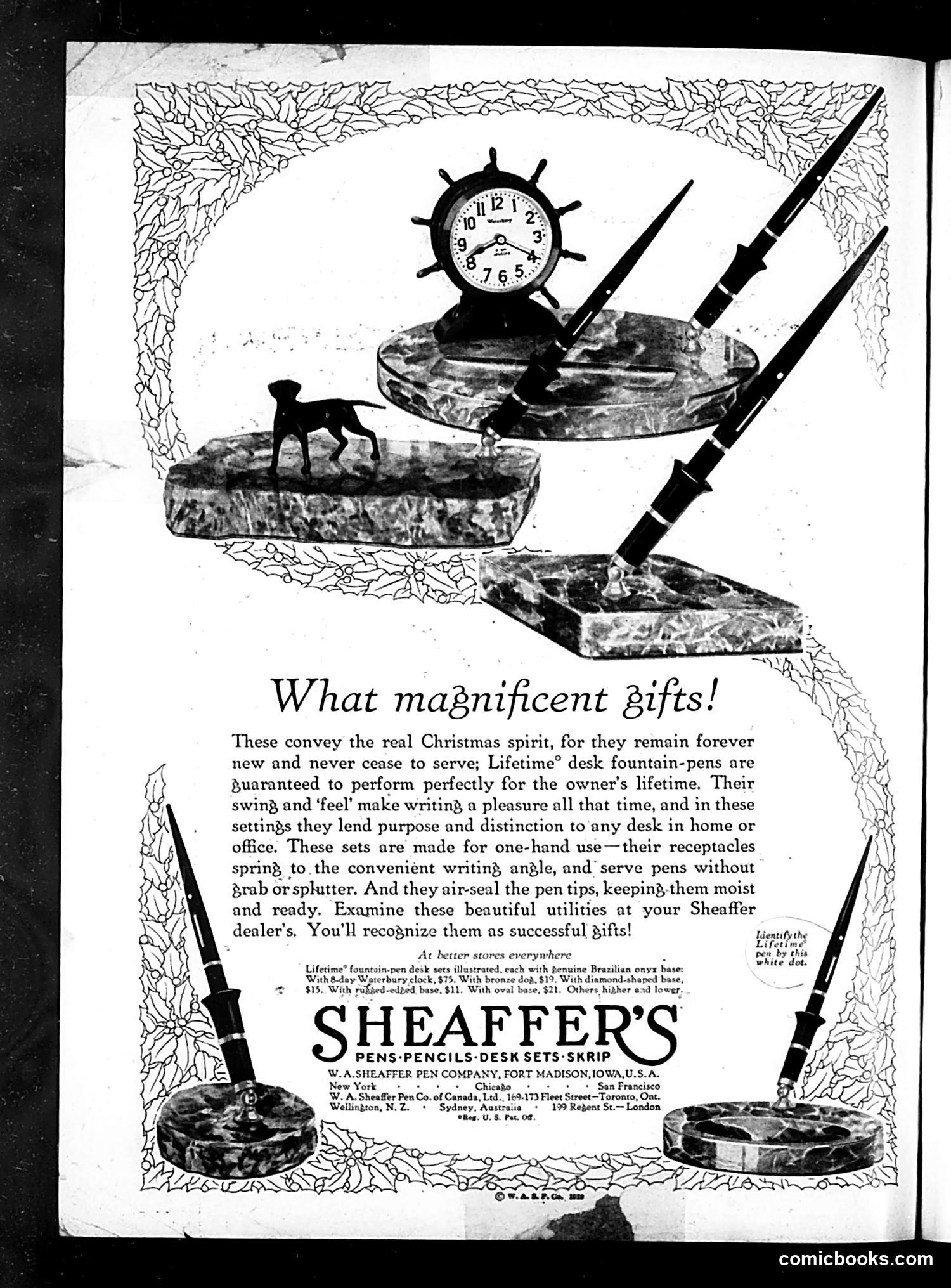
# Analysis This is primarily a **Sheaffer pen company advertisement**, not satirical content. The page promotes "Lifetime" desk fountain-pen sets as Christmas gifts. The imagery depicts decorative desk sets featuring: - A ship's wheel-shaped clock - A hunting dog figurine - Writing implements arranged on marble-like bases The ad's rhetoric emphasizes permanence ("remain forever new," "guaranteed to perform perfectly for the owner's lifetime") and status—these sets supposedly "lend purpose and distinction to any desk in home or office." The ornamental leaf border and nautical/sporting motifs (clock wheel, hunting dog) suggest aspirational, upper-class aesthetics typical of 1920s-30s luxury goods marketing. There is no satire or political commentary; this is straightforward commercial advertising.
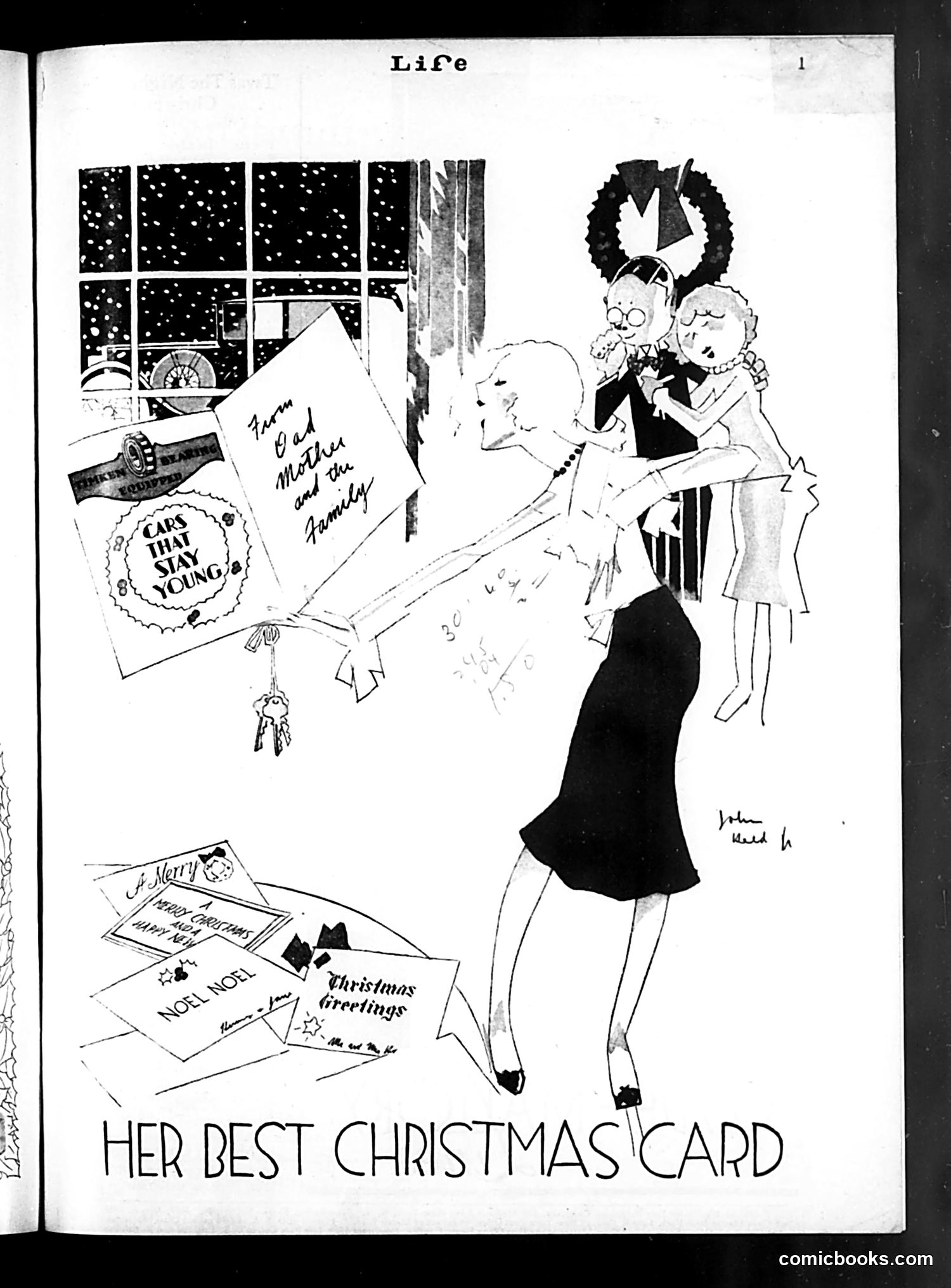
# "Her Best Christmas Card" This satirical cartoon from *Life* magazine depicts a woman holding two young children while surrounded by Christmas cards and holiday greetings. The visible cards reference family-focused messaging like "For God and Mother and the Family" and standard holiday wishes. The satire appears to comment on how a woman's "best Christmas card" is essentially her children themselves—that motherhood and family represent the ultimate expression of domestic virtue and social value. This reflects early-to-mid 20th century cultural attitudes celebrating motherhood as a woman's primary role and greatest achievement. The snowy window, formal dress, and idealized presentation reinforce the sentimentalized vision of domesticity the cartoon is gently mocking through its central conceit.
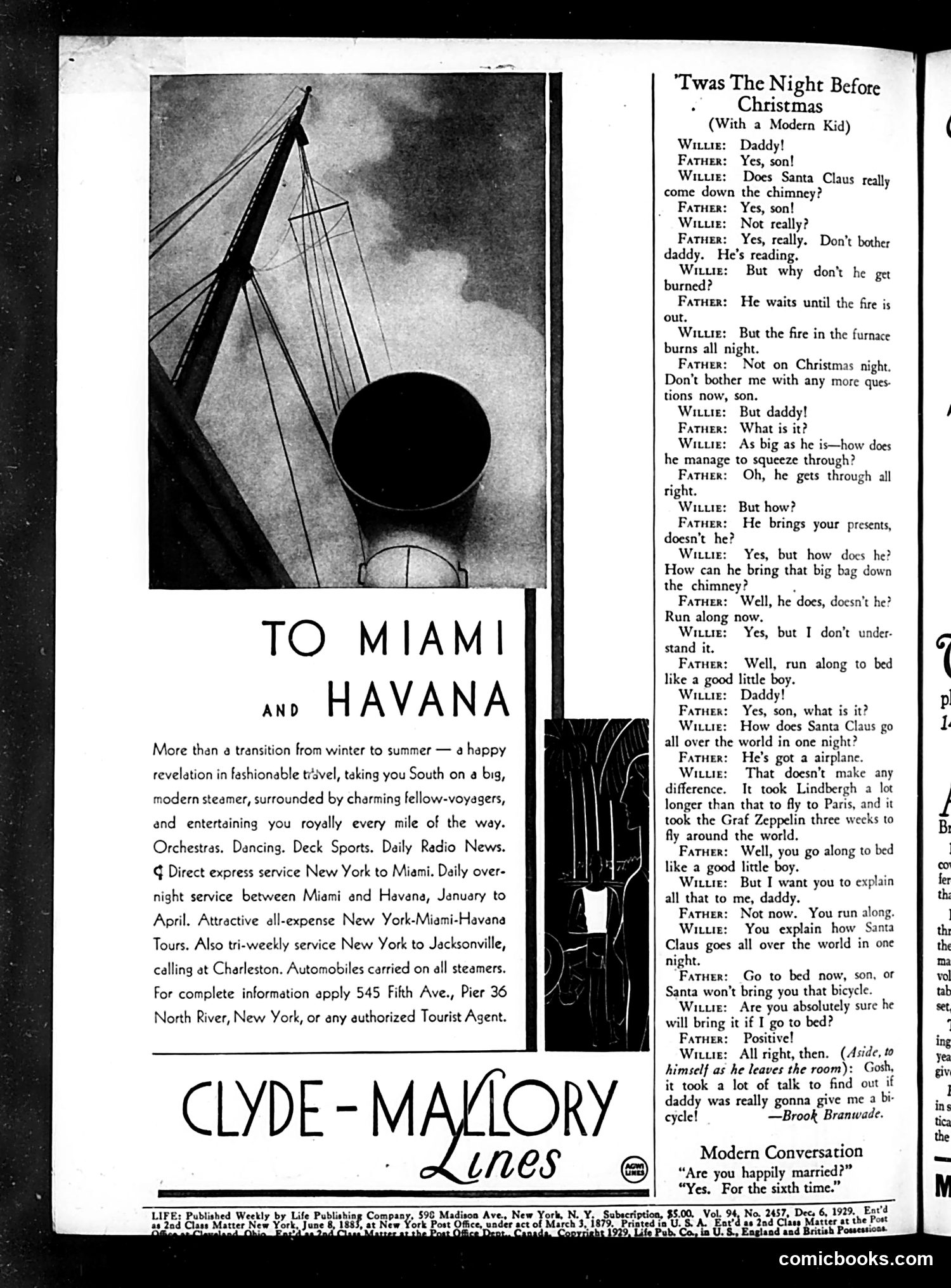
# Content Analysis This page is primarily **advertising** for the Clyde-Mallory Lines shipping company, promoting travel to Miami and Havana with an image of a steamship. The right side contains **"'Twas The Night Before Christmas (With a Modern Kid)"** — a humorous dialogue between a father and son named Willie. The satire targets **modern children's skepticism** about Santa Claus. Willie peppers his father with practical, logical questions: How does Santa fit down chimneys? How does he visit everywhere in one night? How will he transport a bicycle? The father's exasperated responses ("Don't bother me," "Run along to bed") satirize the **generational gap** between parents raised on simple faith and 1920s children armed with rational thinking and scientific knowledge. The joke is that modern kids have lost childhood wonder through reason and information.
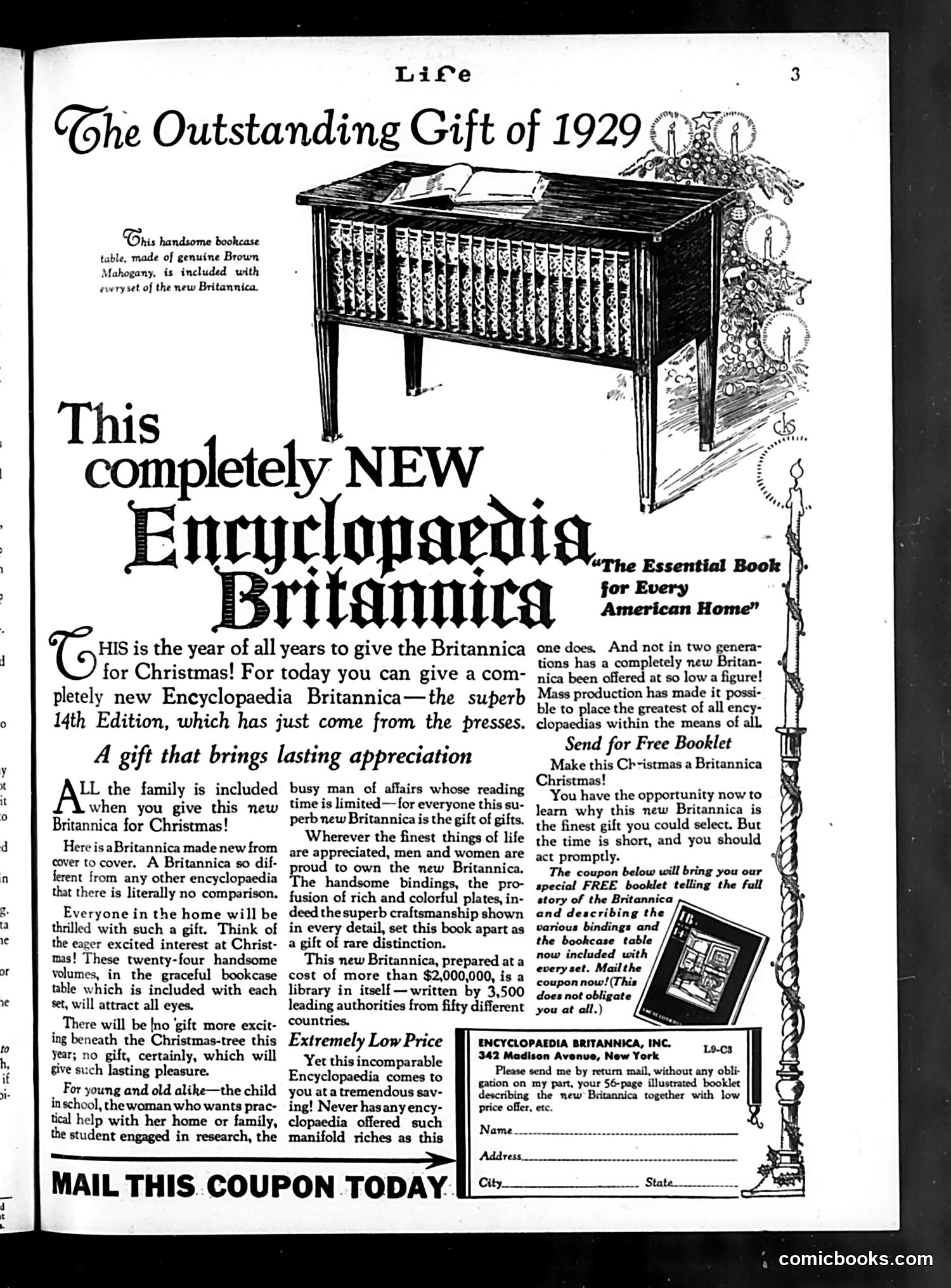
# Analysis This page is **primarily advertising**, not satire or political commentary. It promotes the 1929 edition of the Encyclopedia Britannica as "The Outstanding Gift of 1929." The advertisement emphasizes that this is the "superb 14th Edition, which has just come from the presses"—highlighting its newness and comprehensiveness. The accompanying illustration shows an elegant mahogany bookcase table designed to display the encyclopedia set. The marketing pitch targets middle-class American families, positioning the encyclopedia as a prestigious gift that benefits "everyone in the home," from busy professionals to schoolchildren needing research help. The extremely low price mentioned and the free booklet offer suggest this was a competitive, aggressive sales campaign during the pre-Depression period, when such reference works were luxury items for most households.
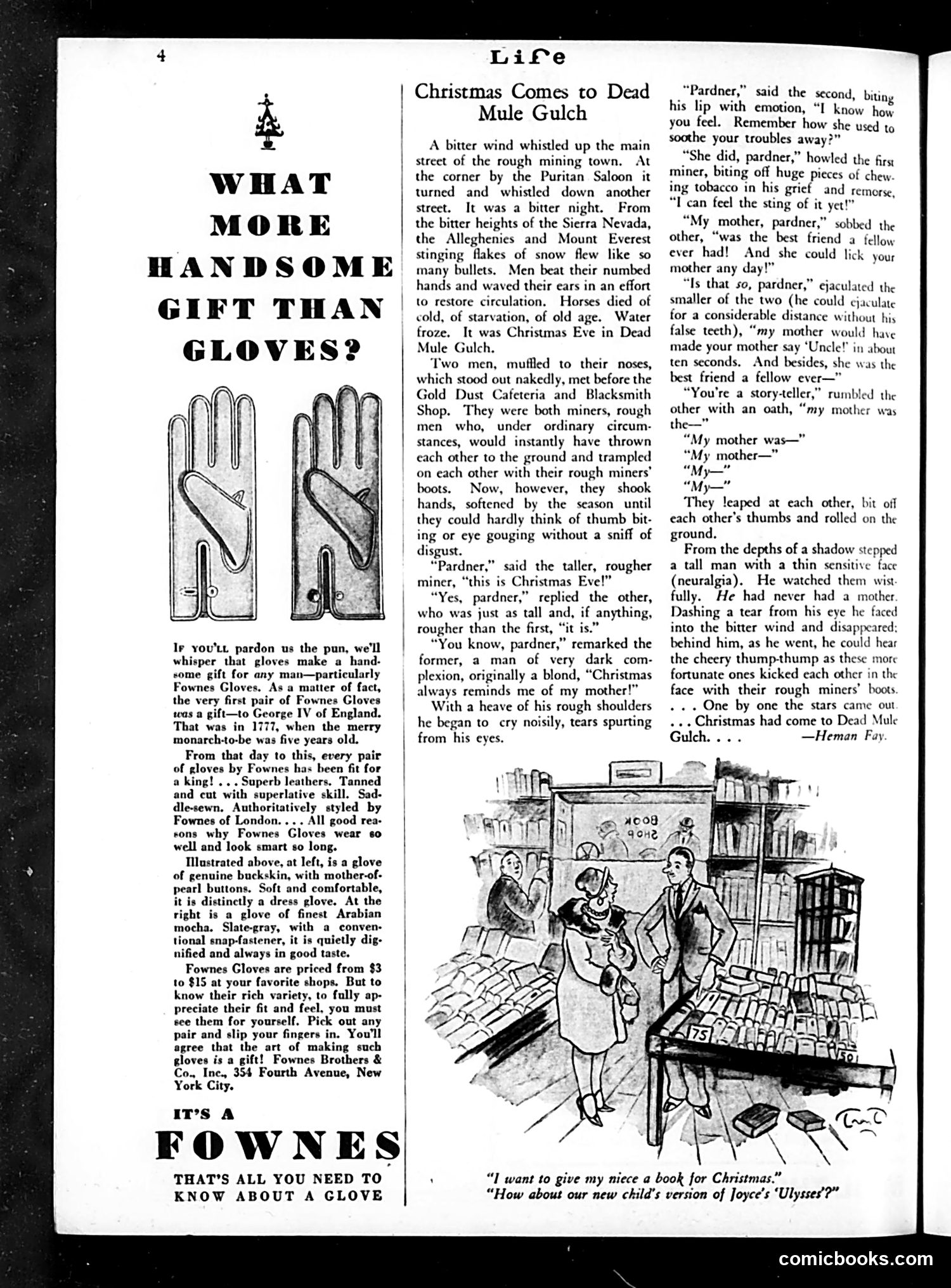
# Analysis This page combines **advertising with fiction**. The left side advertises Fownes Gloves—a luxury brand established in 1777—arguing gloves make an ideal gift. The ad emphasizes quality and pricing ($3-$15). The right side presents a short story titled "Christmas Comes to Dead Mule Gulch" by Herman Fay. It depicts two rough miners in a Western mining town on Christmas Eve bonding emotionally over shared memories of their mothers. The narrative explores how hardened men—who would normally fight—become sentimental when reminded of maternal love and loss. The accompanying illustration shows what appears to be a general store or trading post. The story illustrates a common early-20th-century sentimental theme: that even tough frontier characters possess hidden emotional depths, particularly regarding family bonds.
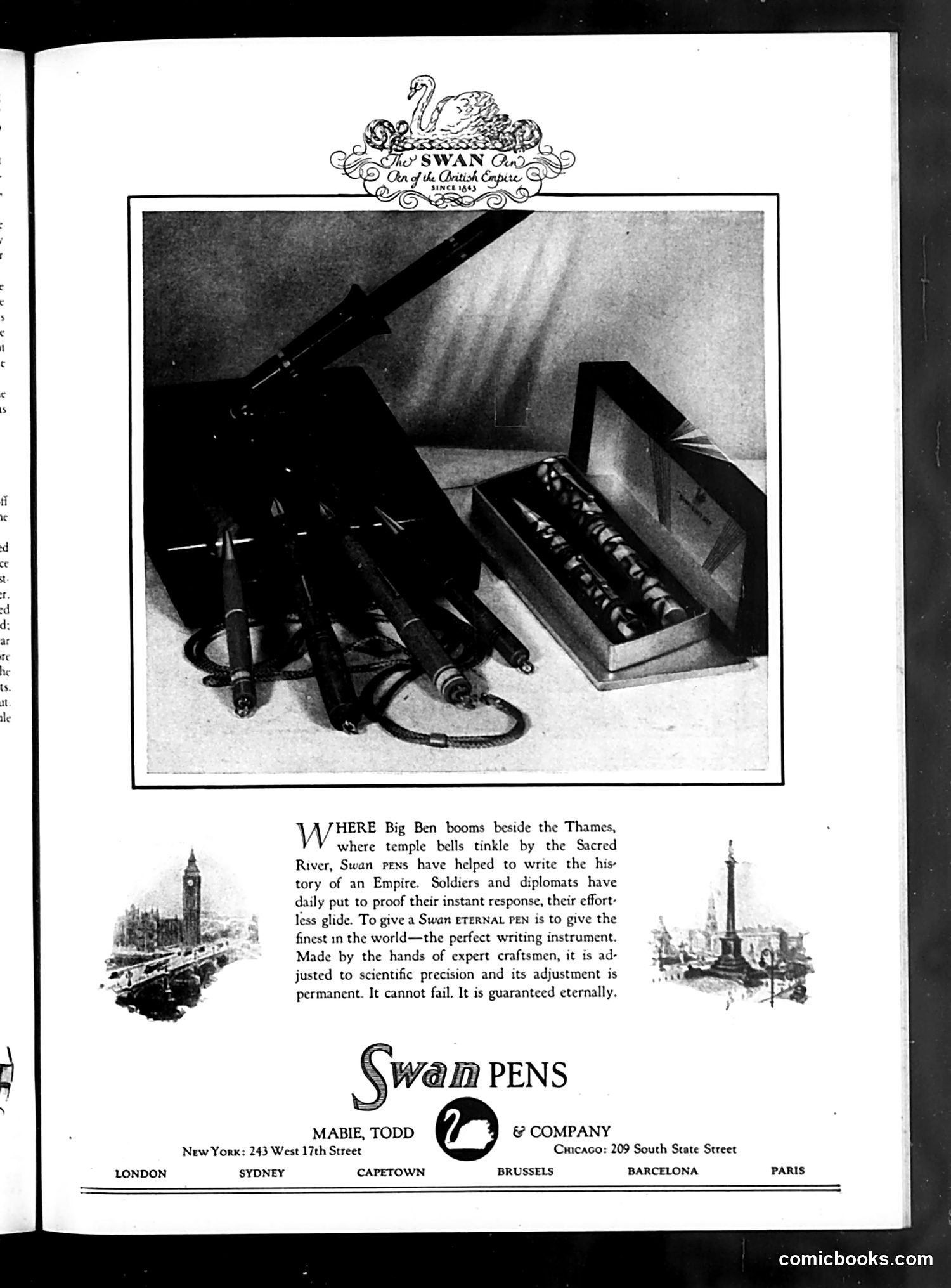
# Swan Pens Advertisement This is a **vintage advertisement**, not a political cartoon. It promotes Swan brand fountain pens manufactured by Mabie, Todd & Company, with offices in London, Sydney, Capetown, Brussels, Barcelona, and Paris. The ad appeals to British imperial pride and authority: it references "Big Ben" and the Thames, mentions that "soldiers and diplomats" rely on Swan pens for official correspondence, and emphasizes the pen's precision and reliability—qualities associated with Empire administration. The photograph shows military or diplomatic implements (possibly binoculars or similar instruments) alongside an open pen box, suggesting these are tools of imperial governance and power. The copy promises the pen "is guaranteed eternally," positioning it as a dependable instrument for maintaining British authority worldwide.
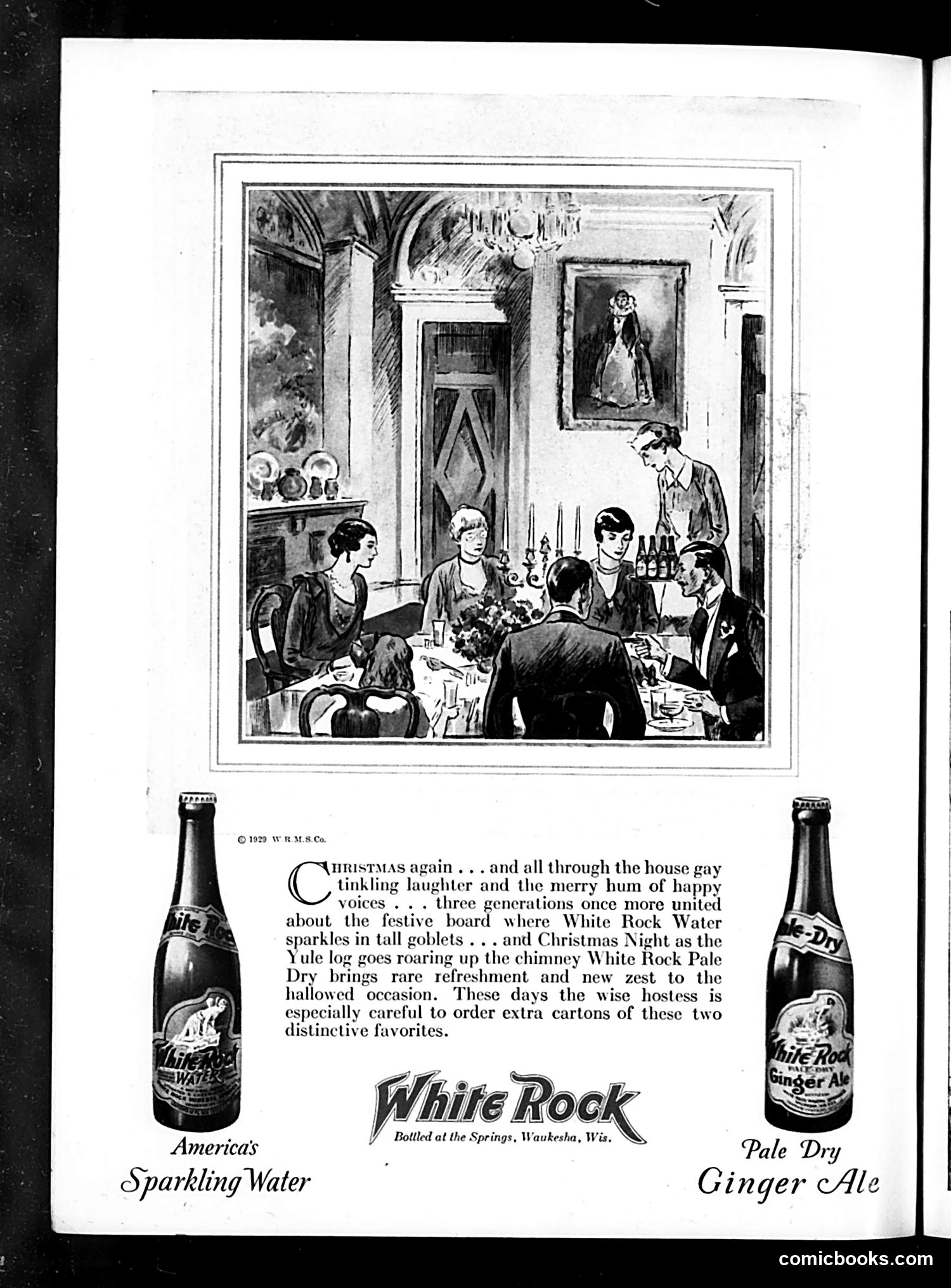
# Analysis This is primarily a **beverage advertisement**, not political satire. It advertises White Rock brand products—Sparkling Water and Pale Dry Ginger Ale, bottled in Waukesha, Wisconsin. The illustration depicts an elegant **Christmas dinner scene** with multiple generations gathered around a formal table in a well-appointed dining room. The text emphasizes tradition and family unity during the holidays. The ad's appeal is nostalgic and aspirational: it associates White Rock beverages with refined, prosperous domesticity and multi-generational holiday celebration. The 1929 copyright date (visible as "© 1929") places this during the Jazz Age, when such beverages were marketed as sophisticated alternatives—particularly relevant given Prohibition's context. The page is essentially commercial content, not editorial commentary.
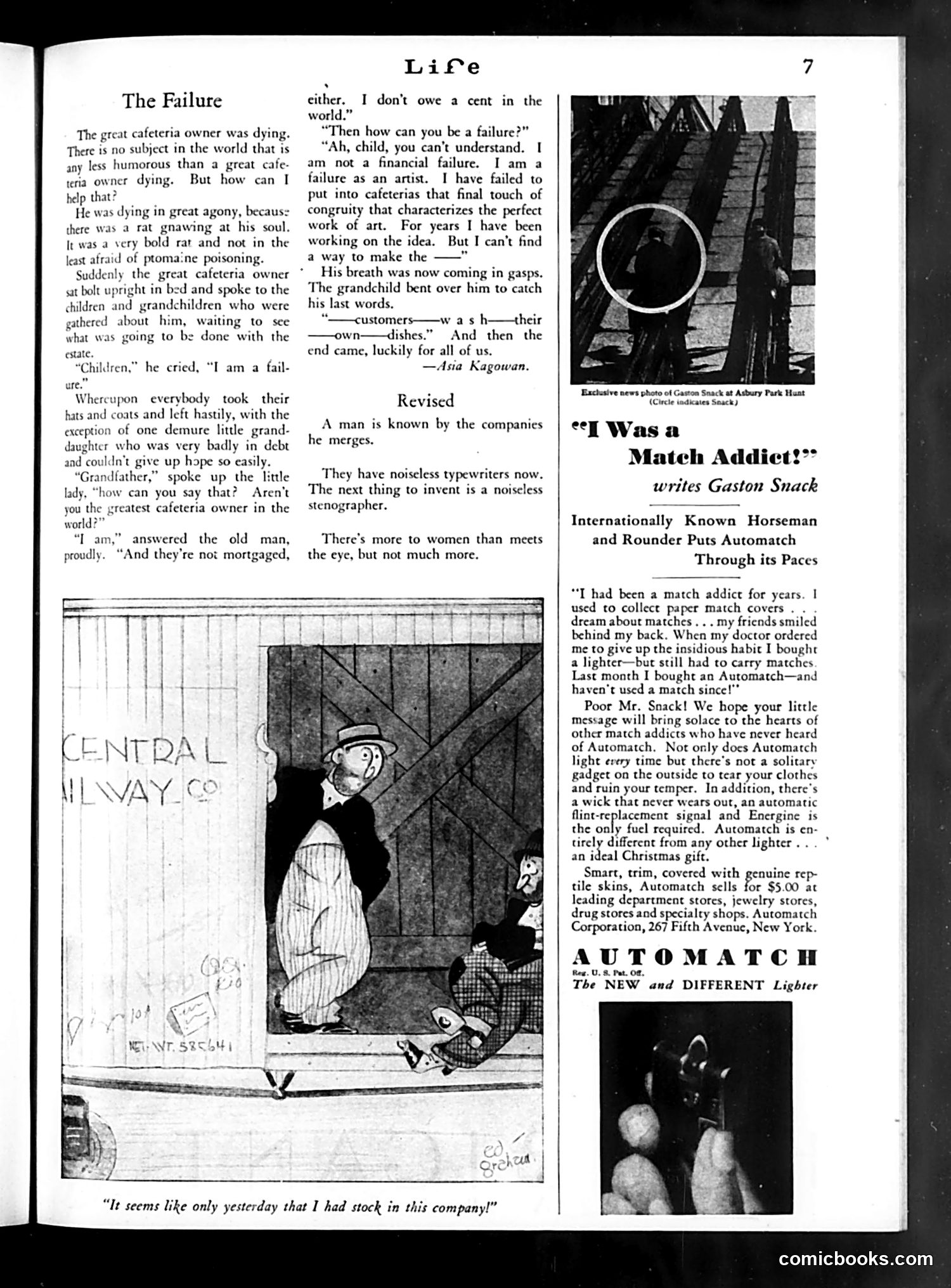
# Analysis of Life Magazine Page 7 This page contains two distinct items: **"The Failure"** (left): A satirical short story about a dying cafeteria owner who considers himself an artistic failure, unable to perfect his vision despite years of work. The granddaughter's mercenary response—asking only about debts and mortgages—satirizes both the grandfather's impractical idealism and younger generations' financial pragmatism. **"I Was a Match Addict!"** (right): An advertisement disguised as a testimonial from someone named Gaston Snack, claiming he overcame match-collecting compulsion by switching to Automatch lighters. This humorous ad mocks both consumer product testimonials and the concept of trivial "addictions," while promoting Automatch as a practical, reusable alternative. Both pieces employ gentle satire of early 20th-century American values and consumer culture.
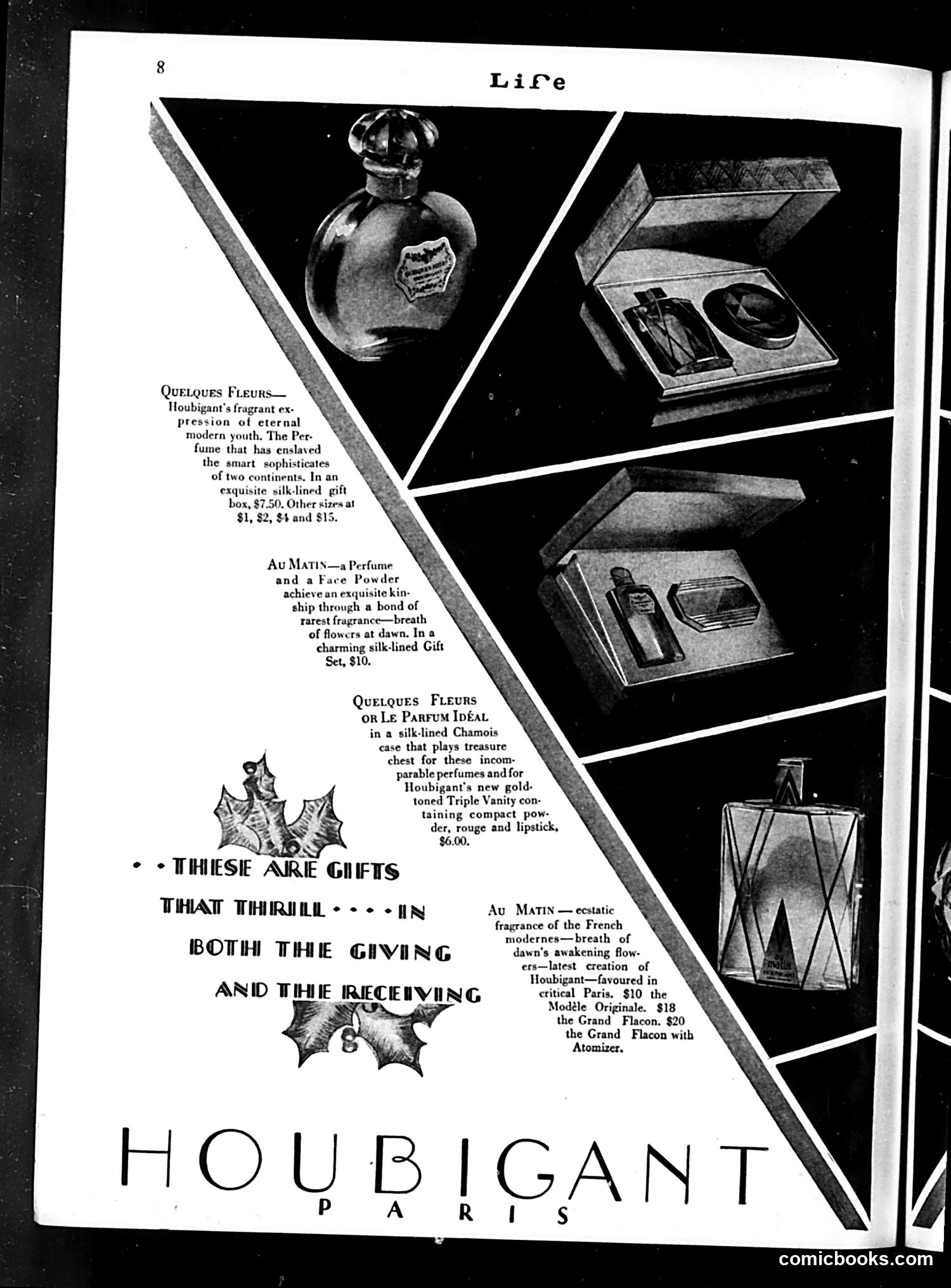
# Analysis This page is primarily **advertising**, not political satire. It features a full-page advertisement for **Houbigant**, a French perfume and cosmetics company. The ad showcases luxury gift sets containing perfumes ("Quelques Fleurs," "Au Matin," "Le Parfum Idéal") and face powder products, with prices ranging from $1 to $20. The products are displayed in elegant packaging. The decorative holly leaves and text about "gifts that thrill in both the giving and the receiving" indicate this is a **holiday shopping advertisement**, likely from a pre-Christmas issue of *Life* magazine. The French branding and emphasis on sophistication reflect the era's association of French products with luxury and modernity. There is no political cartoon or social satire present on this page.
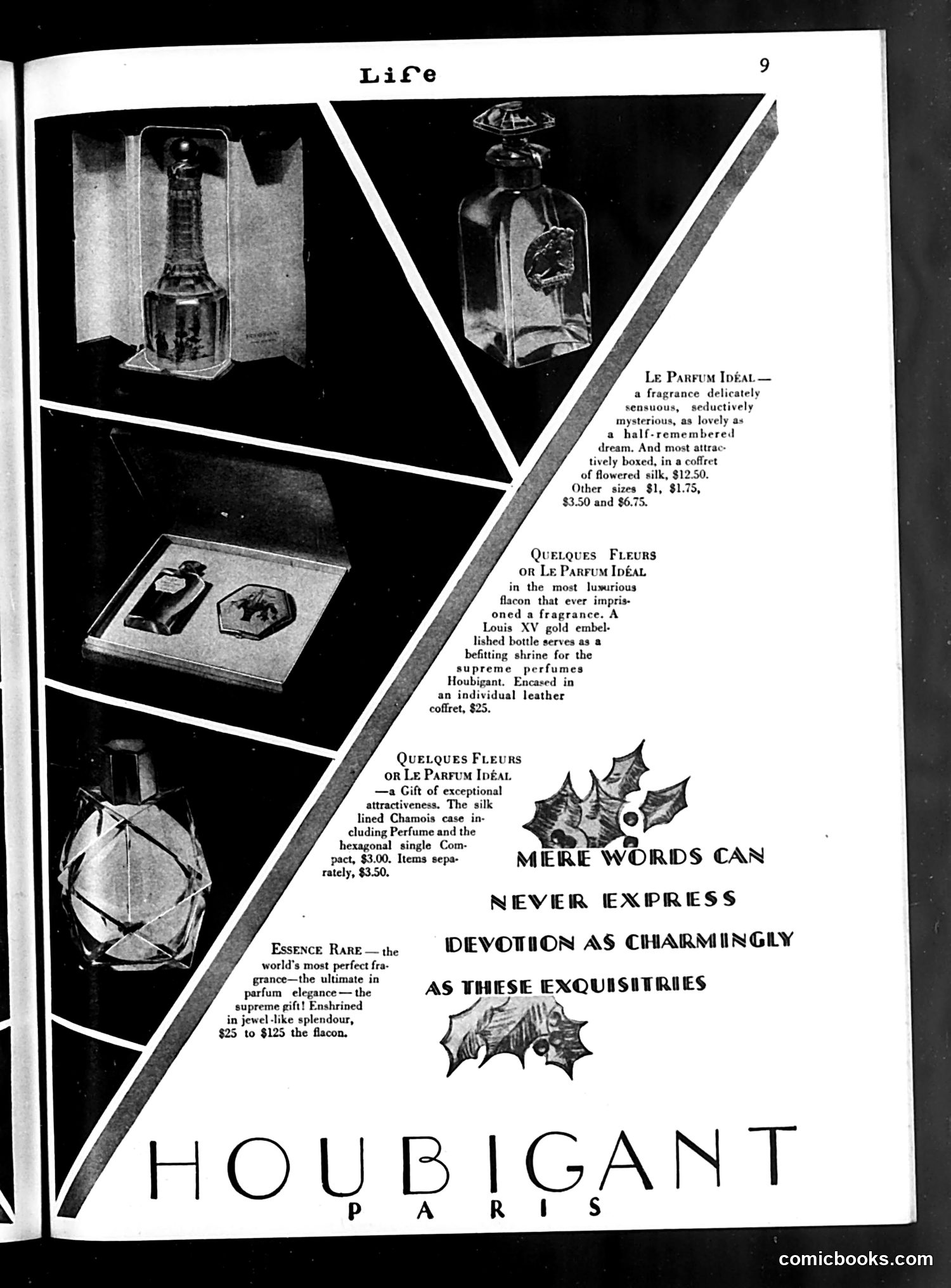
This is primarily a **perfume advertisement page** from Life magazine, not a political cartoon. The page showcases luxury fragrances by Houbigant, a Paris-based perfume house, featuring four products: 1. **Le Parfum Idéal** - described as delicately mysterious 2. **Quelques Fleurs or Le Parfum Idéal** - presented in luxurious packaging with gold embellishment 3. Another **Quelques Fleurs** variant in silk-lined Chamois case 4. **Essence Rare** - claimed as "the world's most perfect fragrance" The ad uses poetic language emphasizing elegance and exclusivity, targeting wealthy consumers. The accompanying tagline—"Mere words can never express devotion as charmingly as these exquisitries"—suggests gifts for romantic occasions. This reflects early-20th-century luxury marketing to affluent audiences.
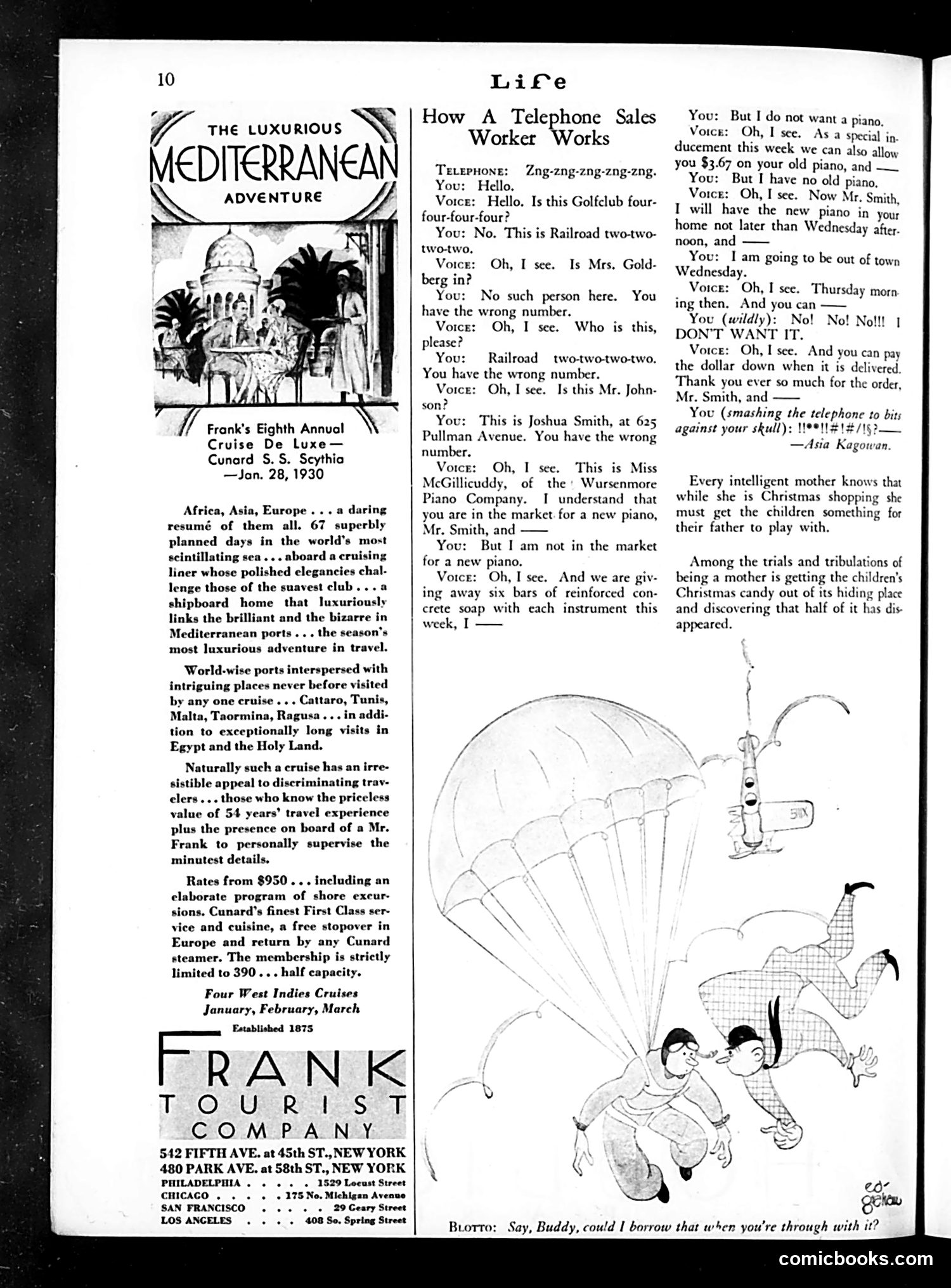
# Analysis of Life Magazine Page (Page 10) This page contains two distinct elements: **Left side:** An advertisement for Frank's Tourist Company promoting Mediterranean cruises on the Cunard S.S. Scythia, departing January 28, 1930. It emphasizes exotic ports (Egypt, Holy Land, North Africa) and luxury amenities. **Right side:** A satirical piece titled "How A Telephone Sales Worker Works" depicting a frustrated telephone conversation where a customer (Mr. Smith) repeatedly gets wrong numbers while trying to order a piano. The humor lies in the salesperson's exhausted politeness as the customer keeps calling back, ultimately expressing rage by smashing the telephone against his skull. **Bottom:** A cartoon showing two children with a parachute, captioned about borrowing one "when you're through with it" — likely satirizing children's wishful thinking or borrowing culture. The page reflects 1930s consumer culture and office humor.