A complete issue · 42 pages · 1929
Life — November 29, 1929
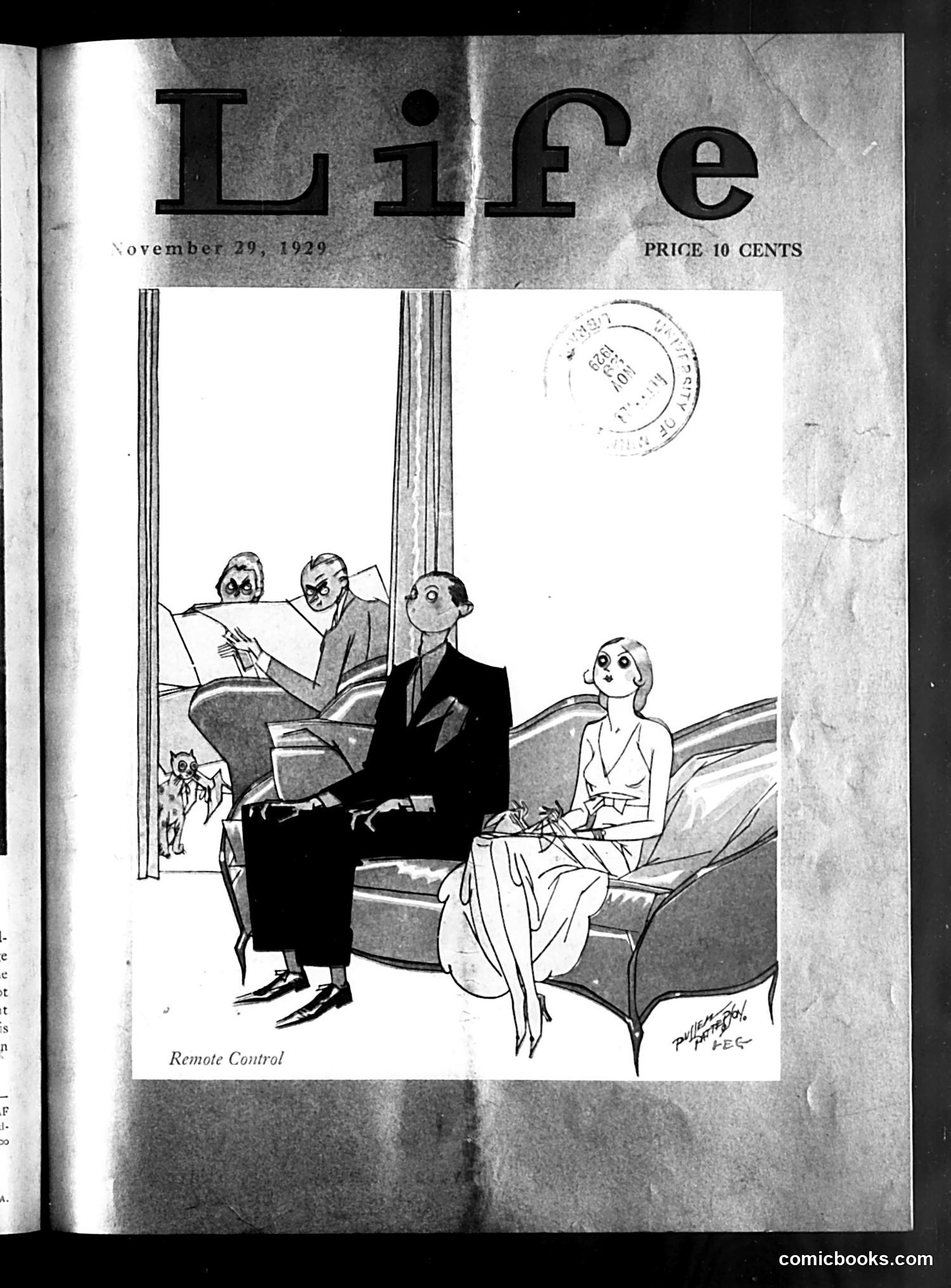
# "Remote Control" — Life Magazine, November 29, 1929 This cartoon satirizes modern domestic technology and gender dynamics. A man sits passively on a couch while a woman operates what appears to be an early mechanical control device, manipulating two masked figures visible through a window above them—likely representing puppets or entertainers. The title "Remote Control" is the joke: the cartoon suggests that wives now control their husbands' leisure activities and entertainment choices, just as one might operate a mechanical device. The man's passive posture and bemused expression contrast with the woman's active manipulation of the scene. Published just weeks after the 1929 stock market crash, this reflects 1920s anxieties about shifting gender roles and women's increasing consumer power and household authority during the modern era.
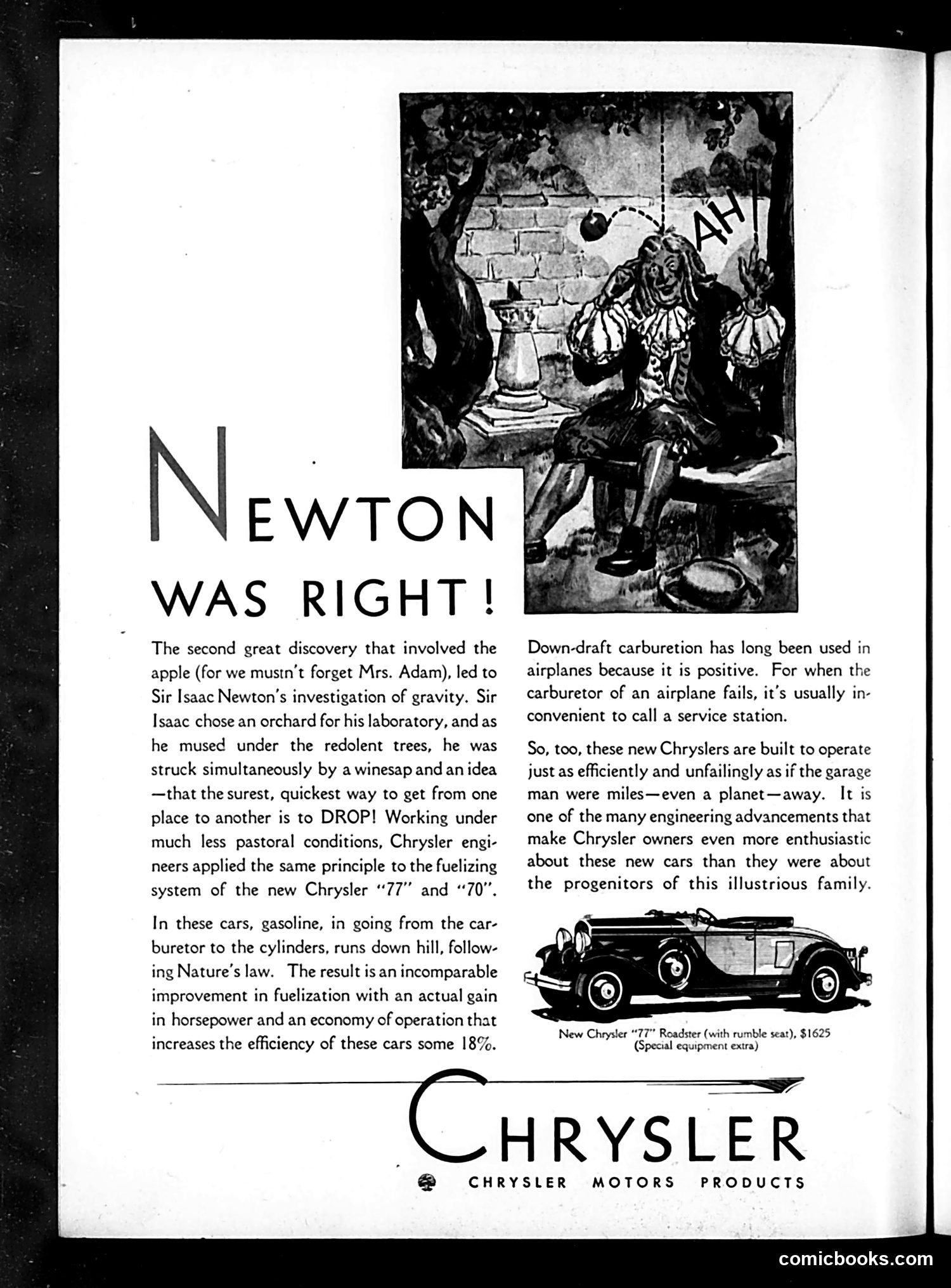
# Analysis This is primarily a **Chrysler Motors advertisement**, not satire or political commentary. The page uses a whimsical illustration to promote the new Chrysler "77" and "70" models. The cartoon depicts what **appears to be a witch or goblin-like figure** reacting with surprise ("AH!") to an apple falling—a visual reference to Isaac Newton's gravity discovery. The ad cleverly draws a parallel: just as Newton's "DROP" of an apple led to understanding gravity, Chrysler engineers applied a "drop" principle to their fuel system design. The joke is that Chrysler applied physics principles to improve carburetion efficiency by 18%, making their cars operate as reliably as a service station. The Newton reference serves as an intellectual metaphor for engineering innovation, not political commentary.
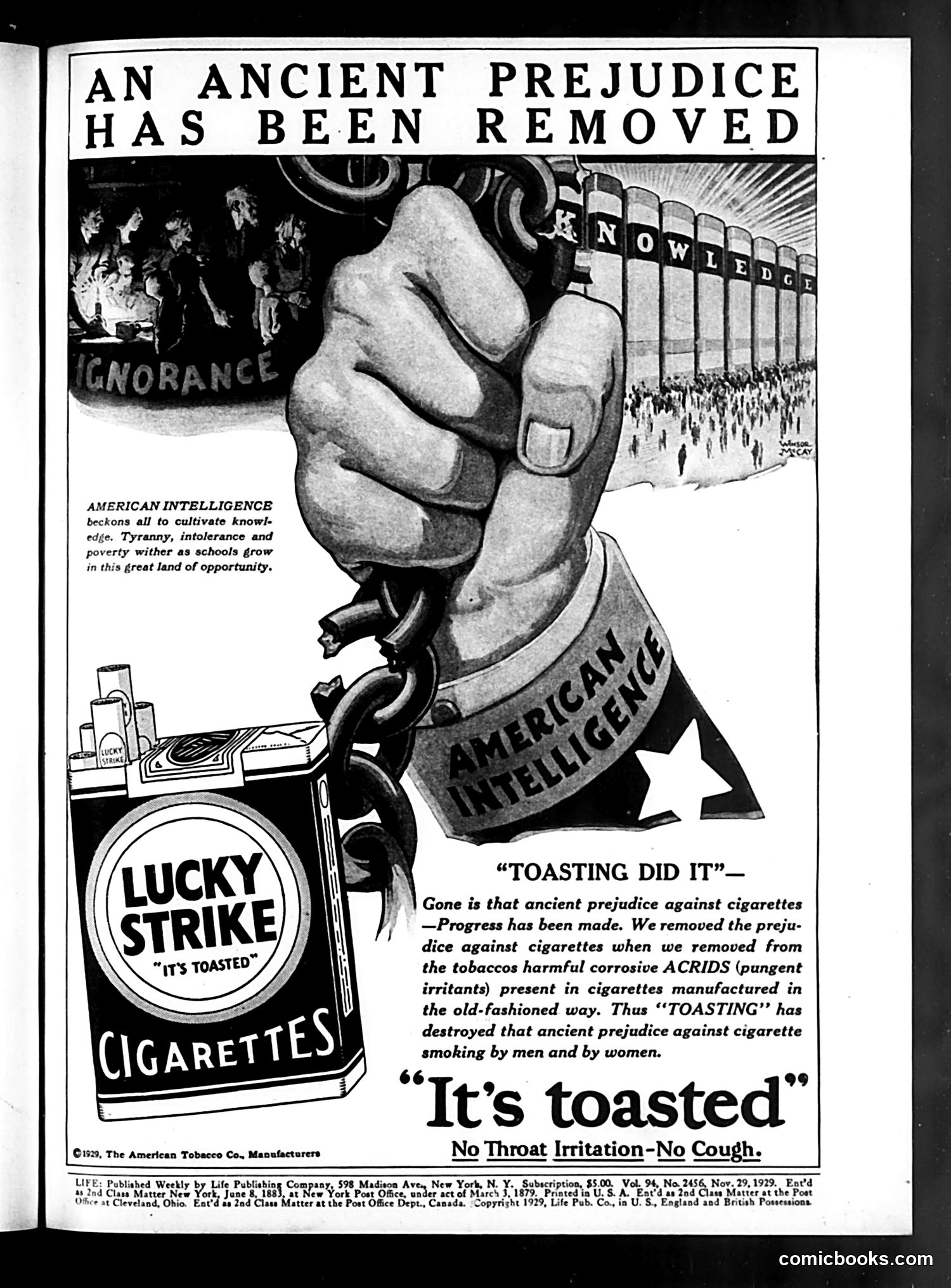
# Analysis This is a **cigarette advertisement**, not satire. It's a Lucky Strike ad from 1929 (copyright visible at bottom) claiming that the "toasting" process removes harmful acids from tobacco, eliminating previous concerns about cigarette smoking. The imagery shows a giant fist labeled "American Intelligence" breaking chains labeled "Ignorance" and crushing prejudice. The text claims "toasting" has destroyed "ancient prejudice against cigarettes." The appeal is to modernity and progress: smoking is reframed as compatible with intelligence and enlightenment. The phrase "No Throat Irritation—No Cough" attempts to address genuine health concerns that existed around cigarettes at the time. This represents early tobacco industry marketing that made health claims later proven false.
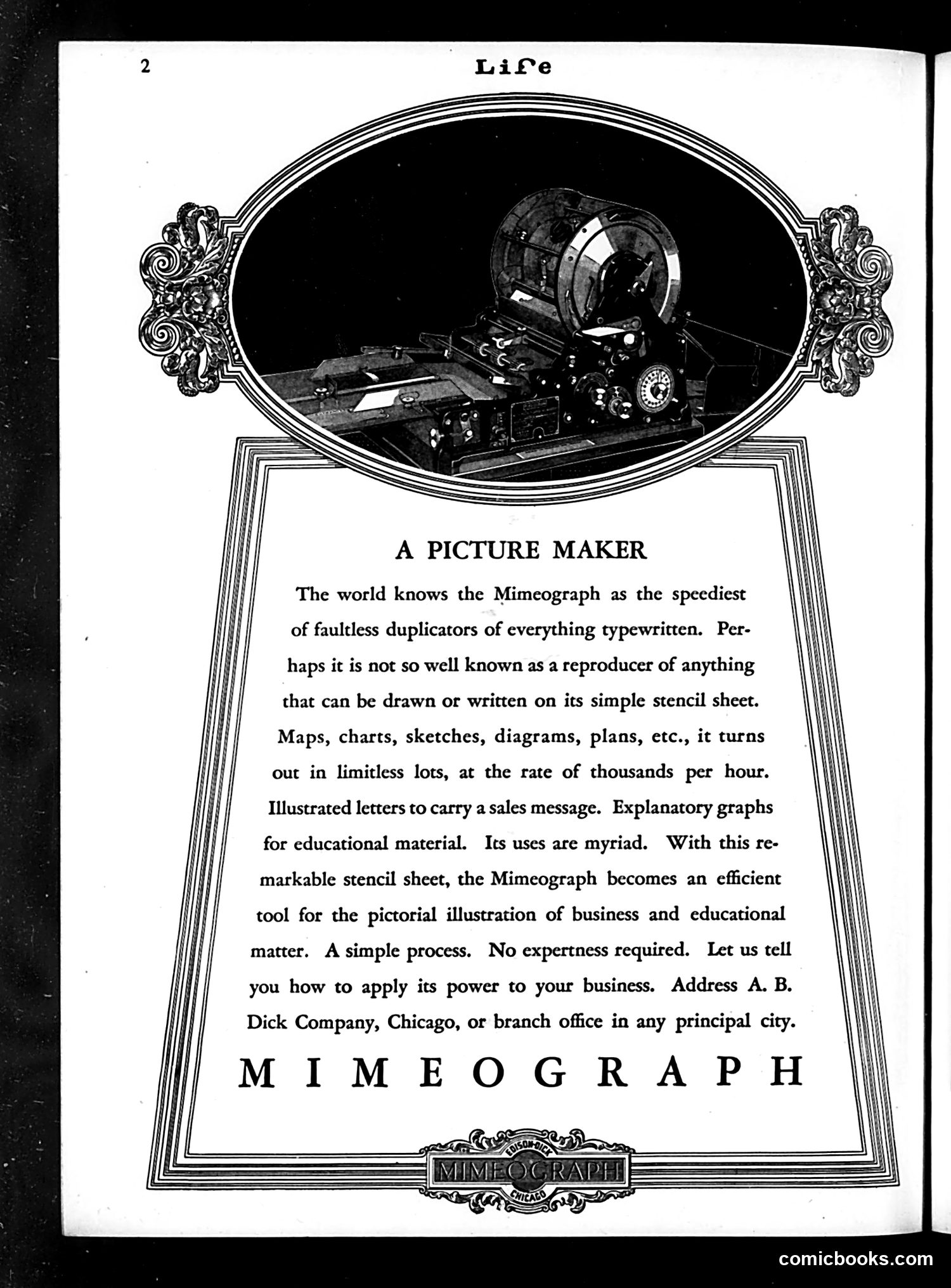
# Analysis This page is primarily **advertising, not editorial content or satire**. It's a full-page advertisement for the Mimeograph machine, manufactured by A.B. Dick Company of Chicago. The ad highlights the Mimeograph as a business tool for mass-producing documents: maps, charts, sketches, diagrams, and illustrated letters at "thousands per hour." The copy emphasizes its simplicity ("No expertness required") and versatility for commercial and educational purposes. The image shows the mechanical device itself—a drum-based duplicating machine typical of early-to-mid 20th century office equipment. This is straightforward product promotion rather than political or social satire. The decorative border and formal layout are typical of period advertising design in magazines like Life.
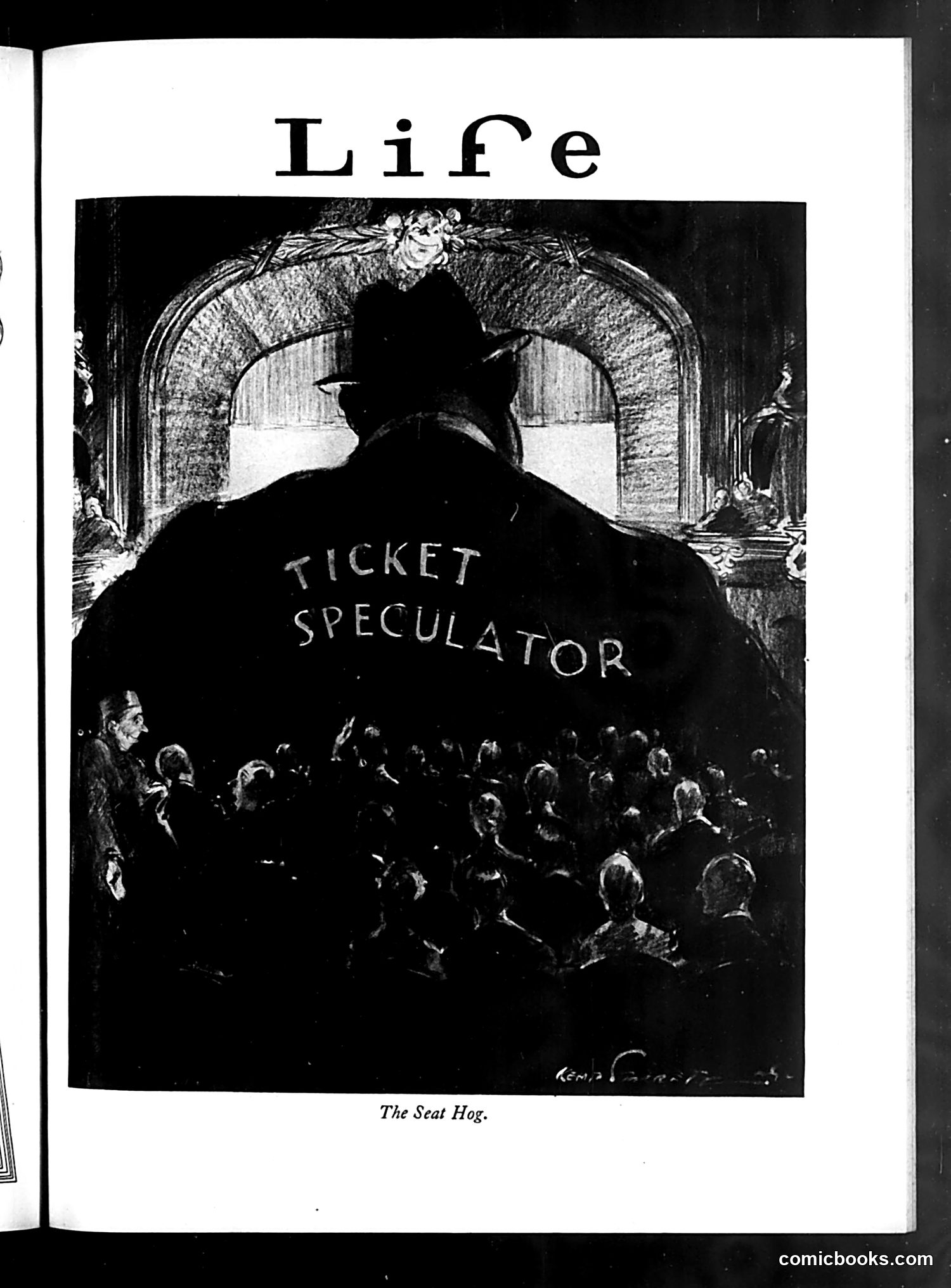
# "The Seat Hog" - Life Magazine This cartoon satirizes a common theater annoyance: the "ticket speculator"—a figure wearing a coat labeled "TICKET SPECULATOR" who dominates the opera house seating area. The giant silhouette looms over ordinary audience members crowded below, literally taking up excessive space. The satire targets ticket scalpers or resellers who bought up seats in bulk, forcing regular theatergoers into worse positions or inflated prices. The "seat hog" metaphor is visual: this one person's greed physically crowds out everyone else from enjoying the performance. This reflects early 20th-century frustration with commercial exploitation of theater access—a working-class complaint about wealthy speculators monopolizing entertainment venues.
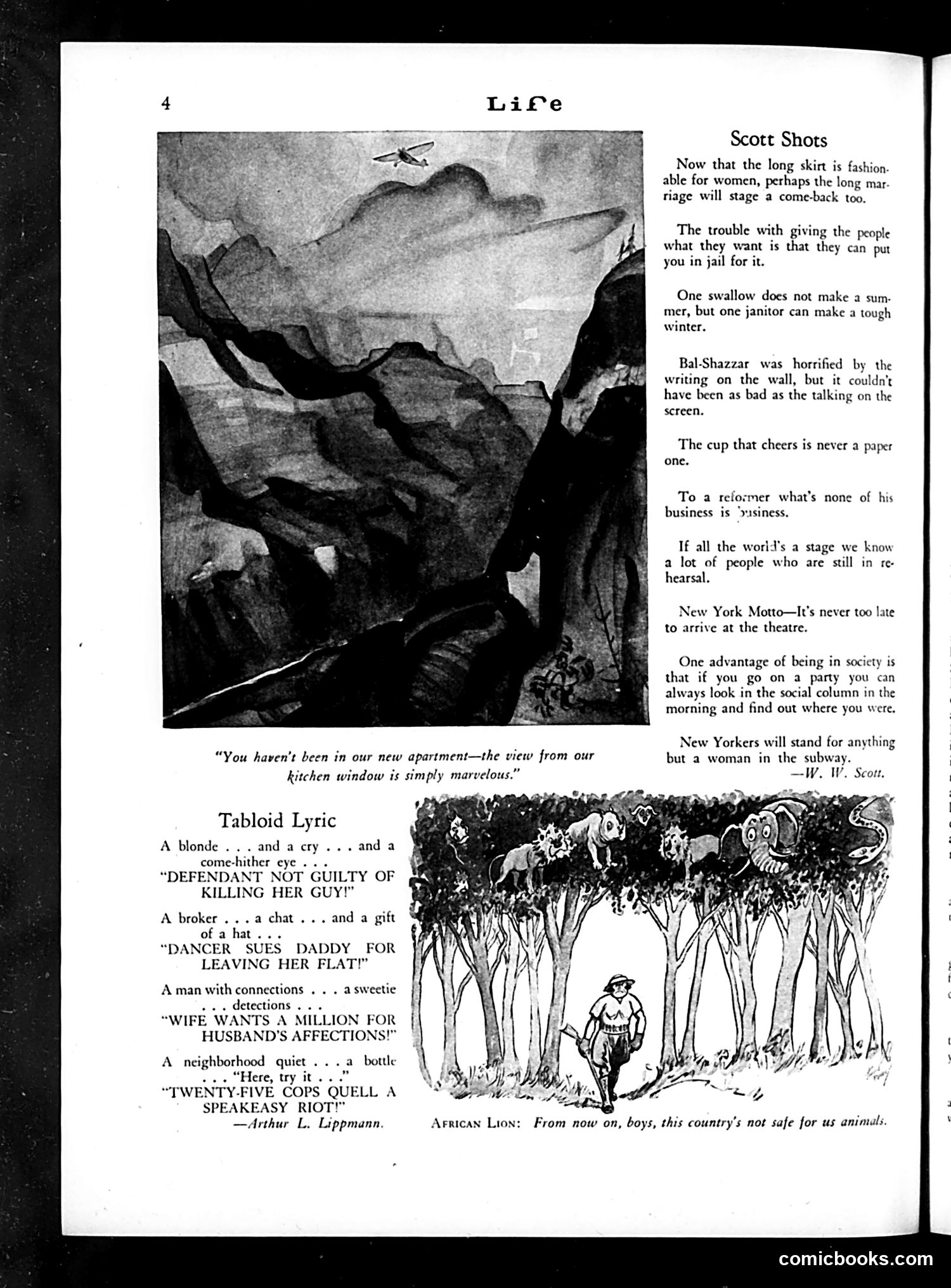
# Analysis of Life Magazine Page 4 **Top Image & Caption:** The photograph shows a dramatic mountain landscape with an airplane flying overhead. The caption quotes someone saying their apartment's kitchen window view is "simply marvelous"—satirizing how New Yorkers exaggerate or find unexpected beauty in ordinary urban settings. This is social commentary on Manhattan living and pretension. **"Scott Shots" Column:** A collection of brief witticisms and observations about contemporary life, including commentary on fashion, janitors, reformers, theater etiquette, and New York society. These are general satirical jabs at 1920s social behavior and trends. **"Tabloid Lyric" & "African Lion" Cartoon:** The lyric parodies sensational tabloid crime headlines through absurdist poetry. The lion cartoon appears to comment on wildlife/conservation, with the caption suggesting dangers to animals.
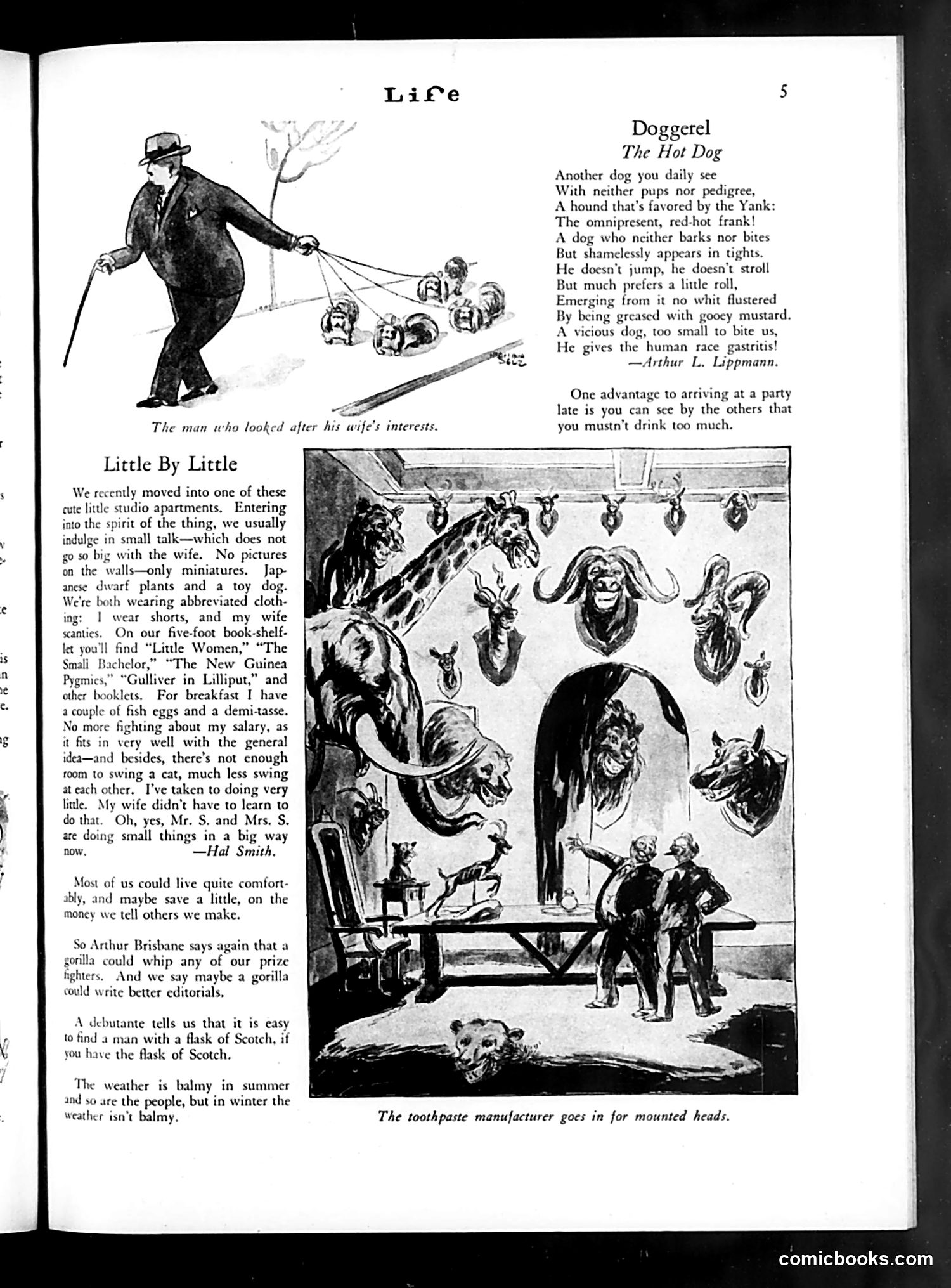
# Analysis of Life Magazine Page 5 **Top Illustration:** A man walking multiple dachshunds on leashes—a visual joke about appearing responsible while managing chaos. The caption "The man who looked after his wife's interests" suggests he's humoring a spouse's pet enthusiasm. **"Doggerel" Poem:** A humorous verse about the "hot dog"—a dachshund breed. The poem satirizes this fashionable but useless dog: it doesn't bark, bite, or jump, but appears in "tights" (fitted clothing) and "rolls" in mustard. The joke critiques both the dog's lack of utility and wealthy owners' pretensions in keeping such impractical pets. **"Little By Little" Essay:** Social commentary on modest living in small studio apartments, abbreviated clothing, and economical habits—reflecting post-WWI or Depression-era attitudes about making do with less while maintaining dignity.
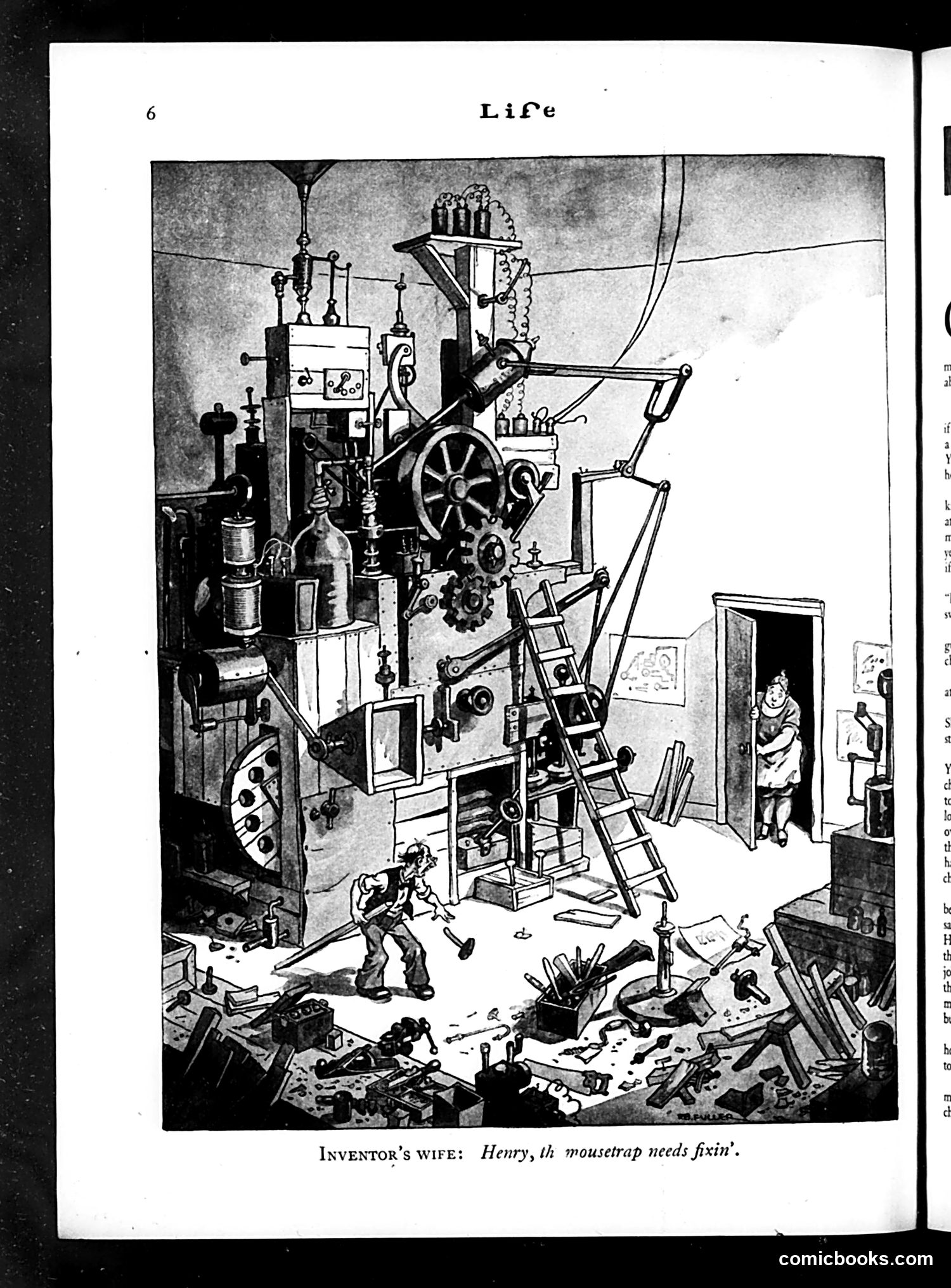
# "Inventor's Wife: Henry, th' mousetrap needs fixin'." This is a satirical cartoon mocking the obsessive inventor or engineer. The image shows an absurdly elaborate, towering contraption—a Rube Goldberg-style machine filled with gears, pulleys, valves, and mechanical complexity—crowding a modest workshop. A man operates this monstrosity while his exasperated wife stands at the door pointing out that a simple mousetrap needs basic repair. **The joke:** The satire critiques inventors who overcomplicate problems with unnecessary technical complexity rather than addressing practical household needs straightforwardly. It's commentary on the gap between grand mechanical ambition and mundane domestic reality—a common theme in early 20th-century American humor about male obsession with technology at the expense of practical family life.
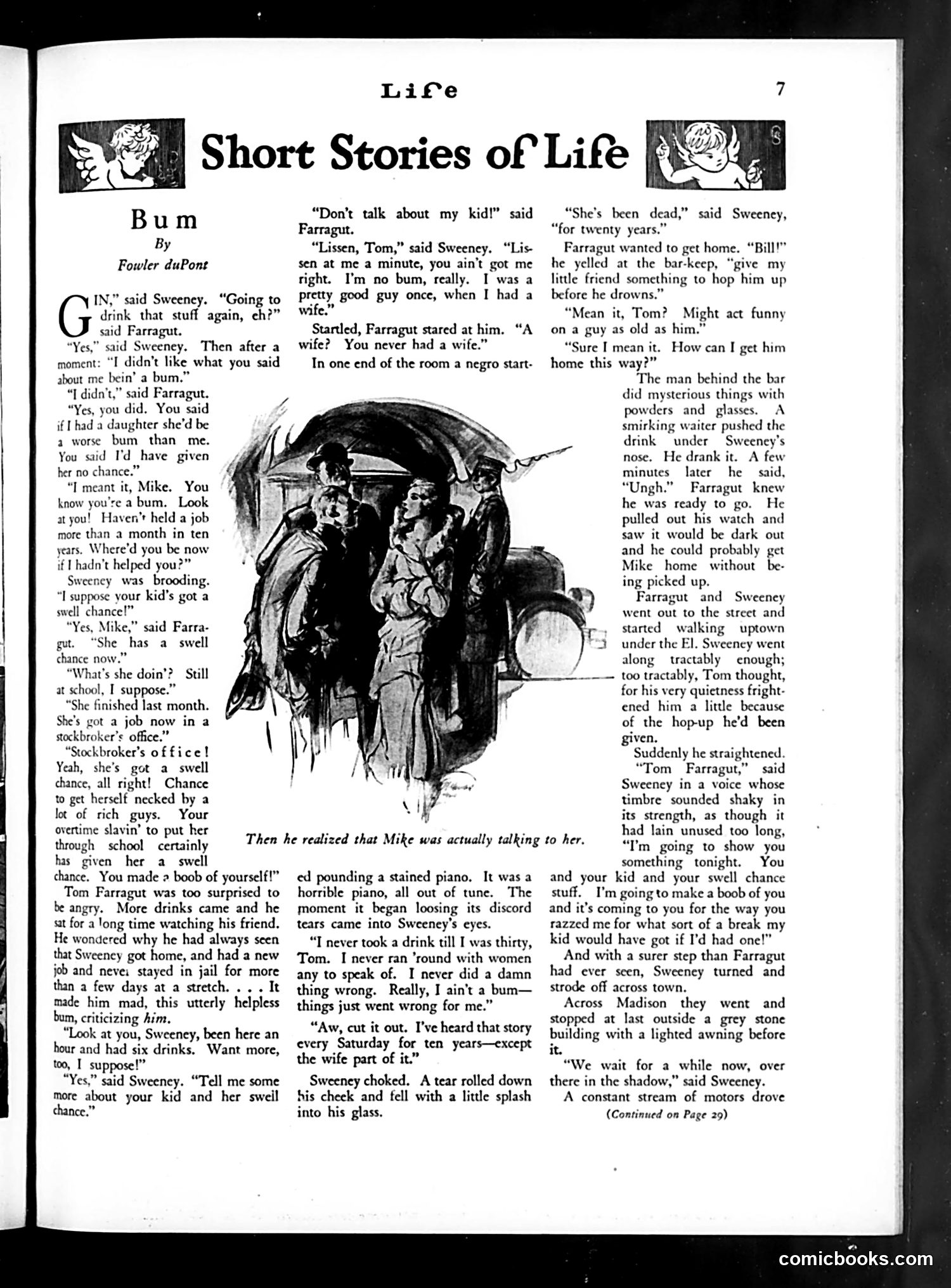
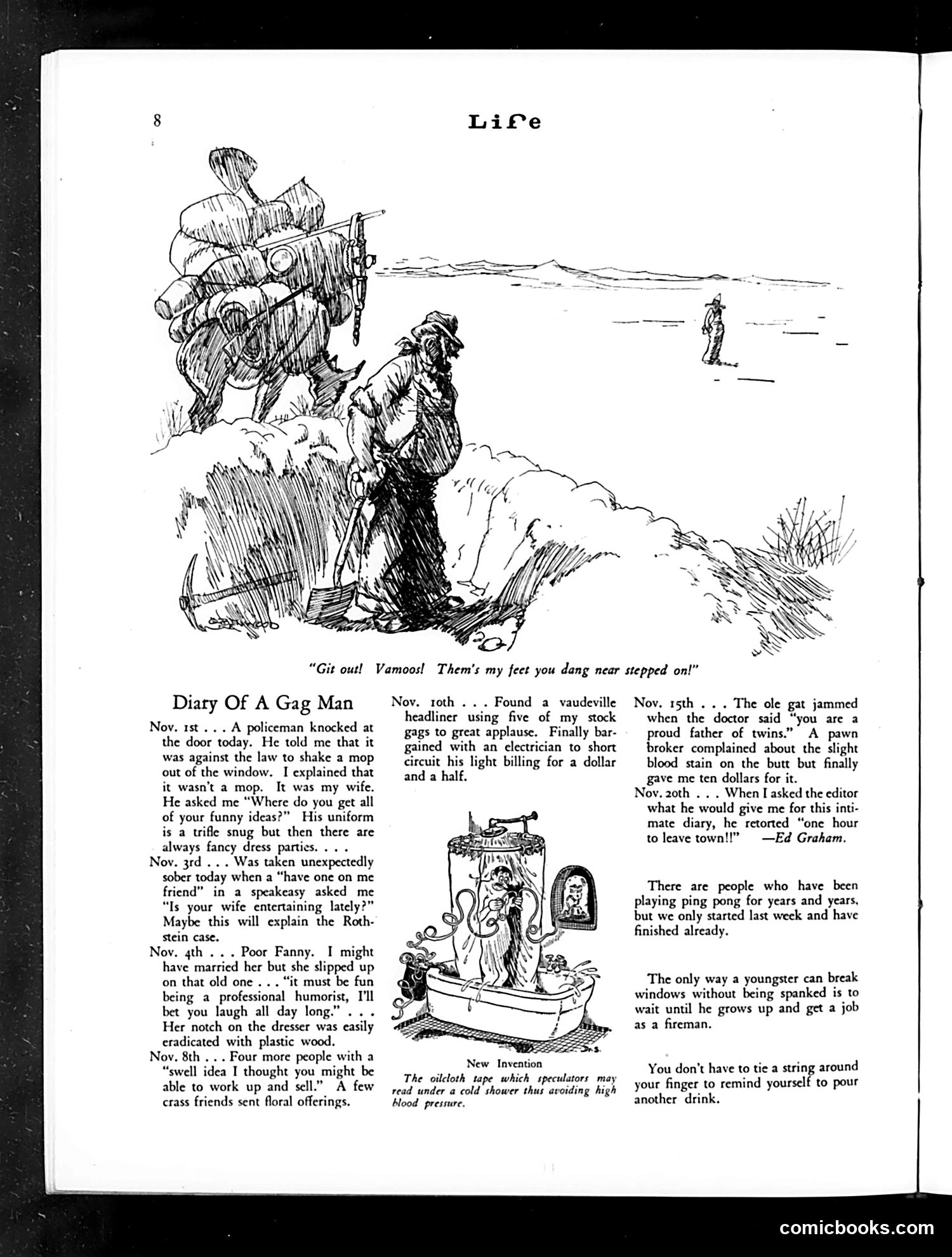
# "Diary of a Gag Man" - Life Magazine Satire This page satirizes professional comedy writing in the early 20th century. The "Diary of a Gag Man" column presents supposedly true anecdotes from a comedy writer's daily life—encounters with policemen, vaudeville performers, and editors—each illustrating absurd or embarrassing situations. The humor targets both the writer's struggles and the ridiculous scenarios he mines for material. The accompanying illustration shows a hobo or vagrant character, fitting the "gag" tradition of slapstick and lowbrow humor. The witty observations at page's bottom mock universal human experiences (ping pong, childhood pranks, drinking rituals), typical of Life's sophisticated humor for educated readers. The vaudeville headliner reference and professional comedy context reflect entertainment industry prominence in that era.
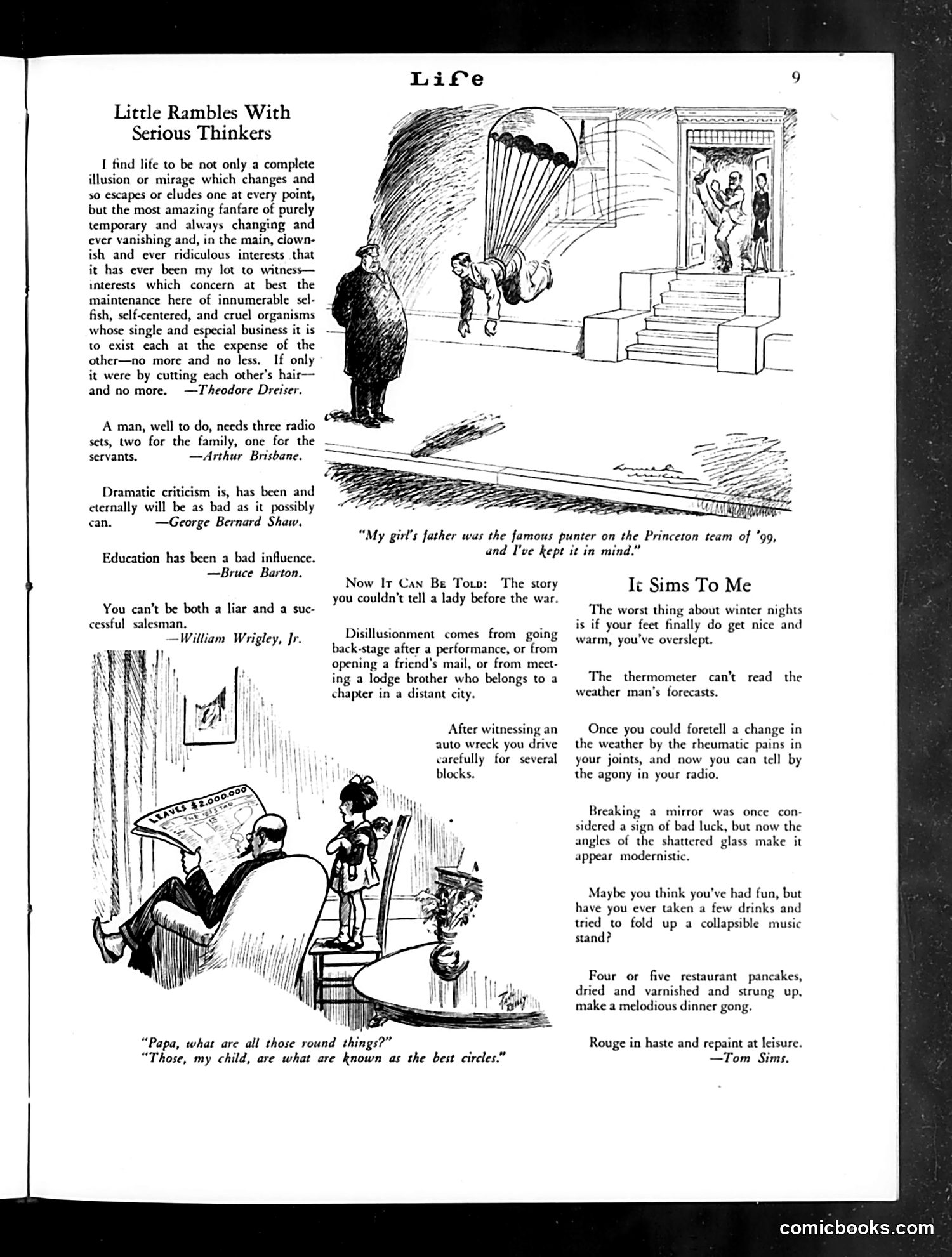
# Analysis of Life Magazine Page 9 This page contains several short humorous observations and two cartoon illustrations rather than a unified political cartoon. **Top cartoon**: Shows a large man holding an umbrella while a small child stands nearby. The caption references "the famous punter on the Princeton team of '99," suggesting nostalgia for college athletic glory—a satirical jab at adults who dwell on past sporting achievements. **Bottom cartoon**: Depicts a father showing his young child a radio dial. The child asks "Papa, what are all those round things?" and the father responds they are "circles"—a gentle joke about children's literal interpretations and the absurdity of radio technology that adults take for granted. The "Little Rambles" section offers cynical observations on human nature, marriage, drama criticism, and education—typical of Life's satirical commentary on contemporary American life.
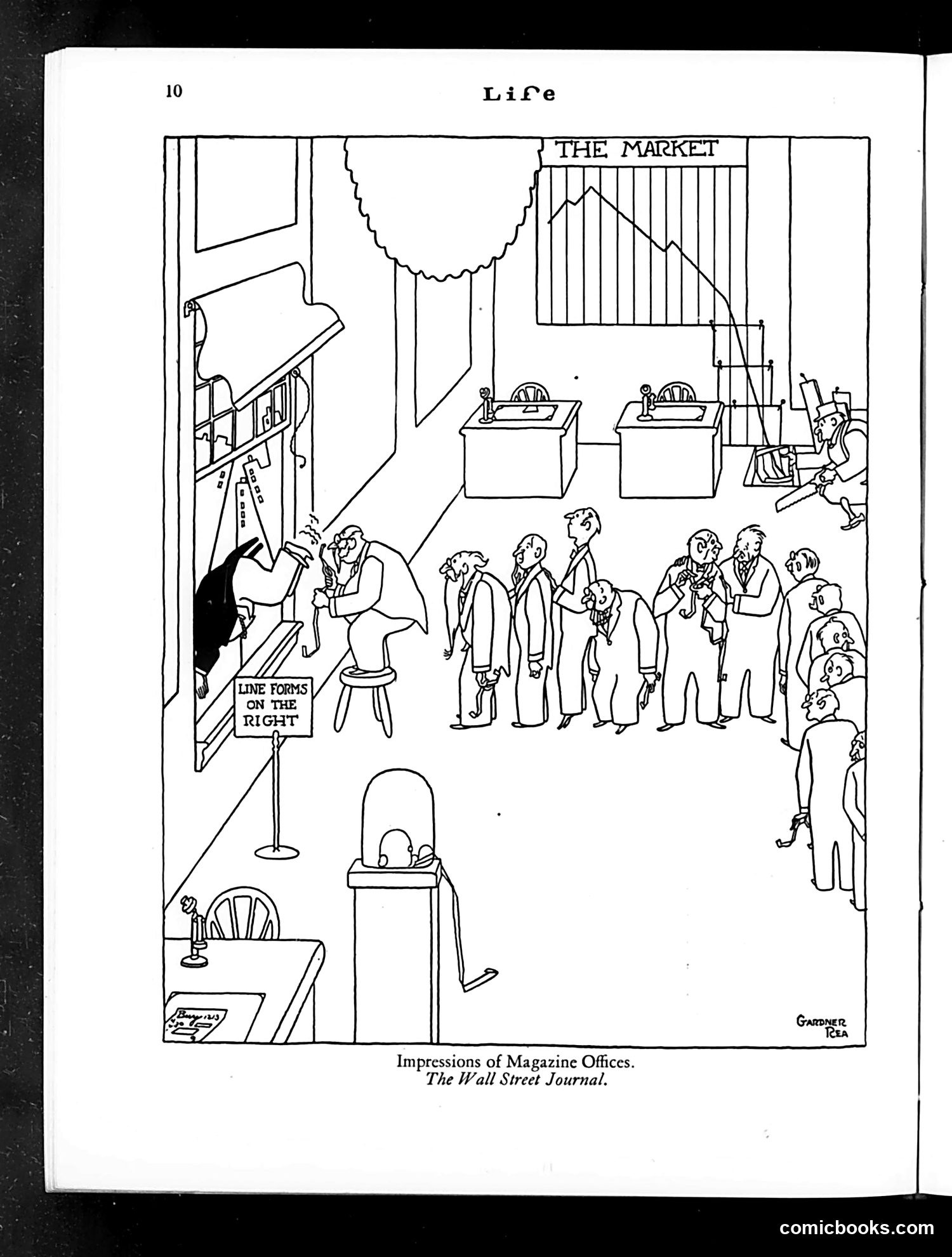
# "The Market" - Magazine Office Satire This cartoon from *Life* magazine satirizes the chaos of a newspaper or magazine office during market fluctuations. The chart labeled "THE MARKET" at top shows declining stock prices, creating panic below. The scene depicts office workers in various states of distress reacting to financial losses. At left, a sign reads "LINE FORMS ON THE RIGHT," suggesting people queuing—likely for unemployment or to submit resignations. The desks with suited figures appear to represent stockbrokers or financial staff. The cartoon critiques how Wall Street market downturns directly impact magazine offices and their staff. The subtitle identifies this as "Impressions of Magazine Offices" relating to *The Wall Street Journal*, suggesting satire about financial news operations being themselves vulnerable to the markets they cover. The humor lies in the immediate, visible human chaos caused by abstract market movements.