A complete issue · 44 pages · 1929
Life — November 22, 1929
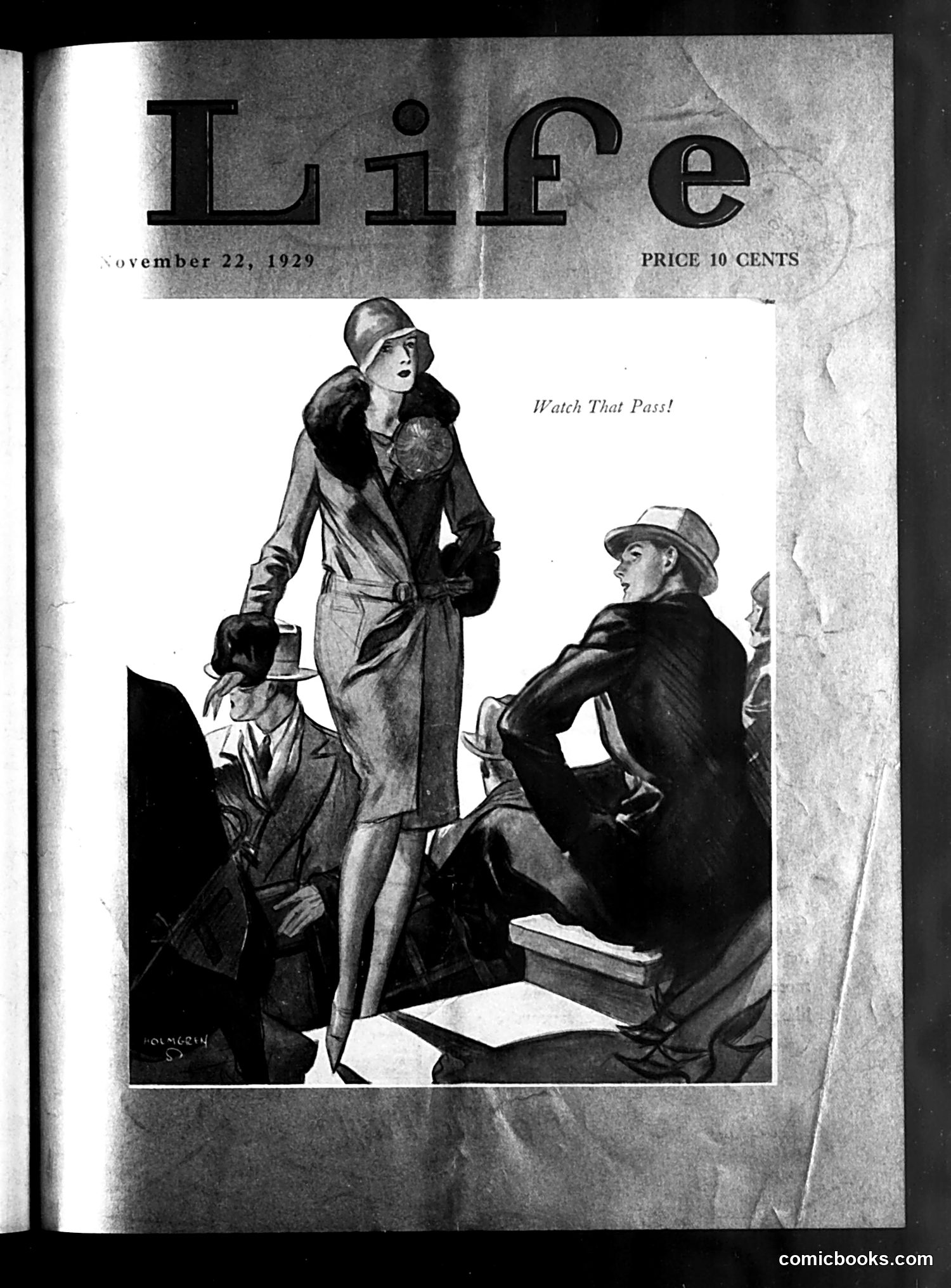
# Analysis of Life Magazine Cover, November 22, 1929 This cover illustration, titled "Watch That Pass!", depicts a social situation from the Jazz Age. A stylishly dressed woman in a cloche hat and fur-collared coat stands prominently among seated men in suits and fedoras, who appear to be watching her intently. The satire likely comments on 1920s social dynamics—specifically the "modern woman" and flirtation customs of the era. The phrase "Watch That Pass!" suggests the men are monitoring or reacting to the woman's movements or behavior, possibly alluding to romantic advances or social maneuvering. This reflects contemporary anxieties about changing gender roles and courtship practices during the socially liberated 1920s.
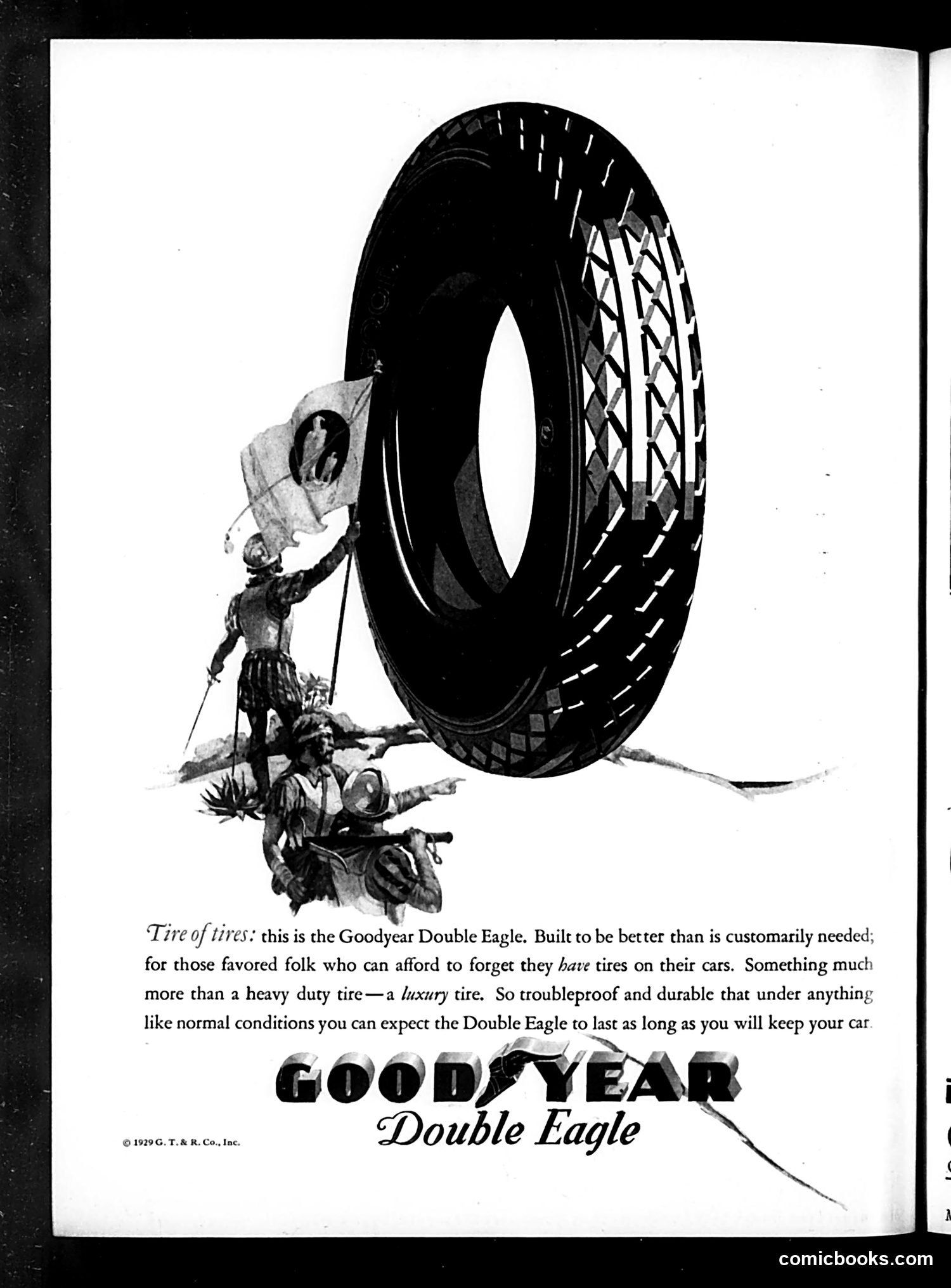
# Analysis This is **not a political cartoon but a 1929 Goodyear tire advertisement**. The page depicts an enormous tire being inspected by tiny figures with surveying equipment, creating a humorous scale comparison to emphasize the tire's impressive size and quality. The ad copy markets the "Double Eagle" as a luxury tire for wealthy customers who can "afford to forget they have tires on their cars"—meaning it's so durable and reliable it requires no maintenance or worry. The phrase "tire of tires" opens the pitch, playing on words. The satirical element is gentle: the exaggerated scale mockingly suggests this tire is almost impossibly superior, suitable only for those wealthy enough to treat such engineering excellence casually. This reflects 1920s advertising's aspirational tone targeting affluent consumers.
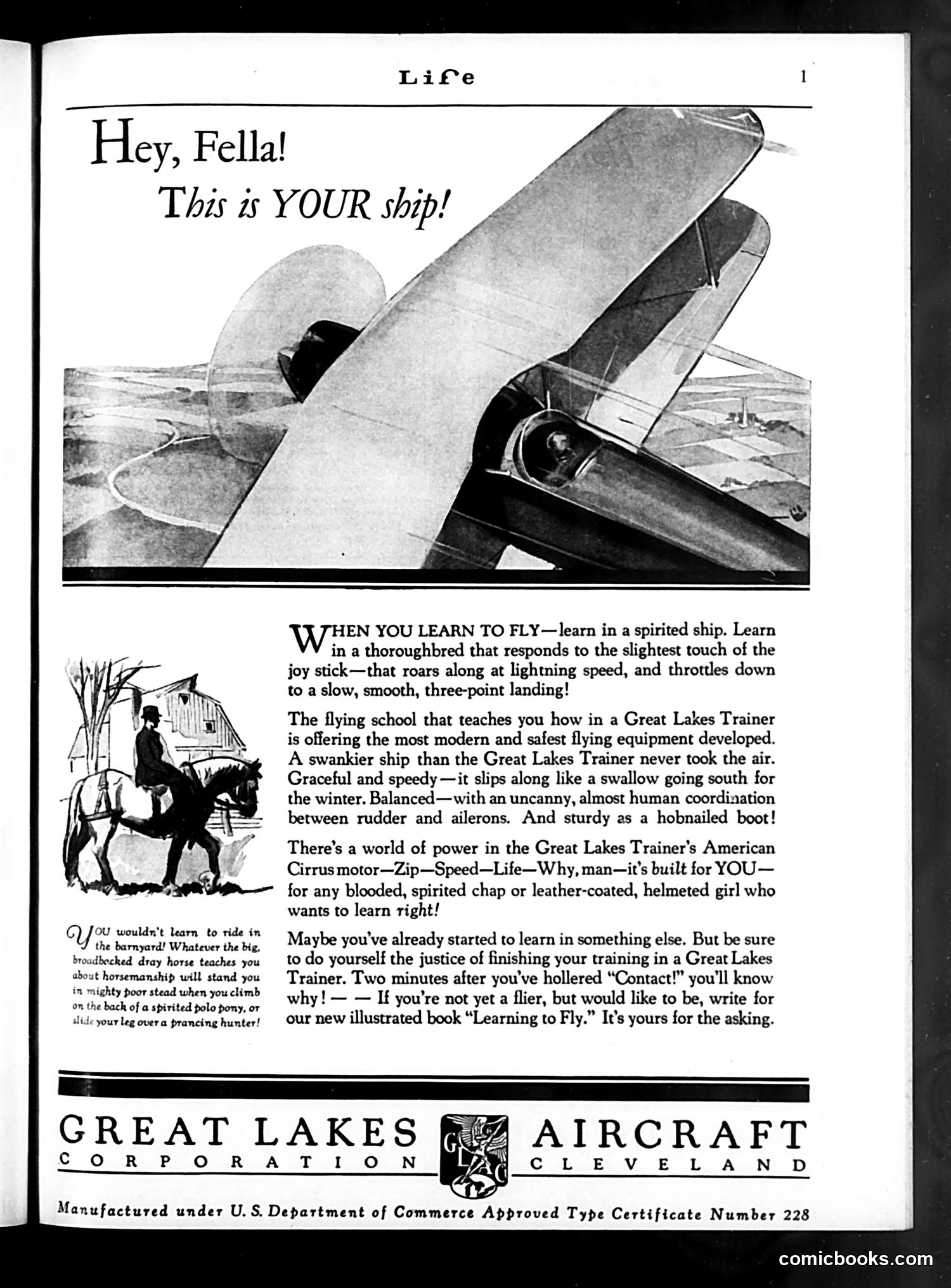
# Analysis This page is **primarily an advertisement**, not satire or political commentary. It's a Great Lakes Aircraft Corporation ad promoting their "Great Lakes Trainer" aircraft for flight training. The ad uses playful comparative humor: it opens with "Hey, Fella! This is YOUR ship!" and includes a sidebar joke comparing learning to fly to learning to ride horses—suggesting flight training is now accessible to ordinary people, not just the elite. The rhetoric emphasizes the aircraft's modern features (responsive controls, smooth landing, durability) and appeals to aspiring pilots of all backgrounds, including women ("helmeted girl who wants to learn right"). This reflects 1920s-30s aviation optimism and the democratization of flying as a leisure/professional skill. The tone is encouraging and informal, marketing flight training as an achievable aspiration for everyday Americans.
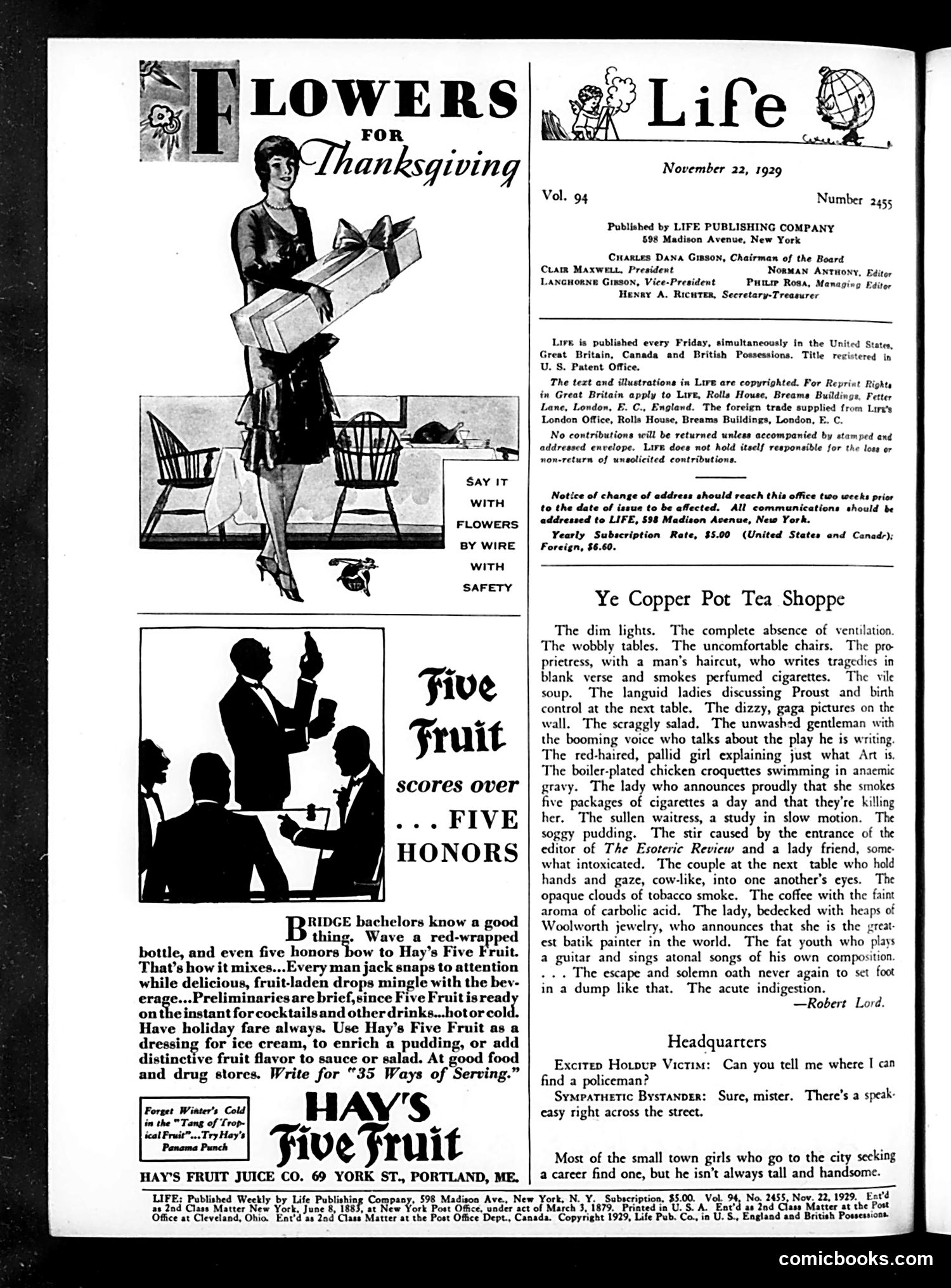
# Analysis This page is primarily **advertising content** rather than political satire. The main visual elements are: 1. **Left side**: A Thanksgiving gift-giving advertisement featuring a woman with large wrapped boxes, promoting flowers "by wire with safety" as Thanksgiving gifts. 2. **Center**: A stylized silhouette advertisement for "Hay's Five Fruit" scoring "five honors," promoting the product for cocktails and holiday entertaining. 3. **Right side**: A satirical article titled "Ye Copper Pot Tea Shoppe" by Robert Lord, which mocks pretentious bohemian tea culture—describing uncomfortable venues where affected intellectuals, would-be artists, and poseurs gather. This is social satire targeting affectation rather than political commentary. The page reflects 1920s consumer culture and satirizes period social pretensions.
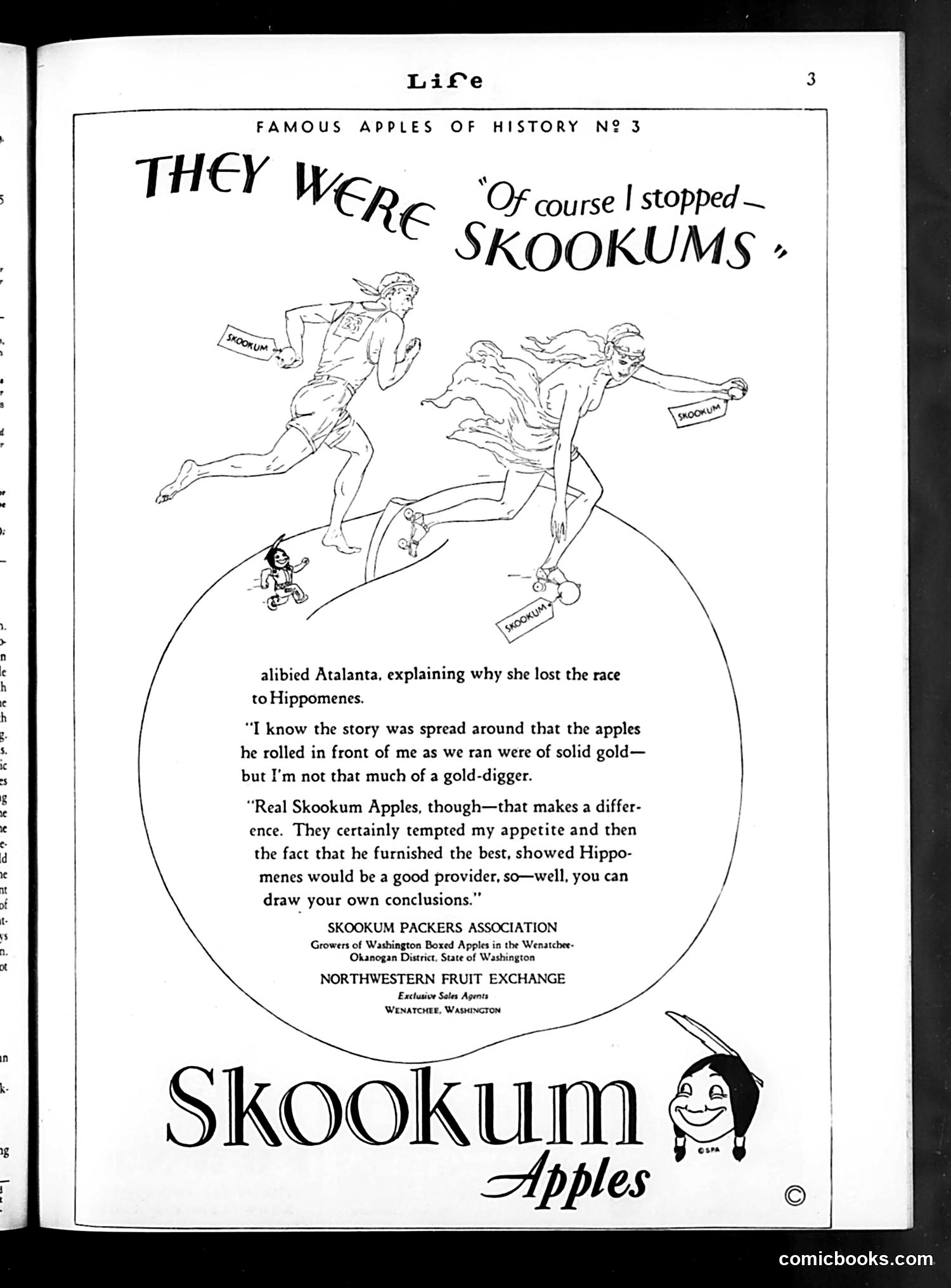
# "Famous Apples of History No. 3: They Were Skookums" This is an advertisement for Skookum brand apples, disguised as humor content. The "famous apples" series parodies historical myths—here referencing Atalanta from Greek mythology, who lost a race to Hippomenes because she stopped to pick up golden apples he dropped. The ad's joke: Atalanta claims she stopped not for gold apples, but for genuine Skookum apples—which were so tempting that winning the race mattered less than eating quality fruit. This reversed the mythological narrative to promote the product's superior taste and appeal. The ad credits the Skookum Packers Association and Northwestern Fruit Exchange in Washington state. The cartoon style and satirical framing made advertising entertaining while promoting regional Washington apples to consumers.
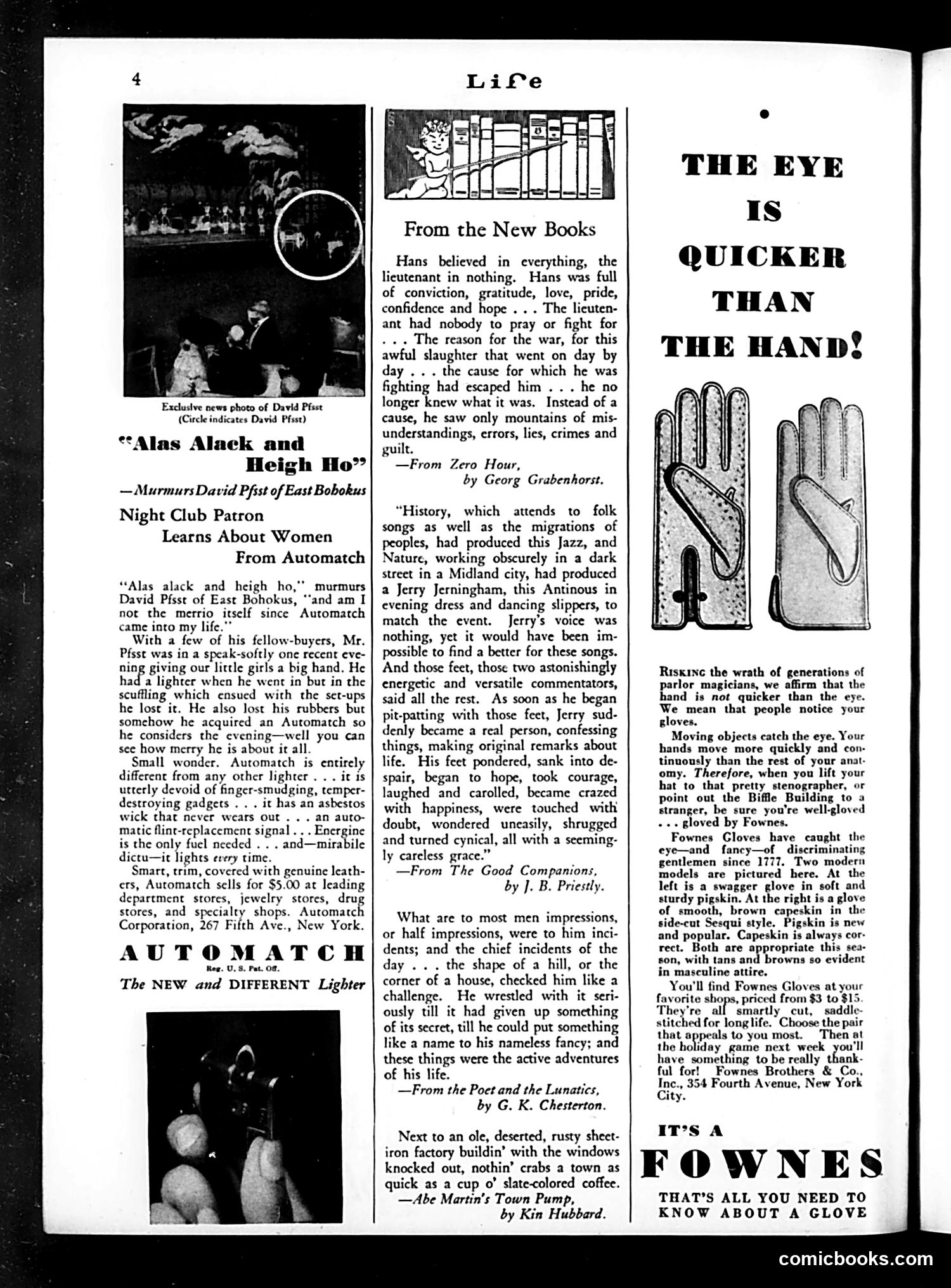
# Content Analysis This page is primarily **advertising and literary excerpts**, not political satire. The left side features an **Automatch lighter advertisement** with a photo credited to David Pfist, and a section titled "Night Club Patron Learns About Women From Automatch" — a humorous vignette about the product. The right side contains **two advertisements**: one for Fownes Gloves (with illustrations of hands demonstrating the gloves' quality) and prominent text stating "THE EYE IS QUICKER THAN THE HAND!" — a sales pitch emphasizing visual appeal. The center includes **literary excerpts** from contemporary books like *Zero Hour* and *The Good Companions*, offering no political commentary. This is a typical 1920s-30s Life magazine page mixing commercial promotions with cultural content—no cartoon satire is present.
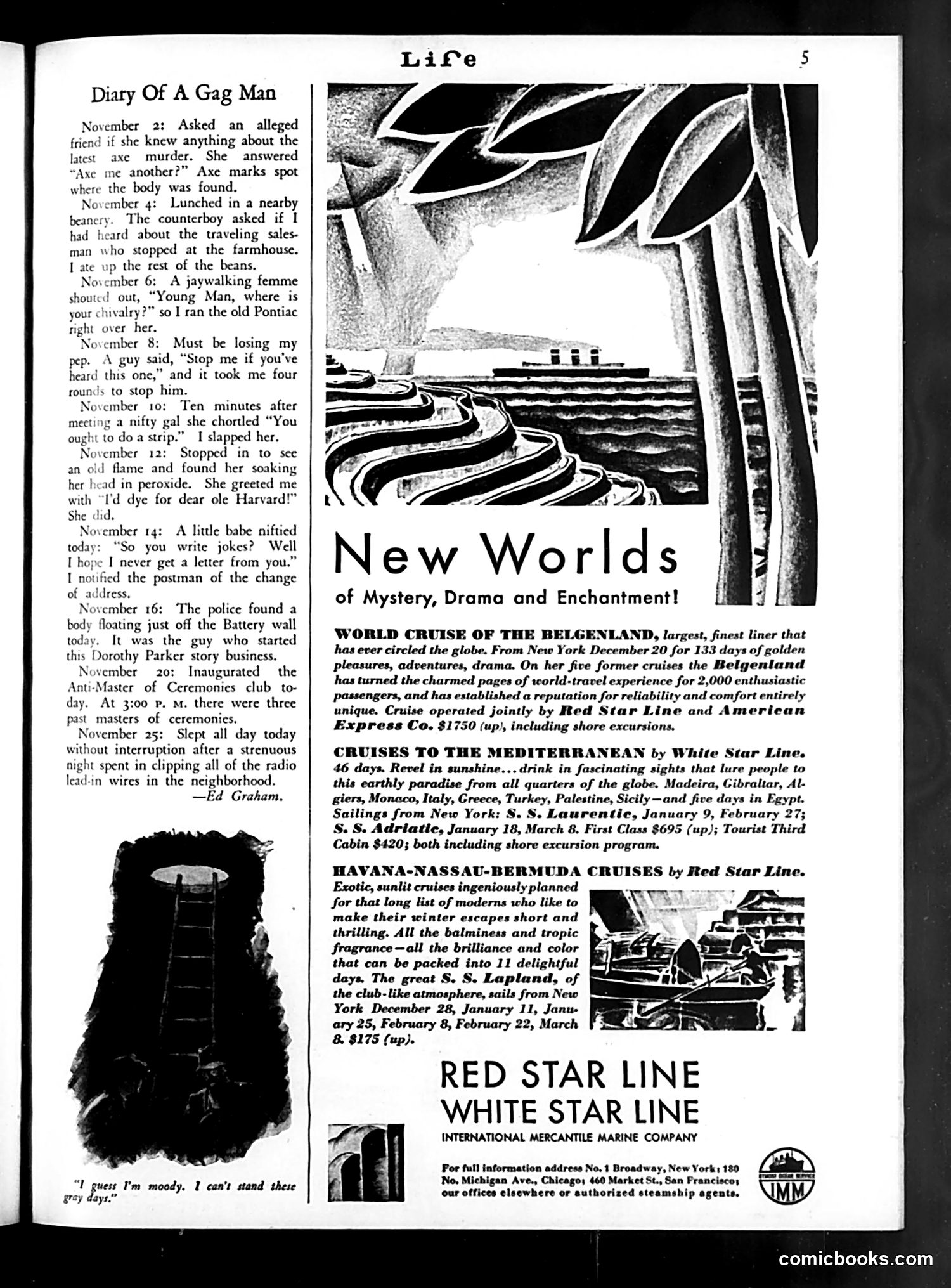
# Analysis This page is primarily **advertising** for cruise lines (Red Star Line, White Star Line, and American Express Co.), occupying the right two-thirds of the page. On the left is **"Diary of a Gag Man,"** a satirical column documenting a comedic writer's November misadventures. The entries mock various situations: a murder reference ("Axe me another?"), farm life, romantic pursuits, police encounters, and social embarrassments. The humor relies on wordplay and absurdist scenarios typical of 1920s-30s magazine comedy. Below the diary is a single-panel cartoon showing a dejected figure in what appears to be a confined space, with the caption "I guess I'm moody. I can't stand these grey days." This illustrates the gag-man's emotional state—likely referencing depression or seasonal melancholy. The content targets readers seeking lighthearted entertainment and travel opportunities.
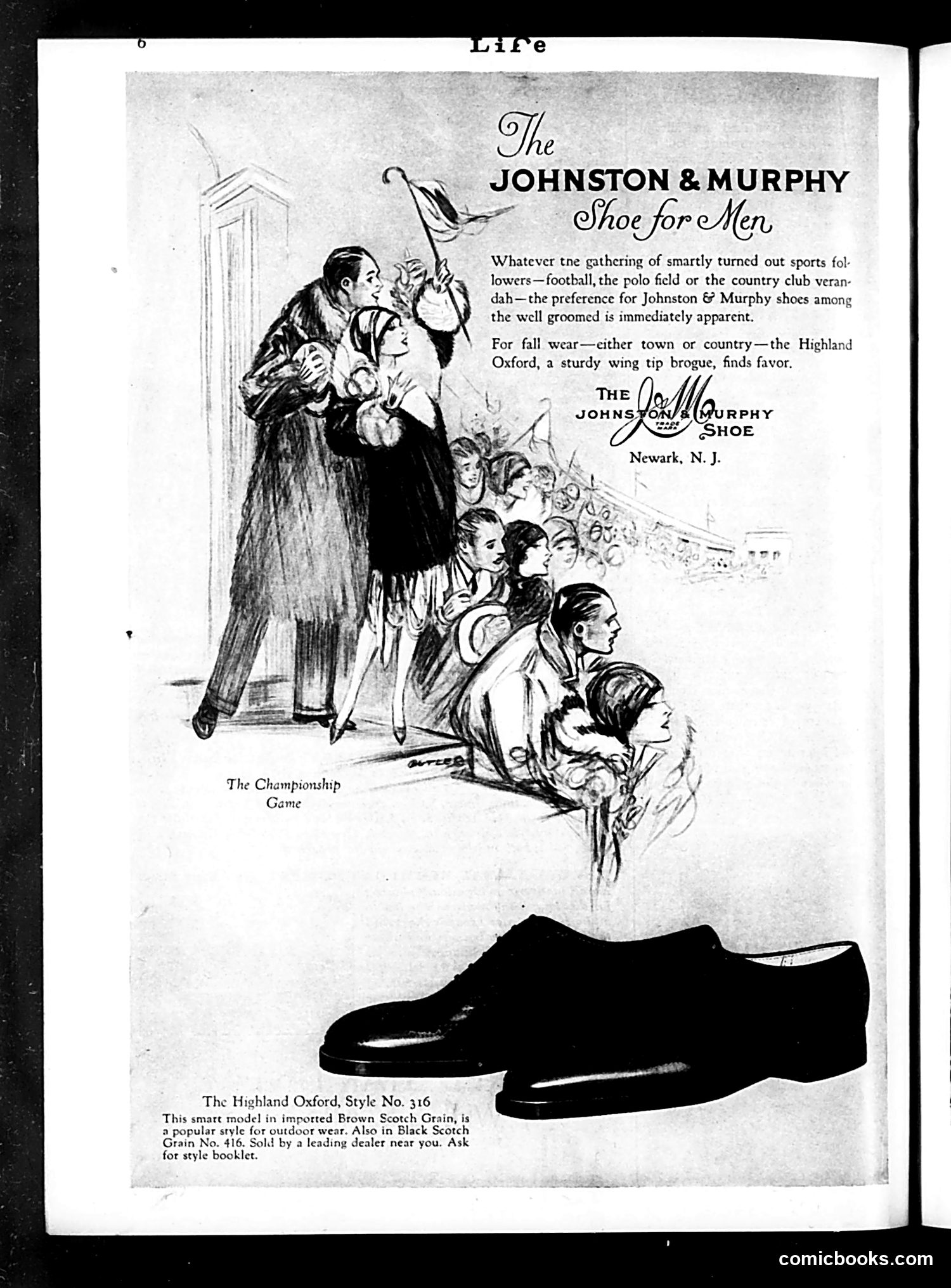
# Johnston & Murphy Shoe Advertisement This is a **straightforward advertisement**, not political satire. The page promotes Johnston & Murphy shoes for men, manufactured in Newark, New Jersey. The illustration depicts "The Championship Game"—well-dressed gentlemen at a sporting event, with one man pointing enthusiastically at the action. The ad emphasizes that Johnston & Murphy shoes are preferred by "smartly turned out sports followers" at events like football, polo, and country clubs. The featured shoe is the Highland Oxford (Style No. 316), described as suitable for both town and country wear, available in brown and black scotch grain. The humor is gentle and aspirational rather than satirical—the ad associates wearing these shoes with belonging to an affluent sporting elite.
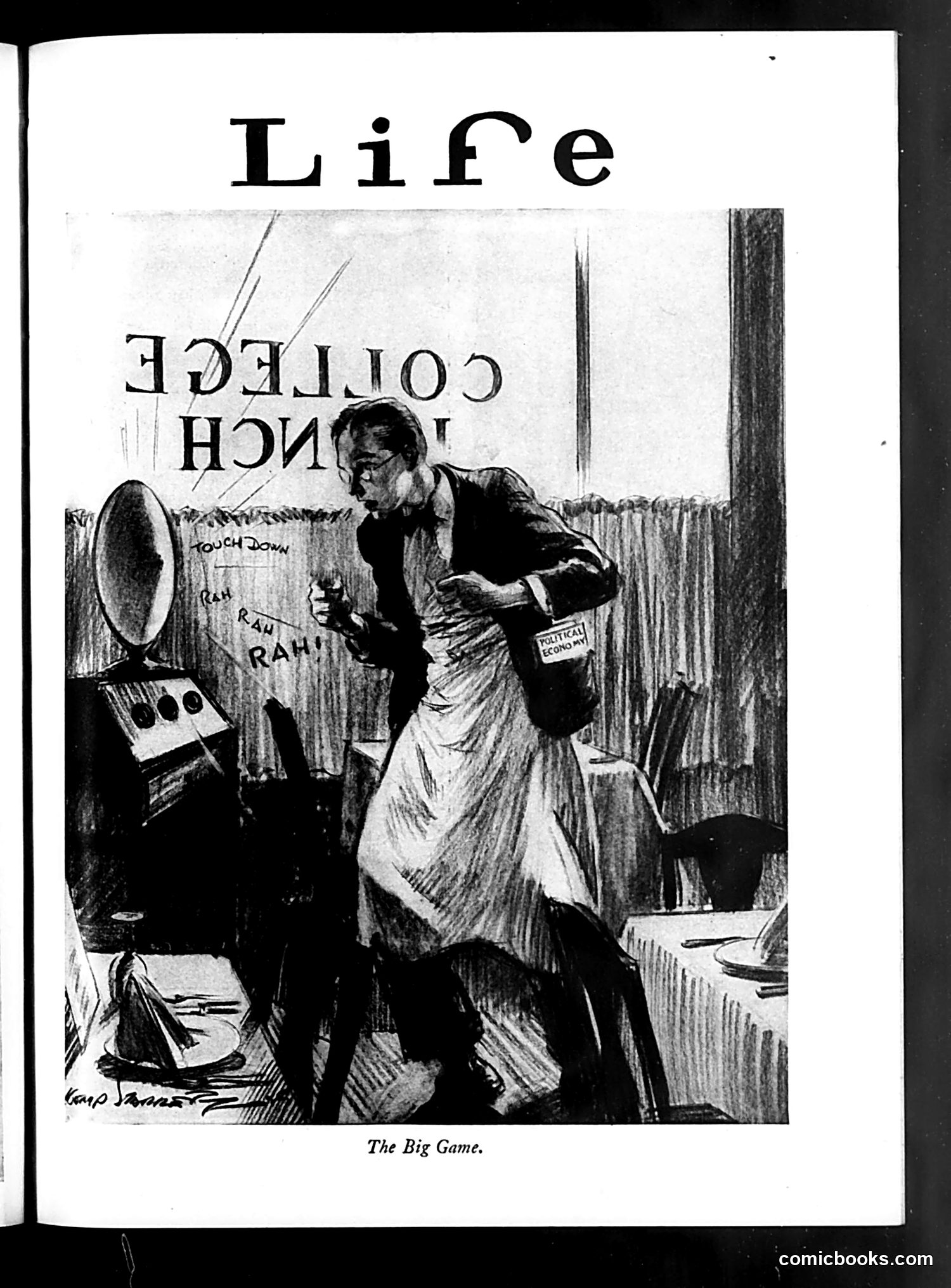
# "The Big Game" - Life Magazine Cartoon This satirical cartoon depicts a man in business attire appearing to manipulate or control a woman in a dress like a puppet or doll. The setting suggests an office or commercial space, with visible text including "TOUCH DOWN," "RAH RAH," and what appears to be "AMERICAN" branding. The title "The Big Game" uses sports terminology as metaphor. The cartoon satirizes how women were treated as objects to be controlled or "played" in commercial and social contexts. The puppet-like pose, combined with the sports reference, suggests commentary on how women's autonomy was compromised in business dealings or romantic/social "games" of the era. The satire critiques male dominance and the objectification of women in early 20th-century American society.
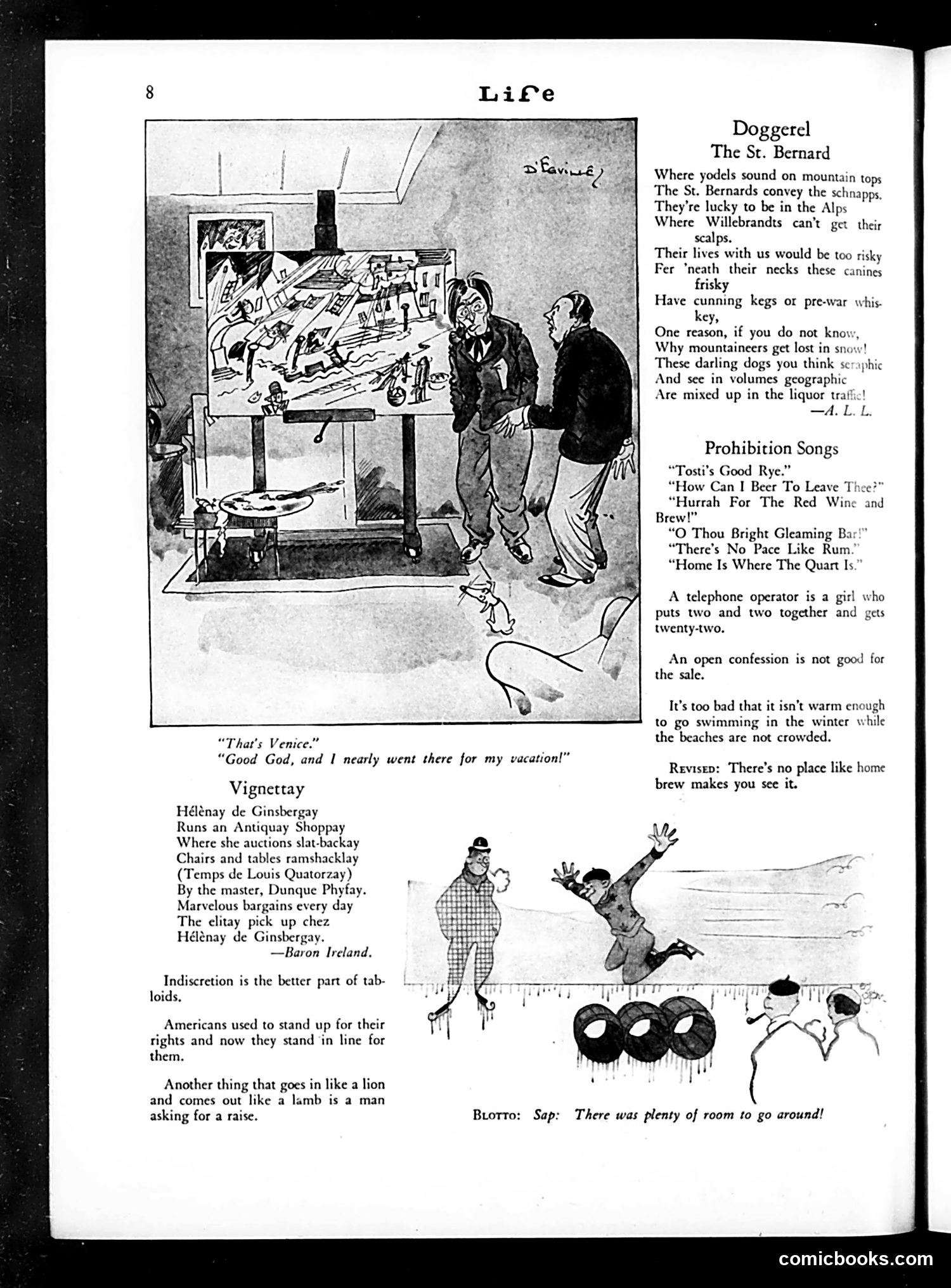
# Analysis of Life Magazine Page 8 This page contains three separate satirical pieces typical of early 20th-century Life magazine humor: **"That's Venice"** (top cartoon): Two men view a cluttered, chaotic interior scene. The caption implies someone almost went there for vacation, suggesting the depicted mess is comparable to Venice's notorious overcrowding or disorder. **"Vignettay"** (middle): A poem about Hélénay de Ginsbergay's antiquary shop, mocking French-sounding names and implying disorganized commerce through references to "ramshackle" furniture auctions. **"Blotto"** (bottom cartoon): Depicts someone diving into what appears to be shallow water or snow, with onlookers. The caption "There was plenty of room to go around!" satirizes reckless behavior or poor judgment. The page represents Life's typical blend of social commentary through humor targeting contemporary leisure, consumer culture, and human folly.
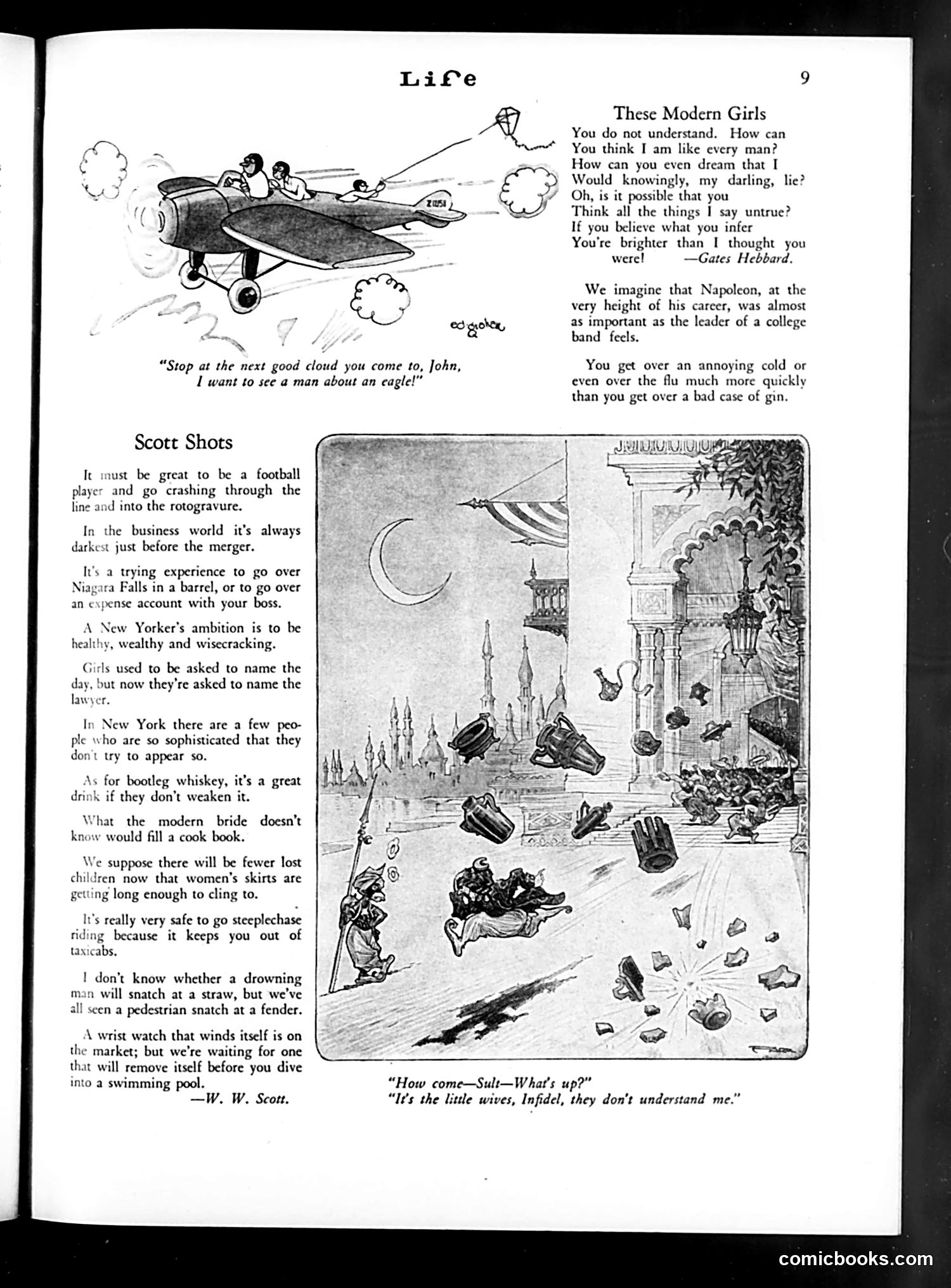
# Page Analysis: Life Magazine, Page 9 **Top Section - "These Modern Girls":** A satirical poem by Gates Hebbard critiques modern women who claim independence but expect men to believe their stories uncritically. The accompanying airplane cartoon shows women piloting/riding in an aircraft, visually supporting the poem's theme about women's changing roles and ambitions. **Bottom Section - "Scott Shots":** W.W. Scott's humorous observations about contemporary life include jokes about business competitiveness, New York ambitions, marriage, and prohibition-era drinking. The large cartoon depicts chaotic Arabian/Orientalist architecture with figures and falling objects—likely satirizing exotic fantasies or possibly foreign affairs, though the specific reference is unclear from context alone.
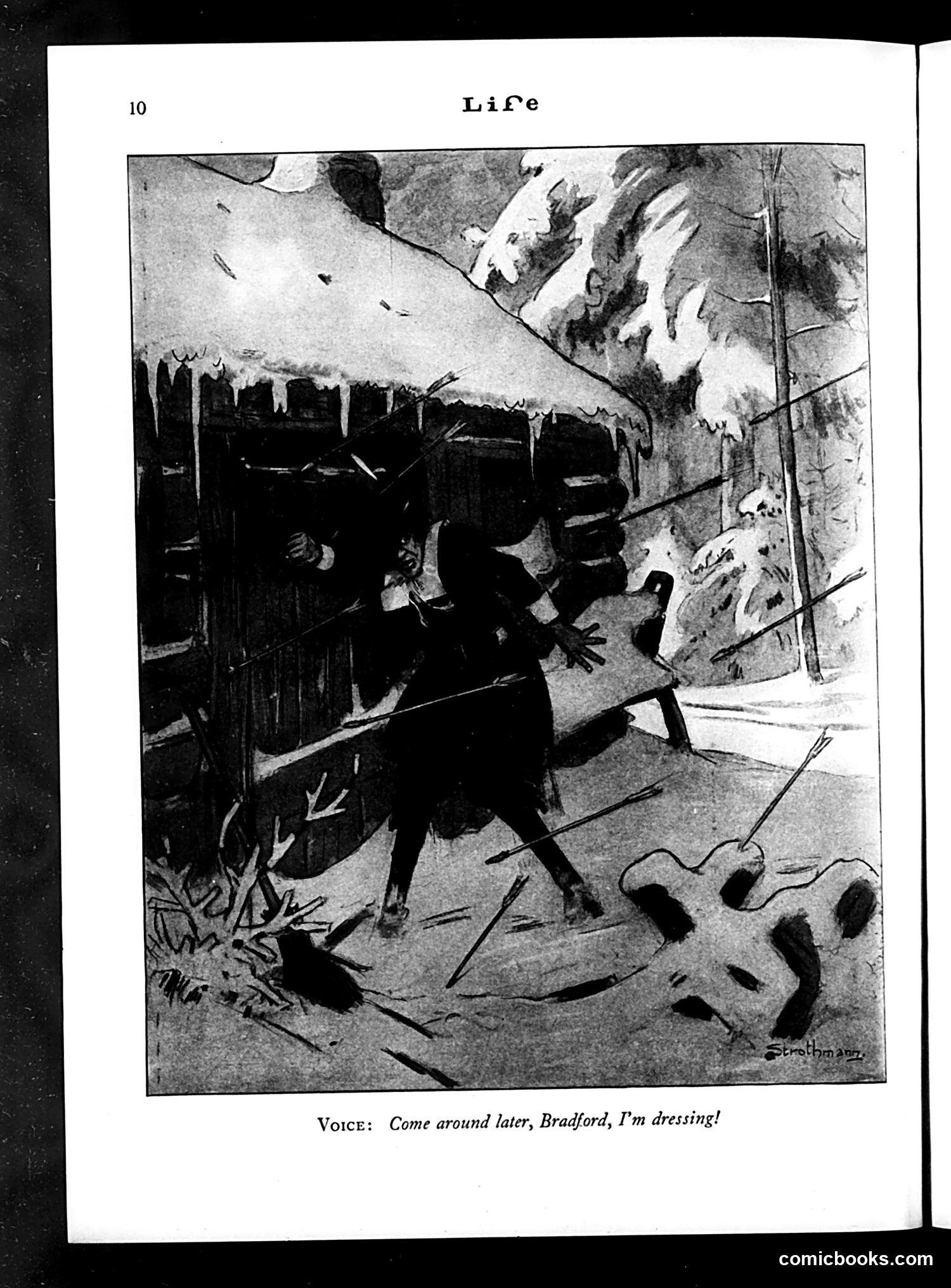
# Analysis This is a satirical cartoon from *Life* magazine (page 10) depicting what appears to be a winter or ice-cave scene. A silhouetted figure is shown near an icy overhang with icicles, and the voice caption reads: "Come around later, Bradford, I'm dressing!" The cartoon satirizes social pretension or vanity—specifically, someone primping or getting ready despite being in crude, primitive circumstances (an ice cave). The humor lies in the contrast between the harsh environment and the speaker's concern with appearance and propriety. "Bradford" appears to be a contemporaneous name suggesting upper-class society. Without additional context about the magazine's date or current events referenced, the specific target of satire remains unclear, though it likely mocks affectation or class-consciousness among wealthy individuals.