A complete issue · 40 pages · 1929
Life — October 25, 1929
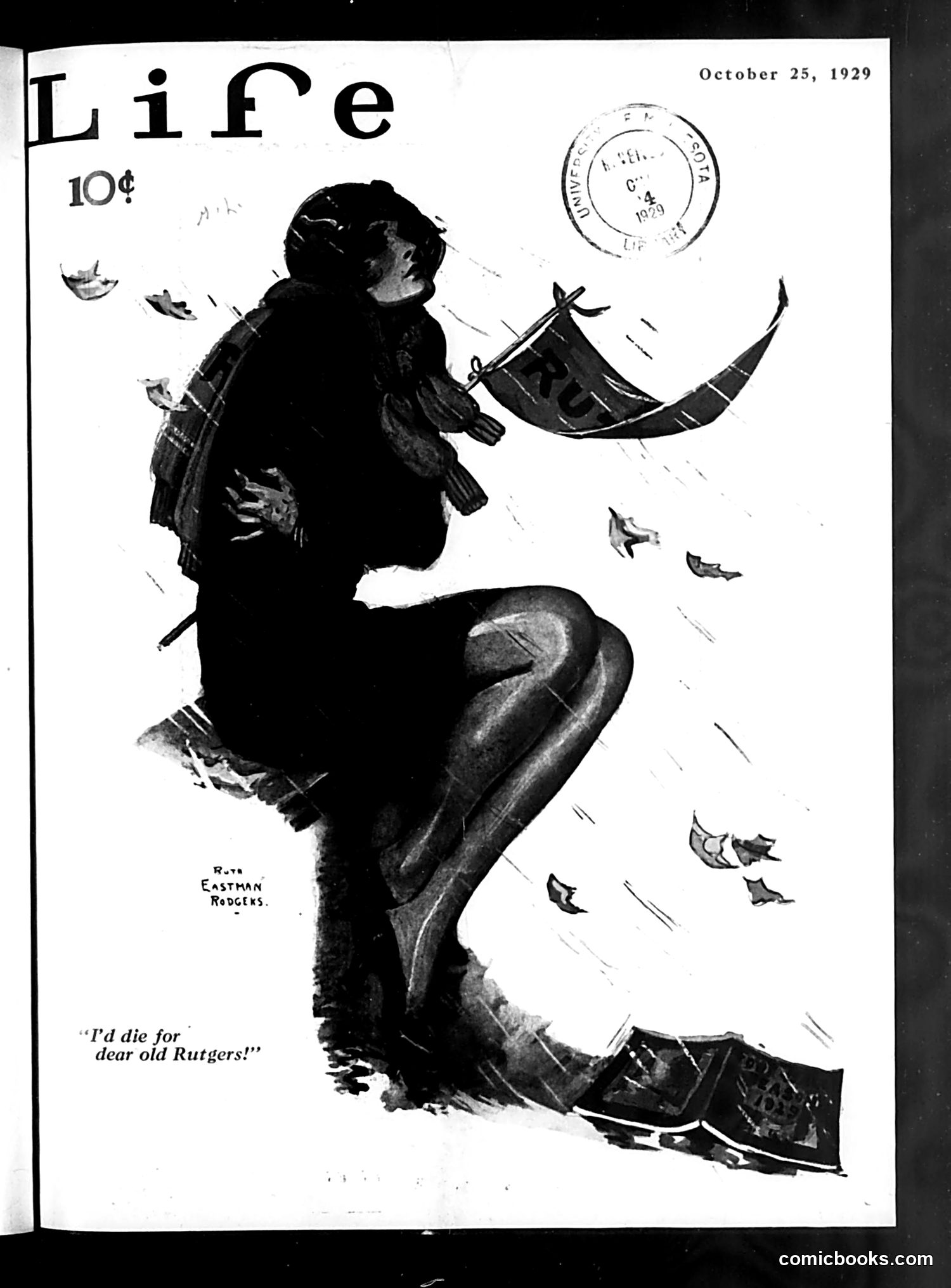
# Life Magazine Cover, October 25, 1929 This cover by Ralph Barton depicts a figure in academic robes (likely representing Rutgers University, given the caption "I'd die for dear old Rutgers!") caught in a windstorm of falling papers and debris. The dramatic pose—legs kicked up, papers swirling—suggests chaos and upheaval. **Context:** This was published just days after **Black Tuesday (October 29, 1929)**, the stock market crash that triggered the Great Depression. The swirling papers likely represent financial documents, stock certificates, and monetary chaos. The satire mocks college loyalty and institutional pride in the face of economic catastrophe—the figure's devotion to Rutgers seems absurdly trivial against the financial destruction engulfing the nation.
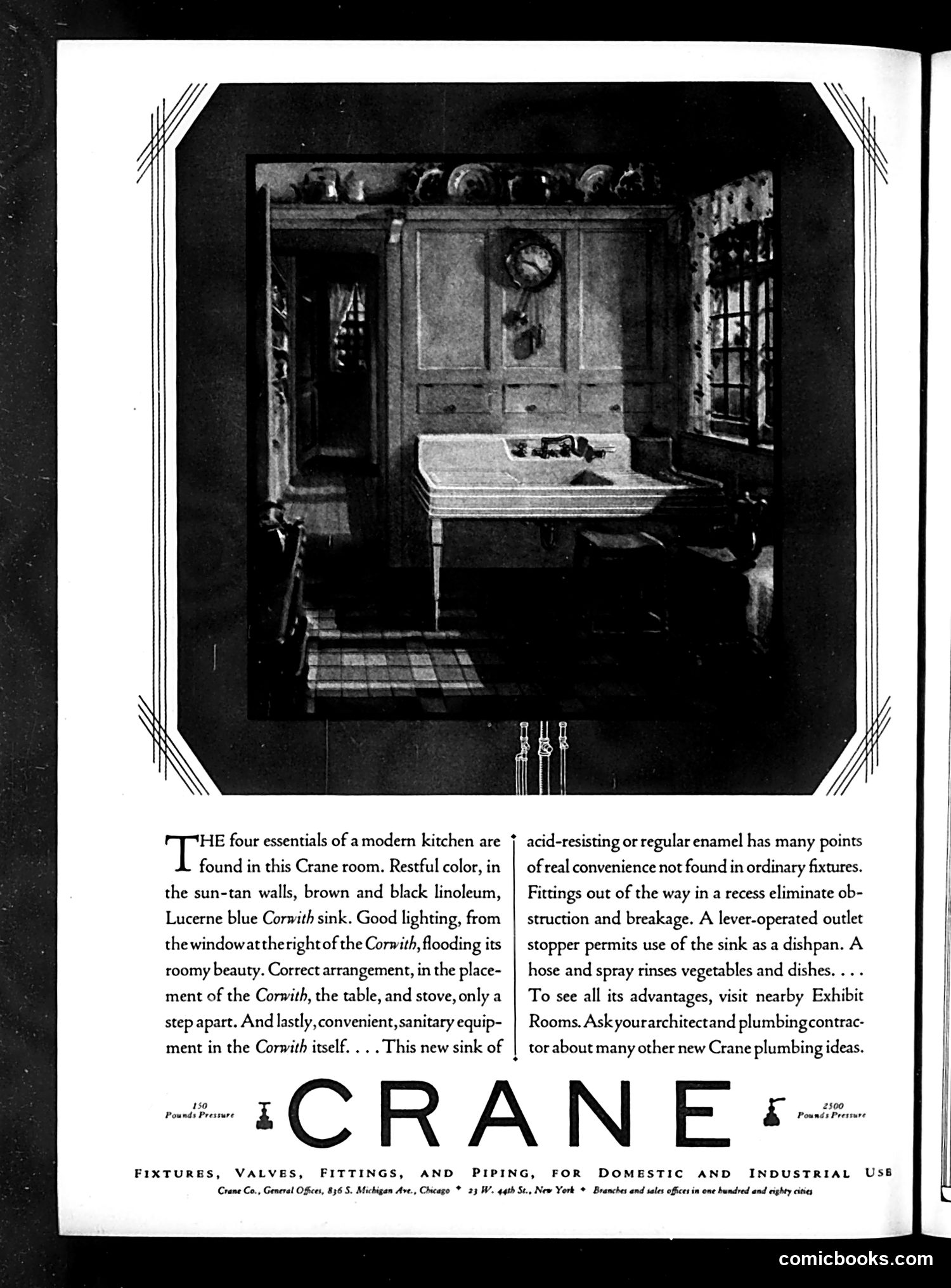
This page is primarily a **product advertisement**, not satirical content. It showcases a Crane plumbing company kitchen display, highlighting modern fixtures from what appears to be the early 20th century. The ad emphasizes four "essentials of a modern kitchen": aesthetic "restful color" (sun-tan walls, brown and black linoleum), functional design, good lighting from the window, and "convenient, sanitary equipment"—specifically a Crane Cornith sink. The text promotes the sink's practical features: acid-resistant enamel, recessed fittings to reduce obstruction, a lever-operated outlet stopper, and spray capabilities for rinsing dishes. This represents the era's marketing of kitchen modernization as a sign of progress and domestic convenience, likely targeting middle-class homeowners seeking up-to-date fixtures.
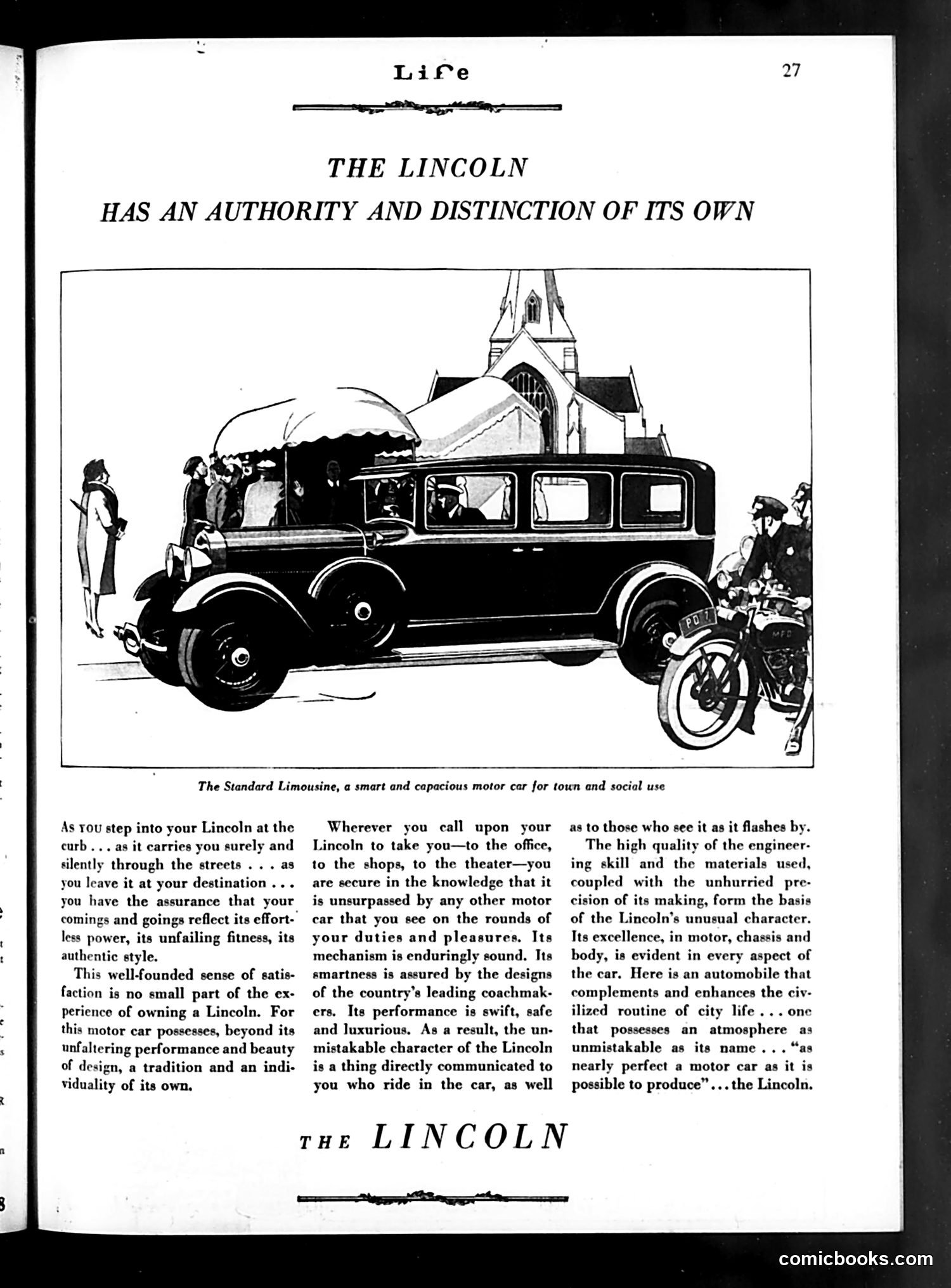
# Analysis This page contains **advertising, not satire or political commentary**. It's a full-page advertisement for Cadillac, La Salle, and Fleetwood automobiles from the Cadillac Motor Car Company (a General Motors division). The ad promotes these as "the most highly perfected and completely appointed motor-cars ever created," emphasizing luxury features like safety glass, harmonized steering, and Fisher/Fleetwood body styling. It highlights technical innovations: V-type engines, Syncro-Mesh transmission, and four-wheel brakes. There are no cartoon figures, caricatures, or political references. The decorative border and typography are period design elements typical of 1920s-30s magazine advertising. This represents straightforward automotive marketing rather than satirical content.
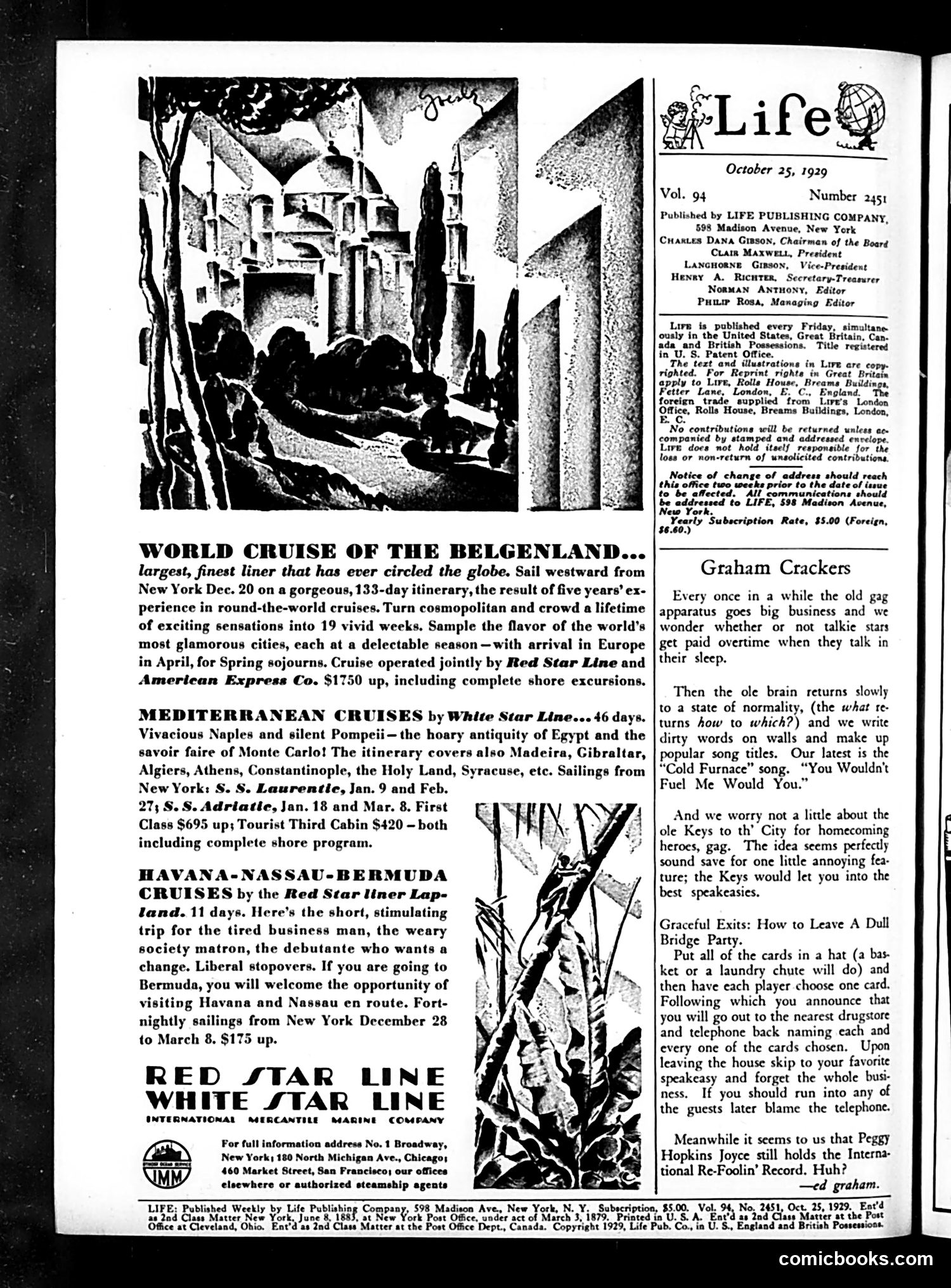
# Analysis This page is primarily **advertising for cruise lines** (Red Star Line, White Star Line, Belgenland), not political satire. The left side features a dramatic illustration of what appears to be a **Middle Eastern or North African street scene** with architecture and figures—likely marketing imagery for the Belgenland's world cruise departing December 20, 1929. The right side contains a brief humor column titled **"Graham Crackers"** discussing comedians and entertainment. It references vaudeville acts, talkie stars' salaries, and mentions **Peggy Hopkins Joyce**, a 1920s celebrity known for publicity and multiple marriages. The humor is light observational comedy about show business, not political commentary. This is essentially a magazine page mixing travel advertisements with light entertainment gossip—typical Life magazine content from 1929.
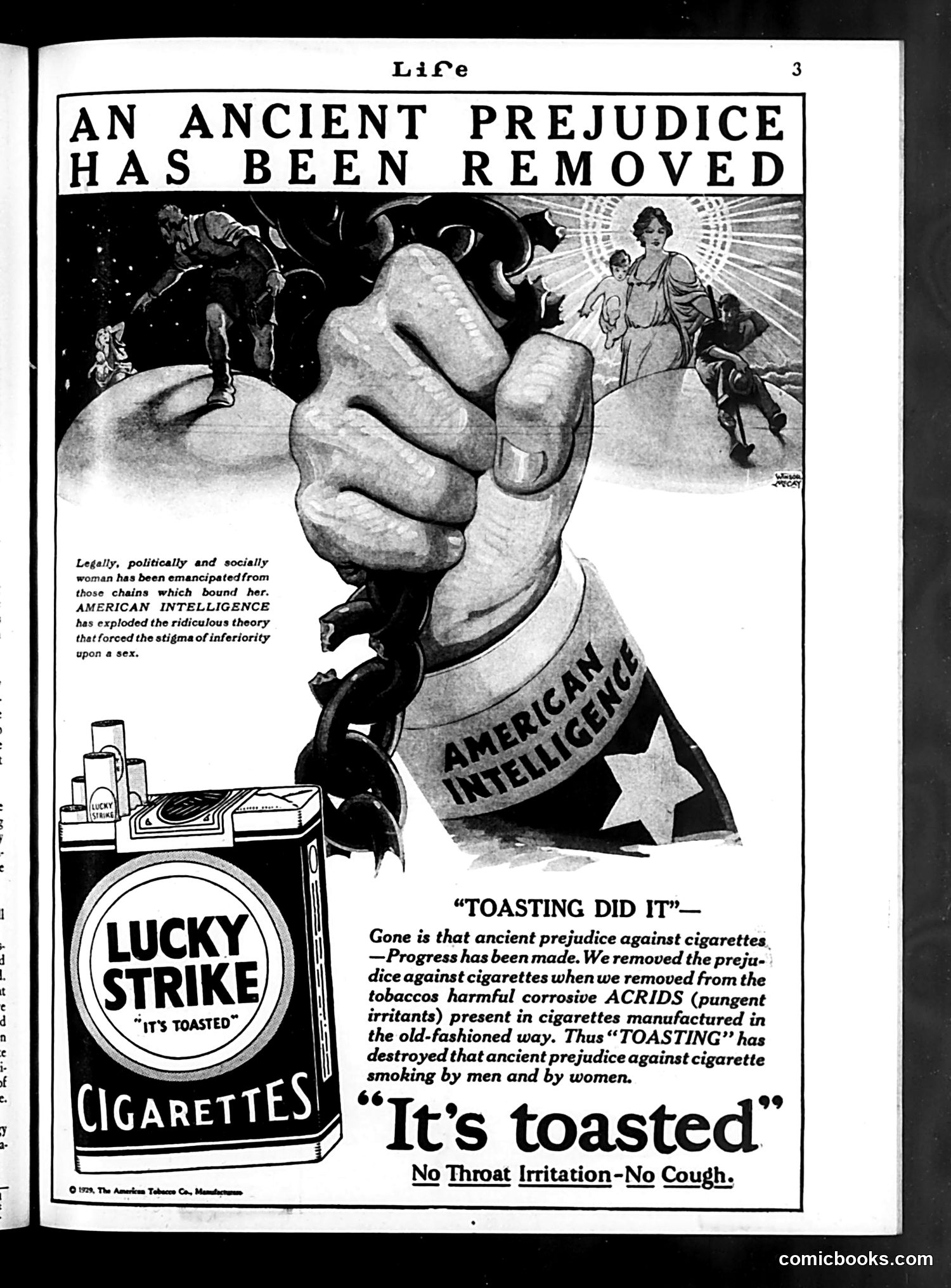
# Analysis This is a **Lucky Strike cigarette advertisement** disguised as social commentary. The headline "An Ancient Prejudice Has Been Removed" uses a giant fist labeled "American Intelligence" to symbolically crush chains, suggesting progress toward women's equality. However, the actual message is commercial: Lucky Strike claims their "toasting" process removes harmful acids from tobacco, making cigarettes safe for both men and women to smoke. The advertisement cynically conflates women's liberation with cigarette consumption, implying that smoking represents modern emancipation. The irony—lost on contemporary readers but evident today—is that this marketing deliberately targets women by framing cigarettes as symbols of freedom, while obscuring tobacco's health dangers. It's propaganda dressed as progressive messaging.
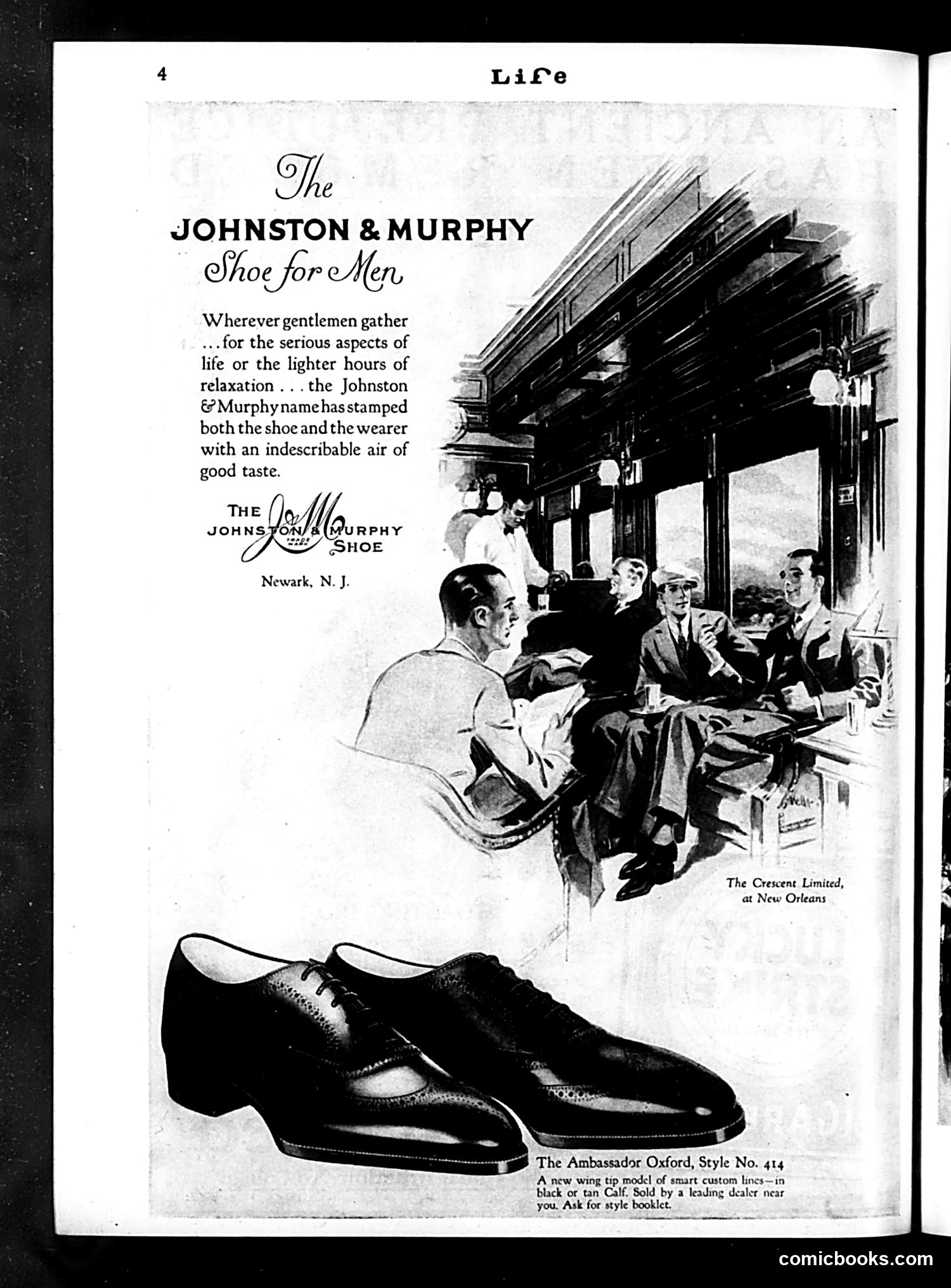
# Johnston & Murphy Shoe Advertisement This page is **primarily a commercial advertisement**, not political satire. It promotes Johnston & Murphy shoes for men, manufactured in Newark, N.J. The ad features two components: 1. **Illustrated scene**: Gentlemen in business attire gathered in what appears to be an upscale social setting (identified as "The Crescent Limited, at New Orleans"), establishing the shoe brand's association with refined, leisured masculinity. 2. **Product image**: "The Ambassador Oxford, Style No. 414," displaying black oxford shoes with a wing-tip design. The marketing copy emphasizes how the Johnston & Murphy name conveys "an indescribable air of good taste" among gentlemen in both serious and recreational contexts. This is aspirational branding targeting middle-to-upper-class male consumers through appeals to social status and refinement.
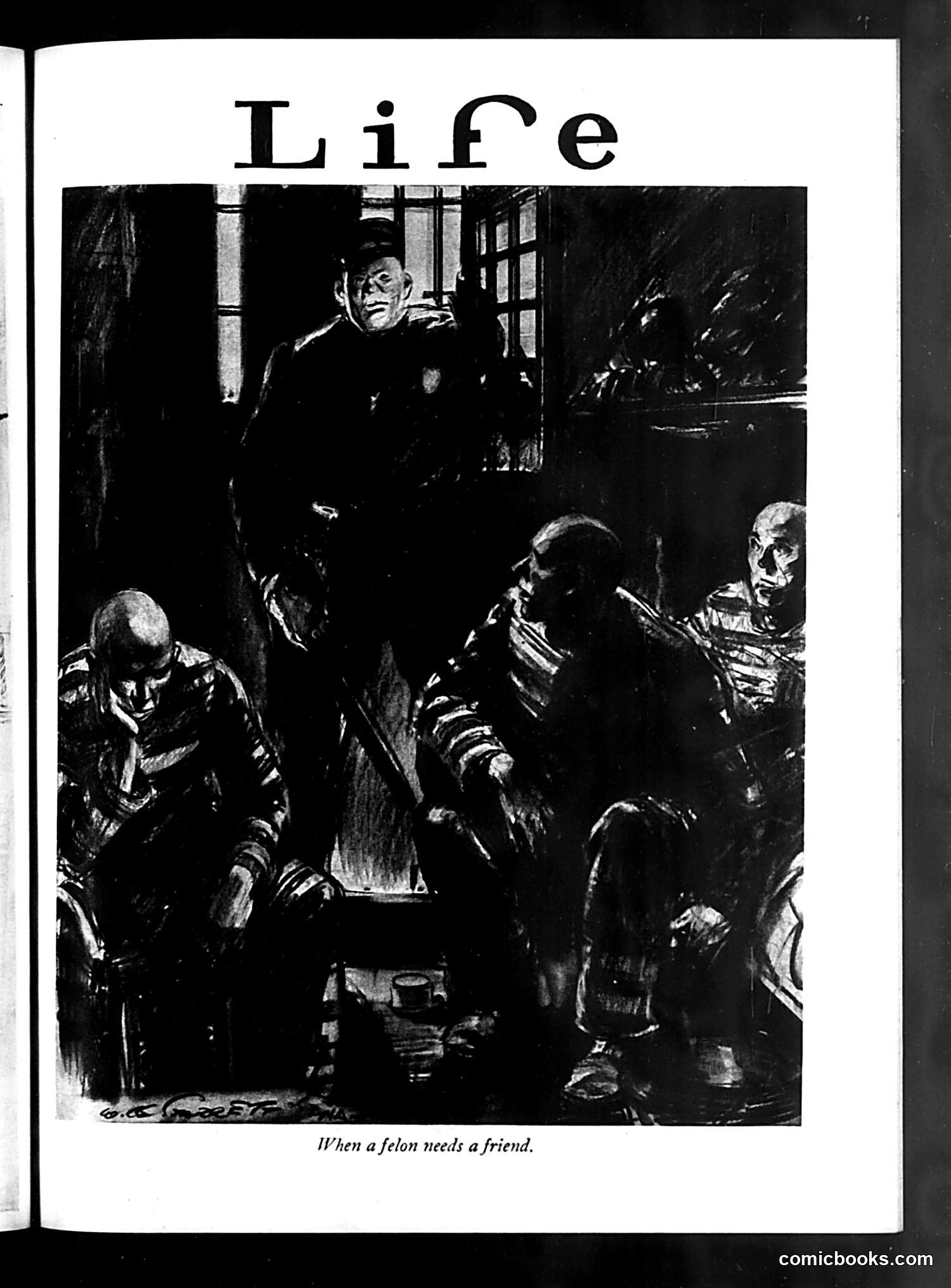
# "When a Felon Needs a Friend" This Life magazine cartoon satirizes prison conditions or criminal justice. The image shows a stern authority figure (likely a warden or official) standing over several emaciated, roughly-dressed prisoners. The caption's darkly ironic title suggests commentary on the treatment of incarcerated people—implying that prisoners in this era received minimal care or support. The stark, expressionistic art style emphasizes the prisoners' gaunt, skeletal appearances, contrasting sharply with the well-dressed official overseeing them. This appears to be social satire criticizing either prison neglect, harsh treatment of inmates, or the inadequacy of support systems for the incarcerated. Without a visible date, the specific historical context remains unclear, though such critiques were common in early-to-mid 20th century American publications.
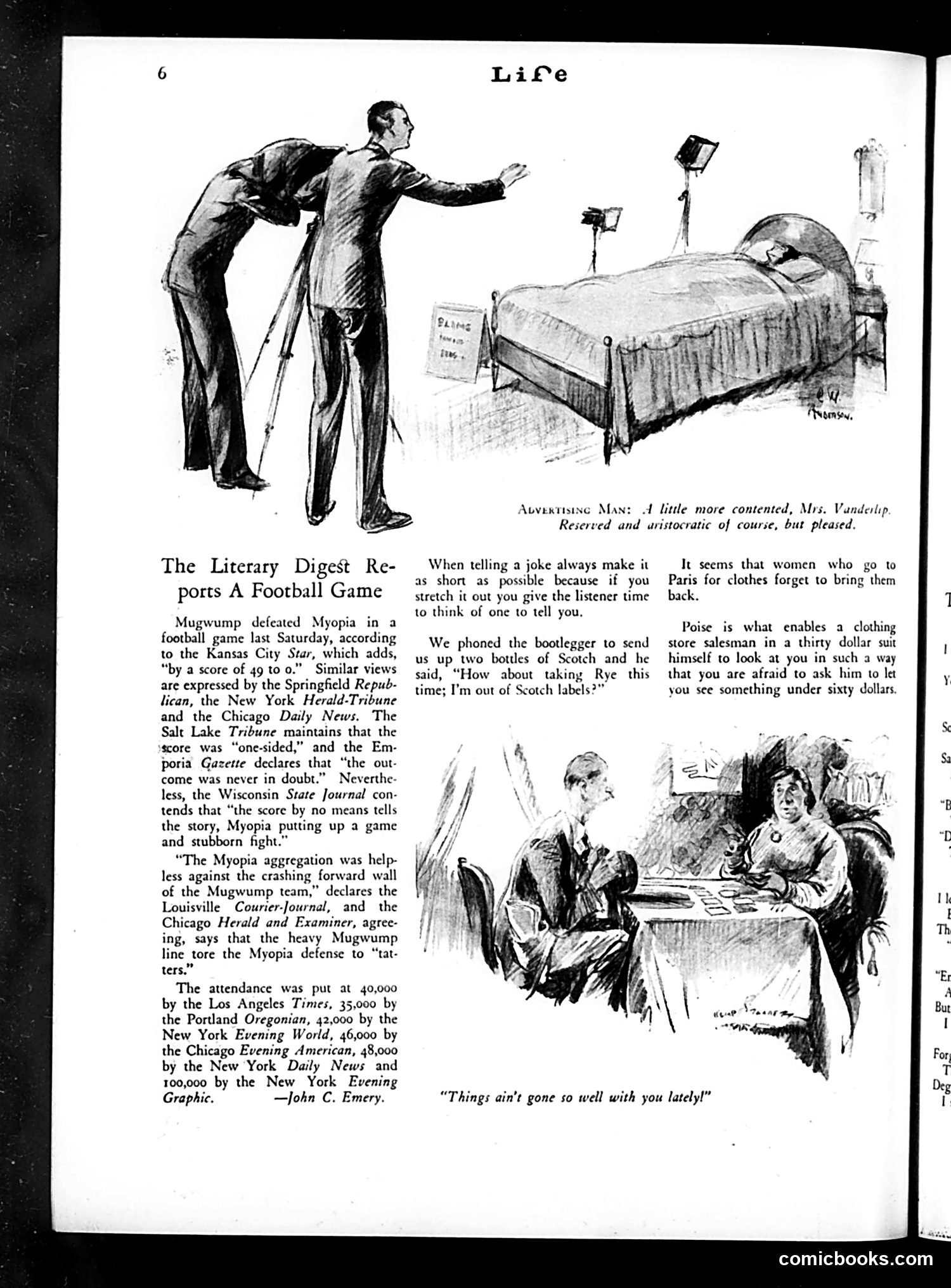
# Analysis of Life Magazine Page 6 This page contains three distinct satirical pieces: 1. **"The Literary Digest Reports A Football Game"** (left column): A commentary on how newspapers exaggerate or sensationalize sports coverage. It humorously catalogs conflicting accounts of a Mugwump-versus-Myopia football game, showing how different papers reported wildly different scores and interpretations of the same event—satirizing unreliable journalism. 2. **Top cartoon**: An advertising man directing a bedroom scene with film lights, captioned about a reluctant but "pleased" Mrs. Vanderlip. This mocks invasive advertising practices and loss of privacy. 3. **Bottom cartoon**: Titled "Things ain't gone so well with you lately!"—shows what appears to be a couple in domestic discord, likely satirizing marital troubles or relationship decline in modern life. The page overall critiques journalism reliability, commercialism, and social complications of the era.
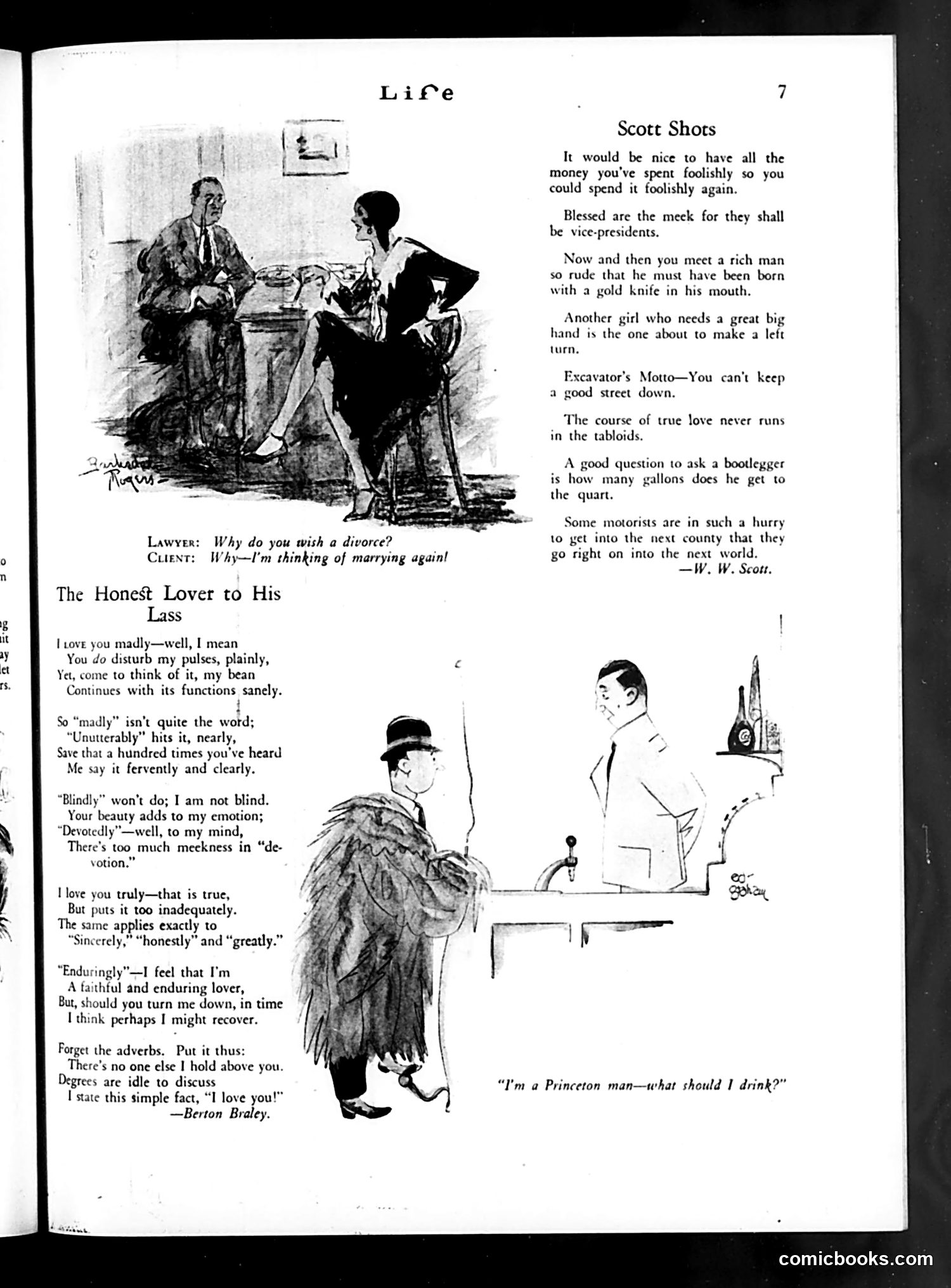
# Analysis of Life Magazine Page 7 **Top Cartoon:** A lawyer asks a client why he wants a divorce; the client replies he's considering remarrying instead. The joke mocks the impulsiveness of romantic decisions—the man hasn't even finalized his first marriage's dissolution before contemplating another. **"Scott Shots" Column:** W.W. Scott's witty observations about wealth, romantic prospects, bootleggers, and motorists. Notable: references to bootleggers and "gallons to the quart" allude to Prohibition-era illegal alcohol trade and measurement deception—indicating this is from the 1920s Prohibition period. **Bottom Cartoon:** A man in shabby clothes asks a bartender what he should drink, identifying himself as "a Princeton man"—satirizing educated, wealthy men reduced to poverty, likely due to economic hardship or Prohibition's effects on their social standing.
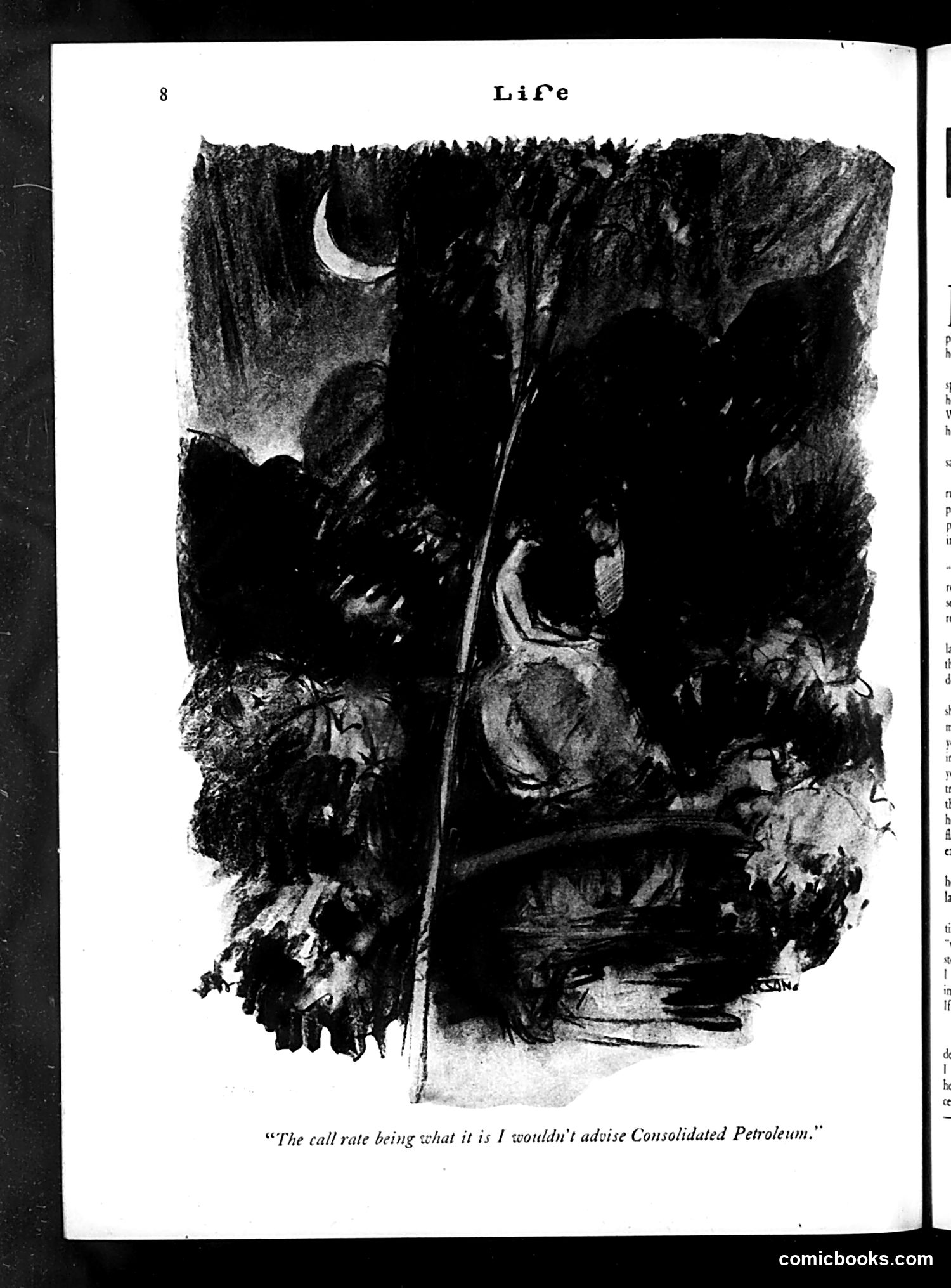
# Political Cartoon Analysis This is a satirical illustration from *Life* magazine depicting a nighttime scene with dark, expressionistic shading. The caption reads: "The call rate being what it is I wouldn't advise Consolidated Petroleum." The cartoon appears to be financial satire, likely from the early 20th century. It shows figures in shadow discussing investment advice, with a crescent moon visible above. The speaker warns against investing in "Consolidated Petroleum" due to unfavorable call rates—financial terms relating to stock market borrowing costs. The darkness and ominous mood suggest the petroleum stock is a risky or failing investment. Without additional context about specific market conditions or Consolidated Petroleum's actual performance during publication, the precise historical event remains unclear, but the satire targets stock market speculation and dubious investment advice.
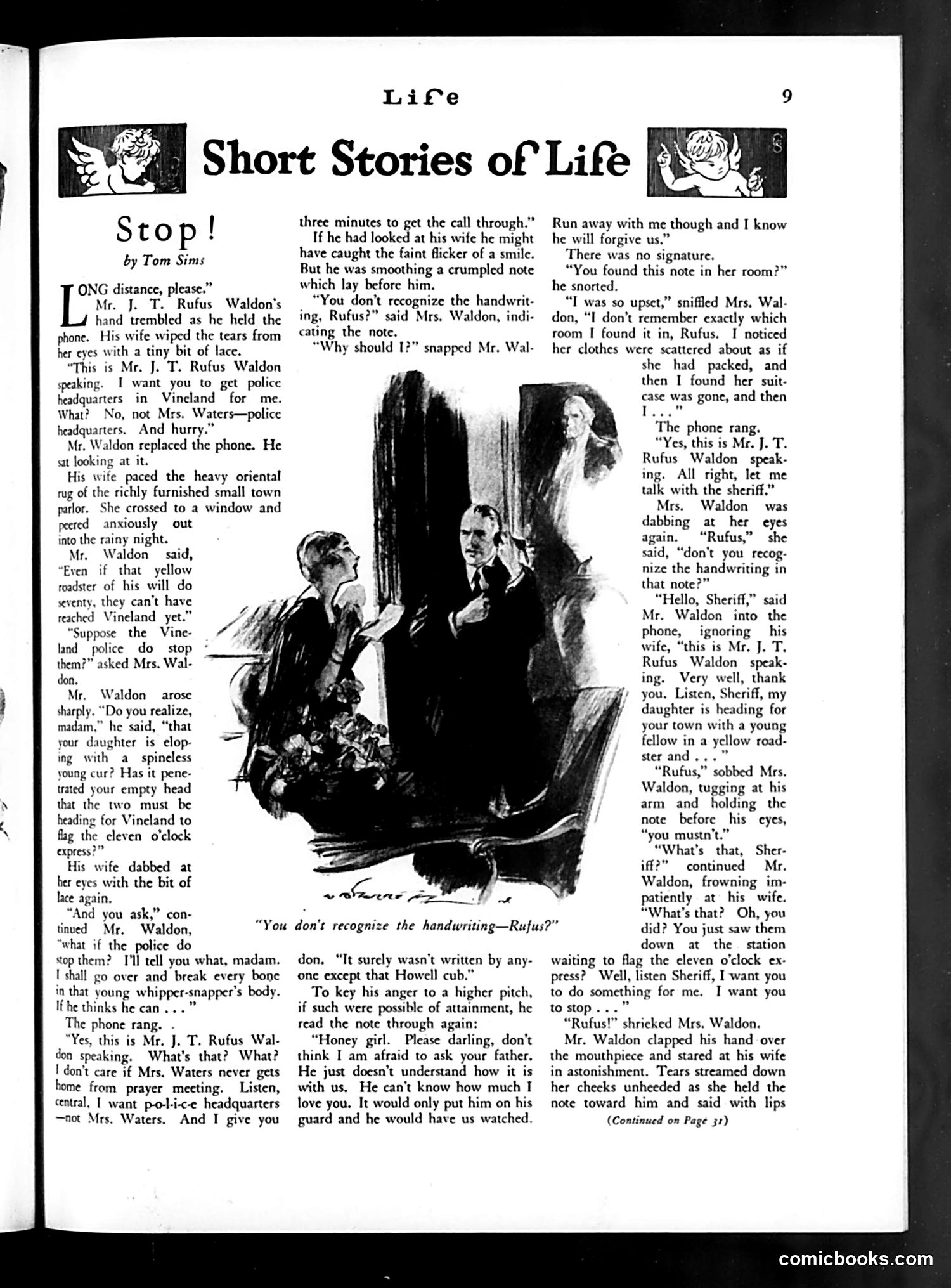
# "Stop!" by Tom Sims This is a domestic drama rather than political satire. The story depicts Mr. J.T. Rufus Waldon receiving a long-distance phone call from his wife about their daughter eloping with a "spineless young cur." The wife is upset; Mr. Waldon wants police intervention in Vineland. The narrative centers on confusion over a handwritten note—the wife found it but can't identify the handwriting. Mr. Waldon reads it aloud to the sheriff, which becomes a crucial plot point (story continues on page 31). The illustration shows the couple at home during this tense phone conversation. This appears to be serialized fiction entertainment typical of *Life* magazine's "Short Stories of Life" section, not satire or social commentary.
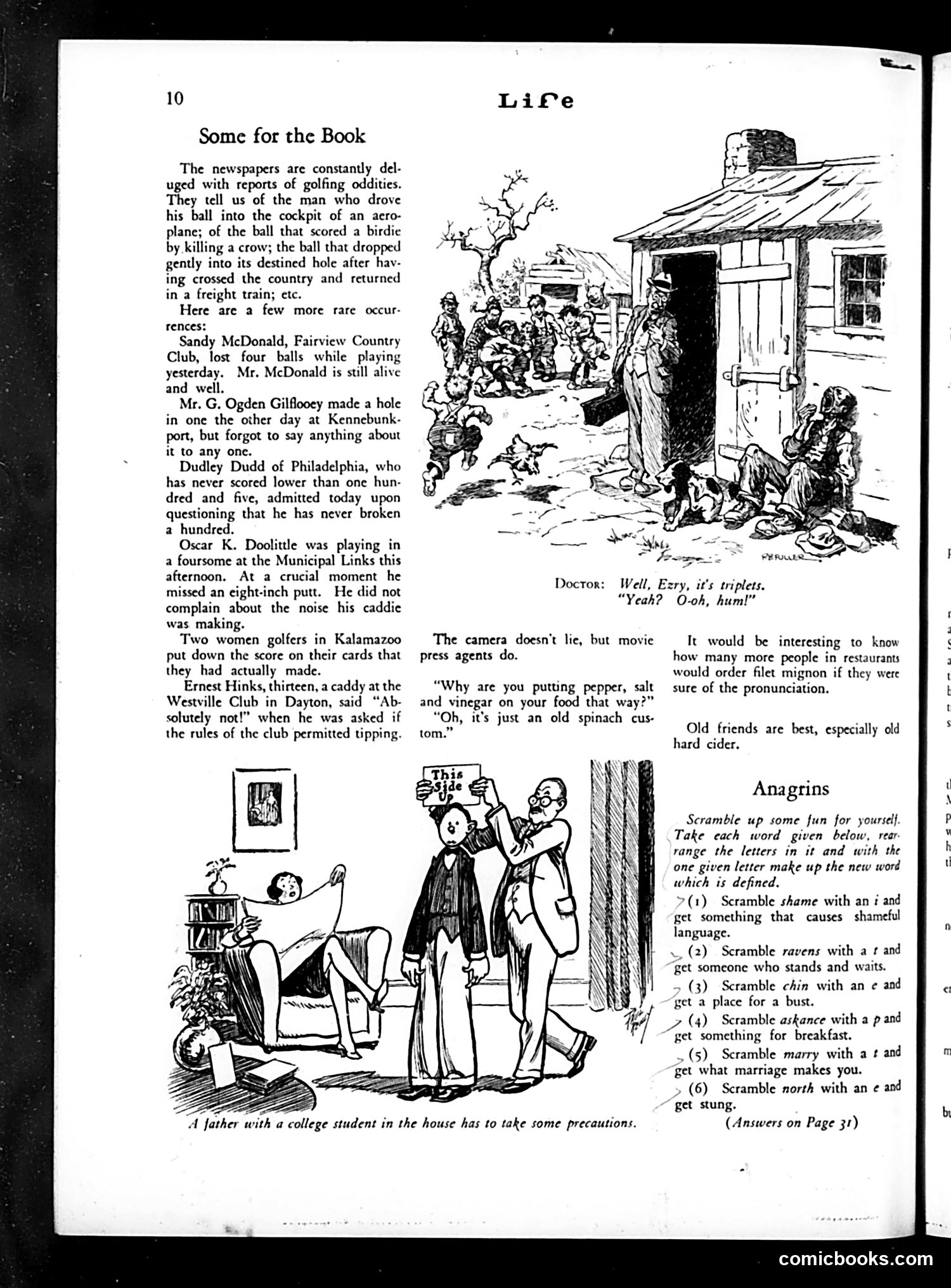
# Analysis This page from *Life* magazine contains two distinct elements: **"Some for the Book"** presents humorous anecdotal reports from newspapers—quirky human-interest stories about golf mishaps, unusual achievements, and social faux pas. These are presented as lighthearted observations on everyday oddities. **The cartoon** (lower left) depicts a domestic scene where a father must manage a college-age son living at home. The caption warns fathers must "take some precautions," suggesting the humor lies in the generational tension and disruption a young adult student brings to household order and propriety—a relatable concern for middle-class readers when college students returned home. **"Anagrins"** is a word-puzzle game where readers rearrange letters to form new words with given definitions. The page reflects 1920s-era social commentary on changing family dynamics and educational access.