A complete issue · 50 pages · 1929
Life — October 18, 1929
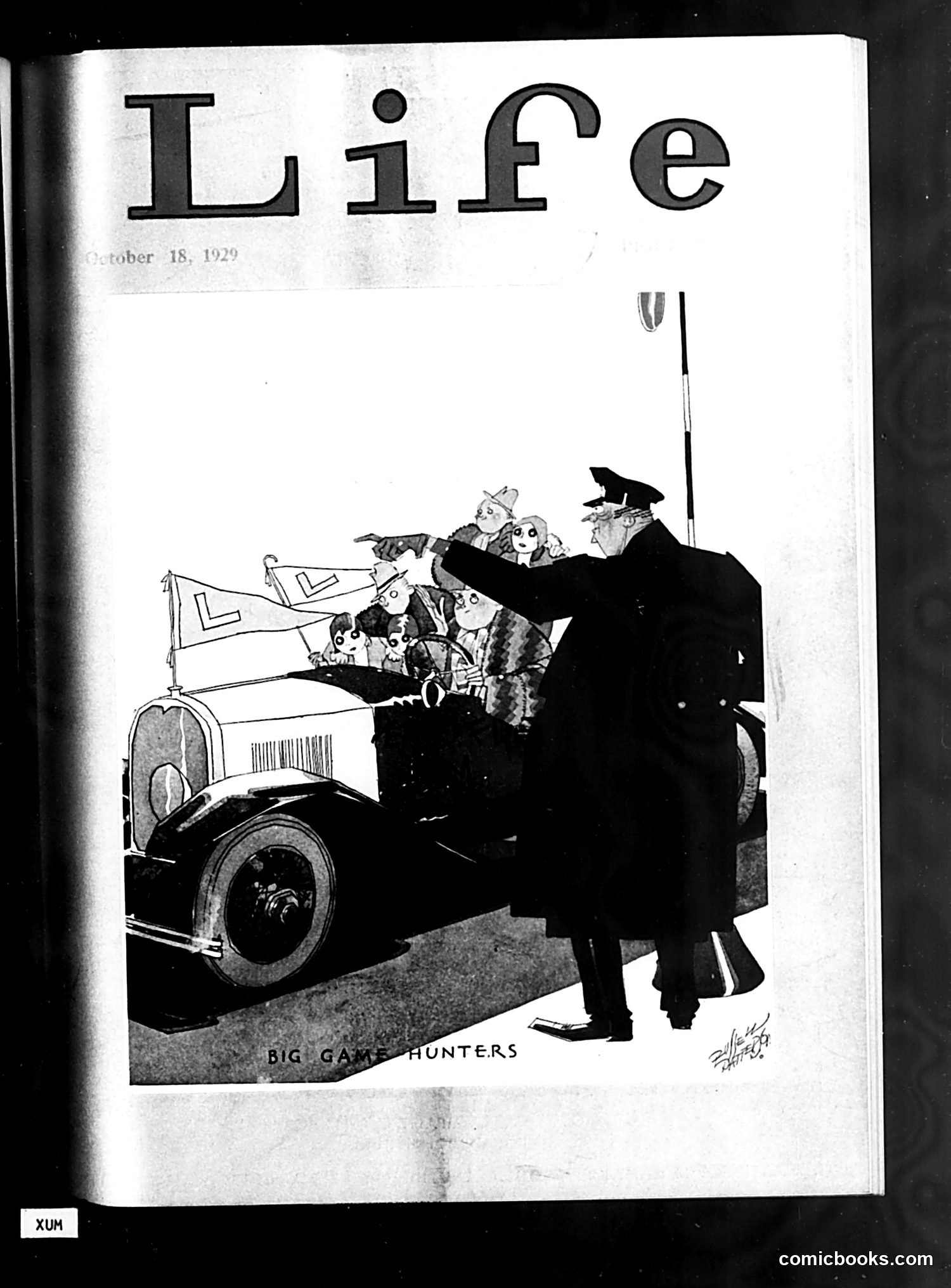
# "Big Game Hunters" — Life Magazine, October 18, 1929 This cartoon satirizes wealthy individuals portrayed as "big game hunters." The illustration shows an elegantly dressed man in a coat and cap pointing authoritatively while several fashionably dressed people (appearing to be his family or associates) sit in an open-air automobile decorated with hunting flags bearing the letter "L." The satire likely mocks the pretensions of the wealthy during the immediate aftermath of the 1929 stock market crash (Black Tuesday occurred October 24, 1929—just days after this publication). The "hunting" metaphor suggests these privileged figures are still pursuing leisure and sport despite economic catastrophe unfolding around them, highlighting their disconnection from the financial devastation affecting ordinary Americans.
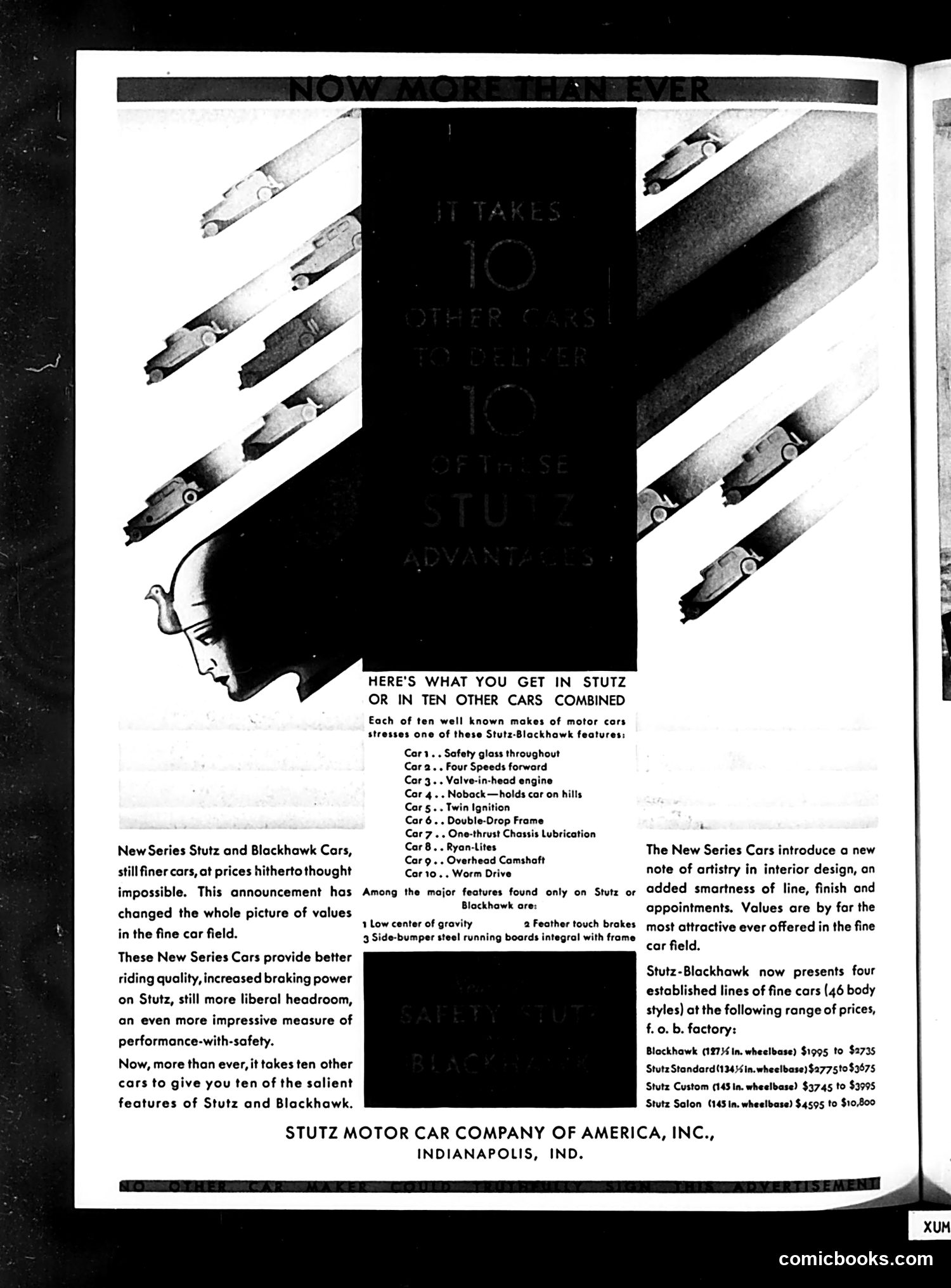
# Analysis This is **not a political cartoon or satire**—it's a straightforward automobile advertisement for Stutz and Blackhawk motor cars from the Stutz Motor Car Company of Indianapolis. The page features: - **Visual element**: Stylized illustrations of car engines/mechanical components arranged around a silhouetted profile of a man's head, suggesting mechanical superiority or engineering prowess - **Marketing message**: Claims these "New Series" cars offer luxury ("finer cars") at previously impossible prices, emphasizing ten key mechanical features that rival ten competing vehicles combined - **Product lines**: Four models listed with prices ranging from $1,595 to $10,800 The "profile" design is purely decorative—not a caricature of any specific person. This is typical 1920s-30s automotive advertising emphasizing technical innovation and value proposition.
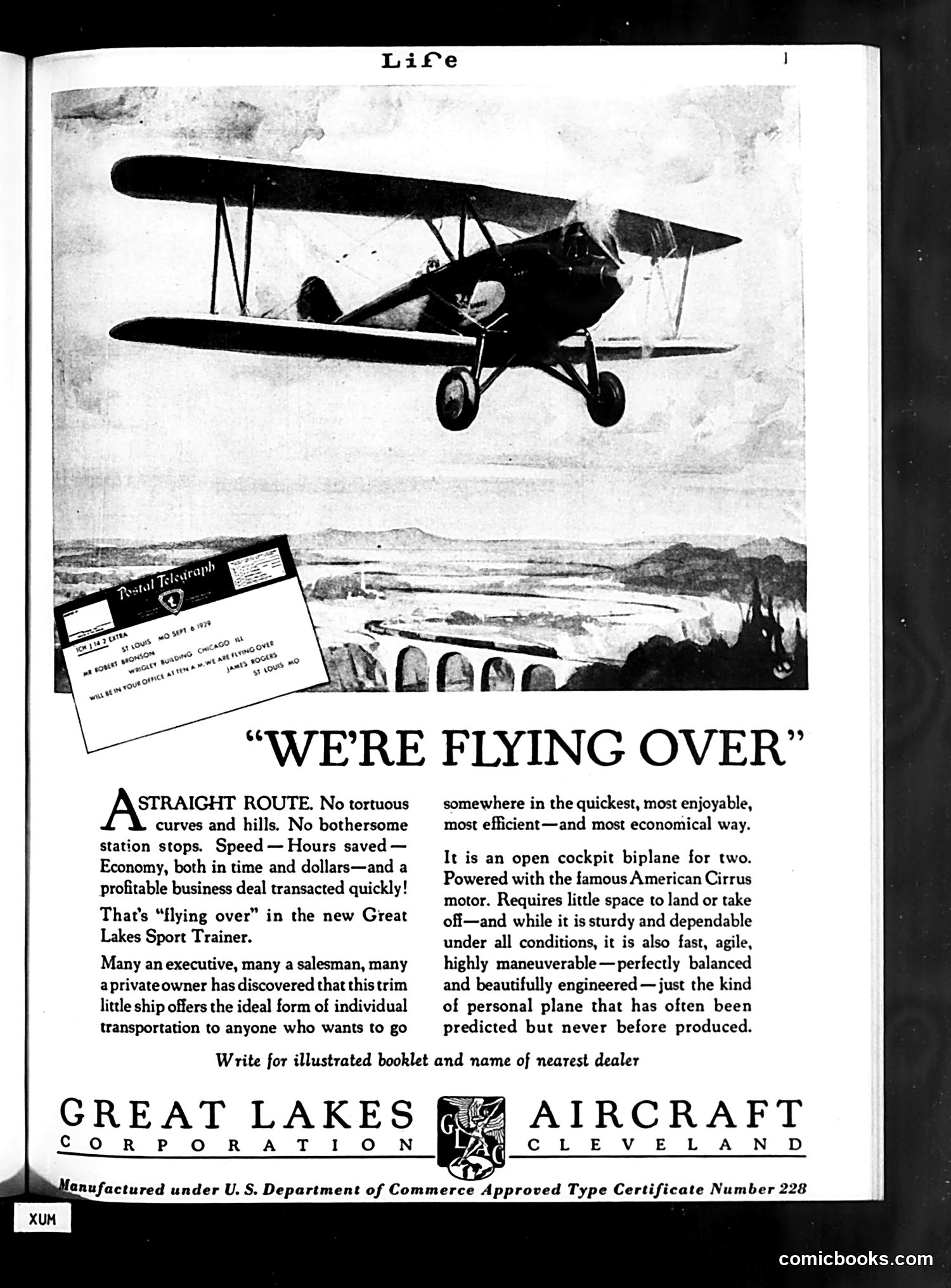
# Analysis This is not a political cartoon or satire—it's a **straightforward advertisement** for the Great Lakes Sport Trainer aircraft, published in *Life* magazine. The page promotes a biplane designed for personal aviation. The ad emphasizes practical benefits: direct routing, speed, fuel economy, and time savings compared to ground transportation. It highlights the aircraft's features—open cockpit for two, American Cirrus motor, easy takeoff/landing requirements, and maneuverability. The "Postal Telegraph" label visible in the image appears to be a newspaper clipping element, possibly suggesting the plane's utility for urgent business communication. This represents early-1920s optimism about private aviation as accessible personal transportation, before such aircraft became impractical for most Americans.
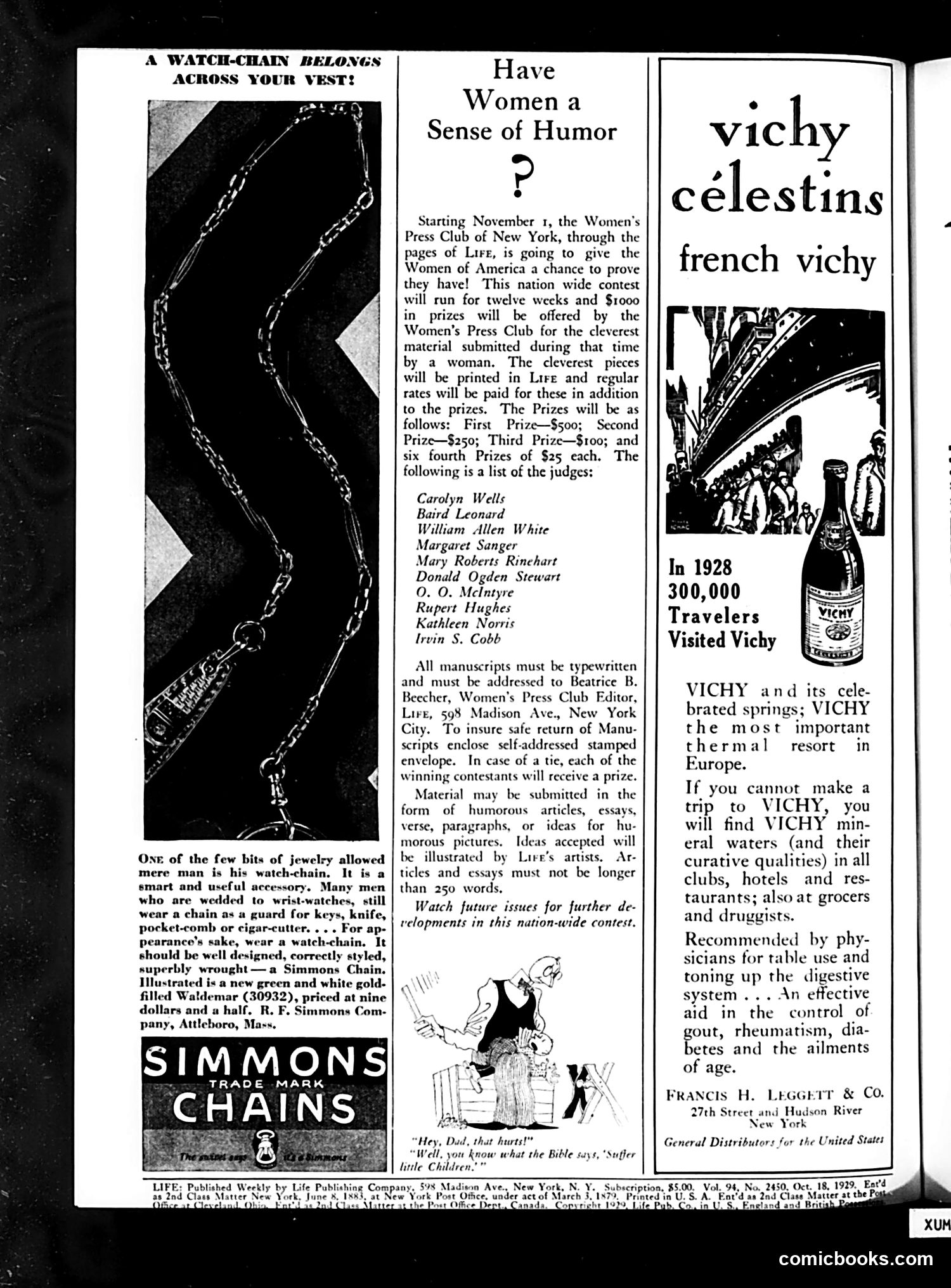
# Page Analysis This page is primarily **advertising and contest announcements** rather than political satire. The main content includes: 1. **Simmons Trade Park watch-chains** (left): A jewelry advertisement emphasizing that watch-chains are appropriate masculine accessories, illustrated with an elegant chain design. 2. **Women's humor contest** (center): The Women's Press Club of New York is running a 12-week competition asking women to submit humorous material, with $1000 in prizes. The small cartoon at bottom ("Hey, that hurts!") appears to be an example of the type of humor sought. 3. **Vichy advertisement** (right): Promoting the French mineral water brand as a health tonic, noting 300,000 travelers visited Vichy in 1928. The page reflects 1920s consumer culture and women's growing participation in public discourse through organized clubs and contests.
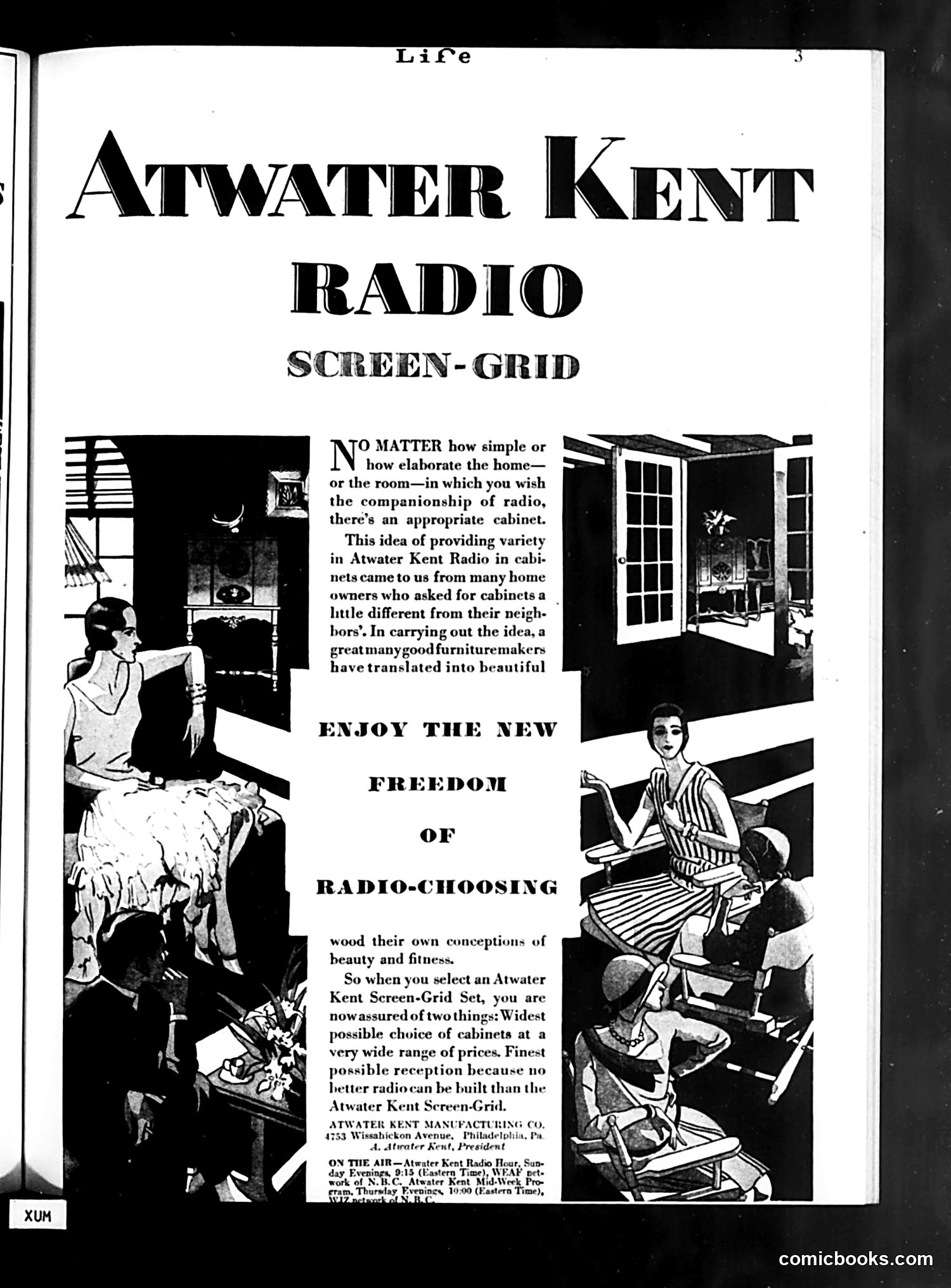
# Analysis This is primarily **advertising copy**, not satire or political commentary. It's a product advertisement for Atwater Kent Radio Screen-Grid sets, published in *Life* magazine. The page promotes radio cabinets designed to complement various home décors. The illustrated figures (a woman at left, another at right) are generic lifestyle imagery showing consumers enjoying radio in domestic settings—not specific caricatures or political figures. The "sales pitch" emphasizes consumer choice: buyers can select from multiple cabinet styles and price points while receiving superior radio reception from Atwater Kent's technology. The phrase "new freedom of radio-choosing" is marketing language, not political satire. This reflects early 1920s-30s radio commercialization, when radios were luxury furniture items requiring attractive cabinetry for home display.
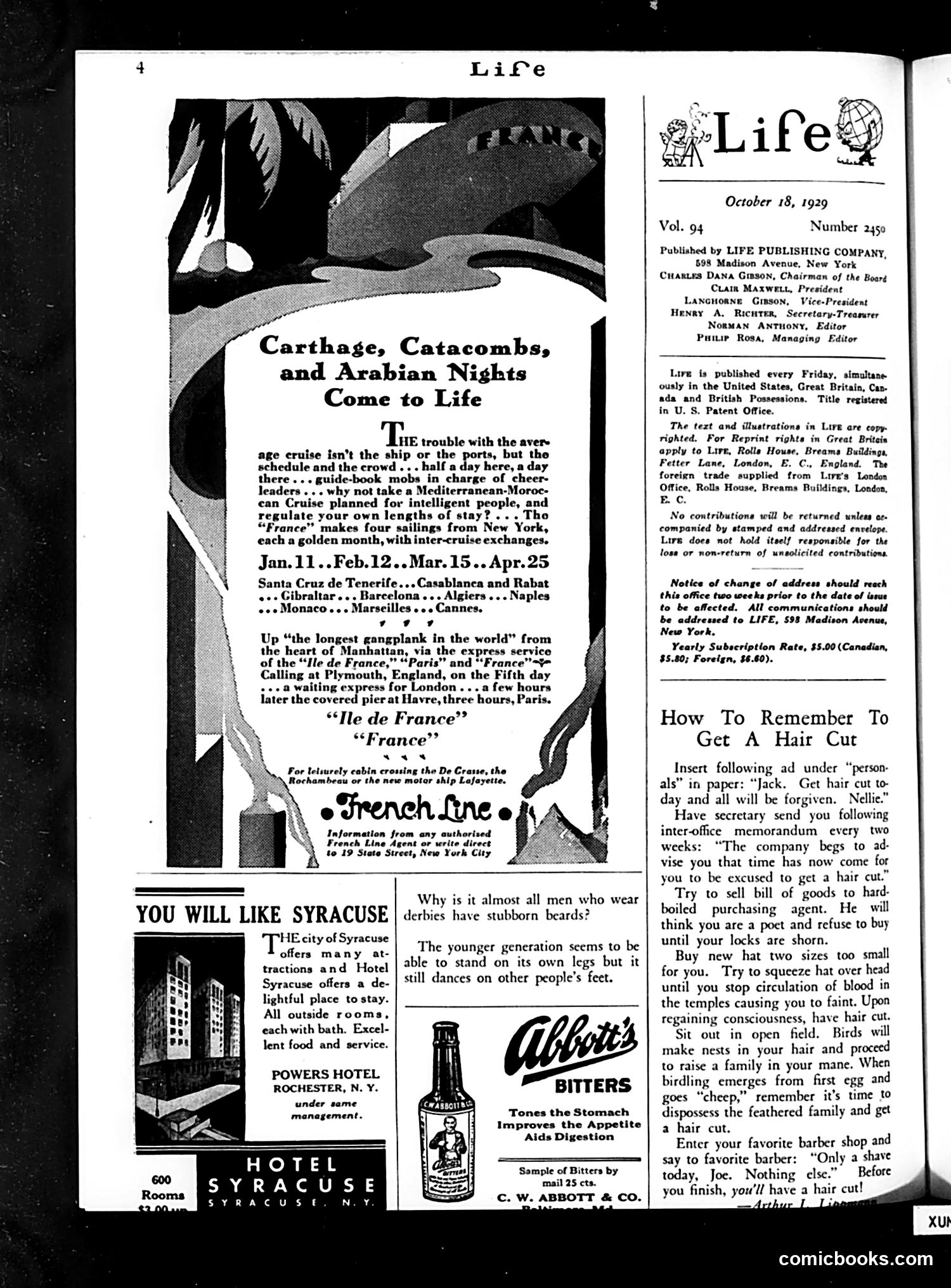
# Analysis This page contains **primarily advertisements** with minimal editorial content. The main advertisement features a luxury cruise on the French Line, promoting Mediterranean travel to Carthage, Catacombs, and "Arabian Nights" destinations—appealing to wealthy American travelers seeking exotic experiences. The dates (Jan.11, Feb.12, etc.) advertise departure schedules. Secondary ads include the Powers Hotel in Rochester and Abbott's Bitters (a digestive tonic). The only potential satirical content is a brief humor piece titled **"How To Remember To Get A Hair Cut,"** which employs absurdist comedy—suggesting increasingly ridiculous methods to remind oneself about haircuts (inserting office memos, squeezing the head until unconscious, etc.). This appears to be light-hearted domestic humor rather than political satire. The issue's date is **October 18, 1929**—notably just days before the stock market crash.
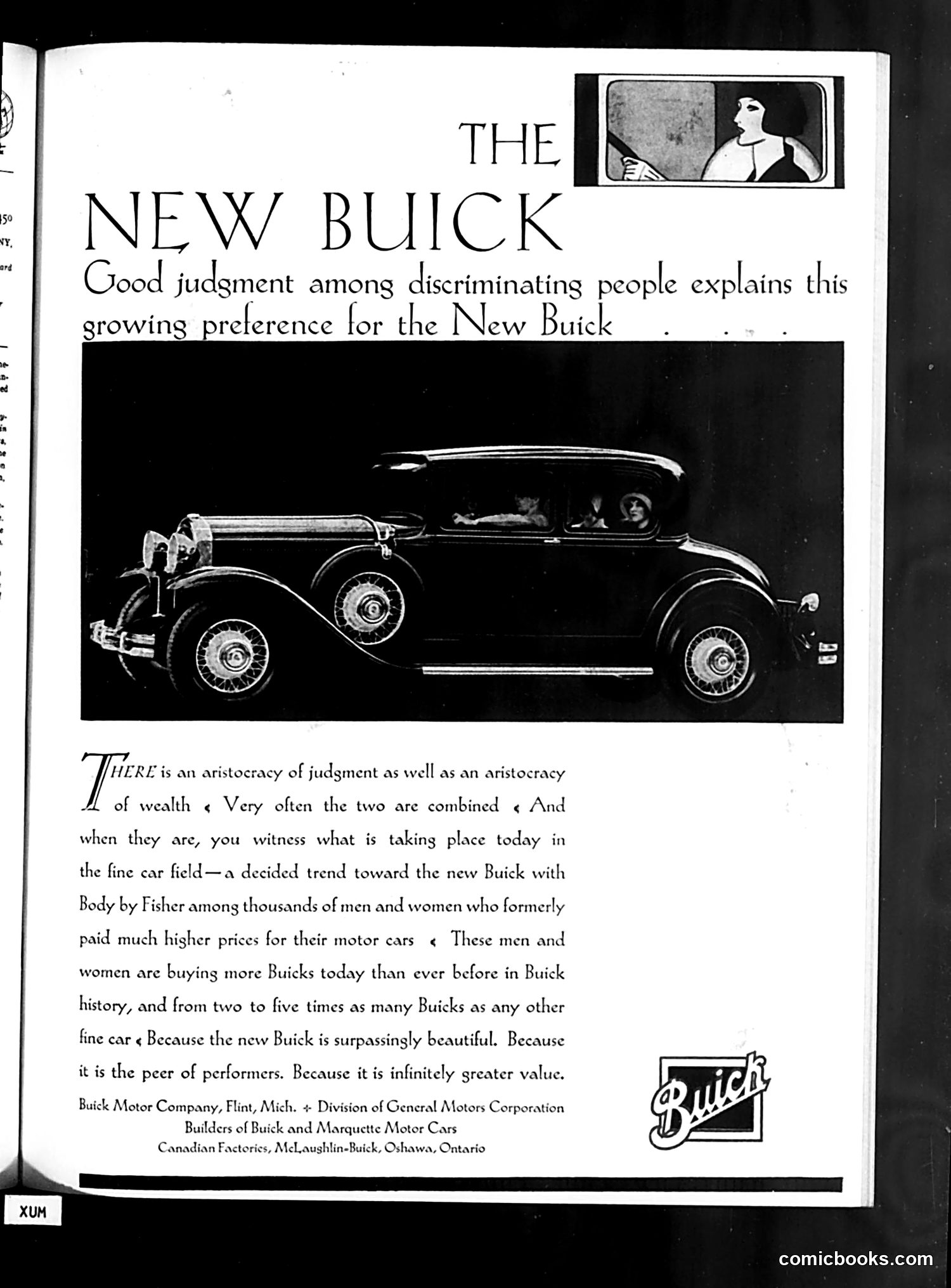
# Analysis This is a **Buick automobile advertisement**, not a satirical cartoon. The page promotes "The New Buick" by appealing to wealthy, discriminating buyers. The ad's language reflects 1920s-30s class attitudes: it praises "an aristocracy of judgment as well as...wealth" and notes that wealthy people who once bought expensive foreign cars are now choosing Buick instead. The advertisement suggests that purchasing this car demonstrates refined taste and good judgment. The small illustration at the top right appears to show a well-dressed woman, reinforcing the car's association with luxury and sophistication. The large central image displays the automobile's sleek design against a dark background, emphasizing its aesthetic appeal. This represents period advertising that explicitly marketed products to elite consumers using language celebrating class distinction.
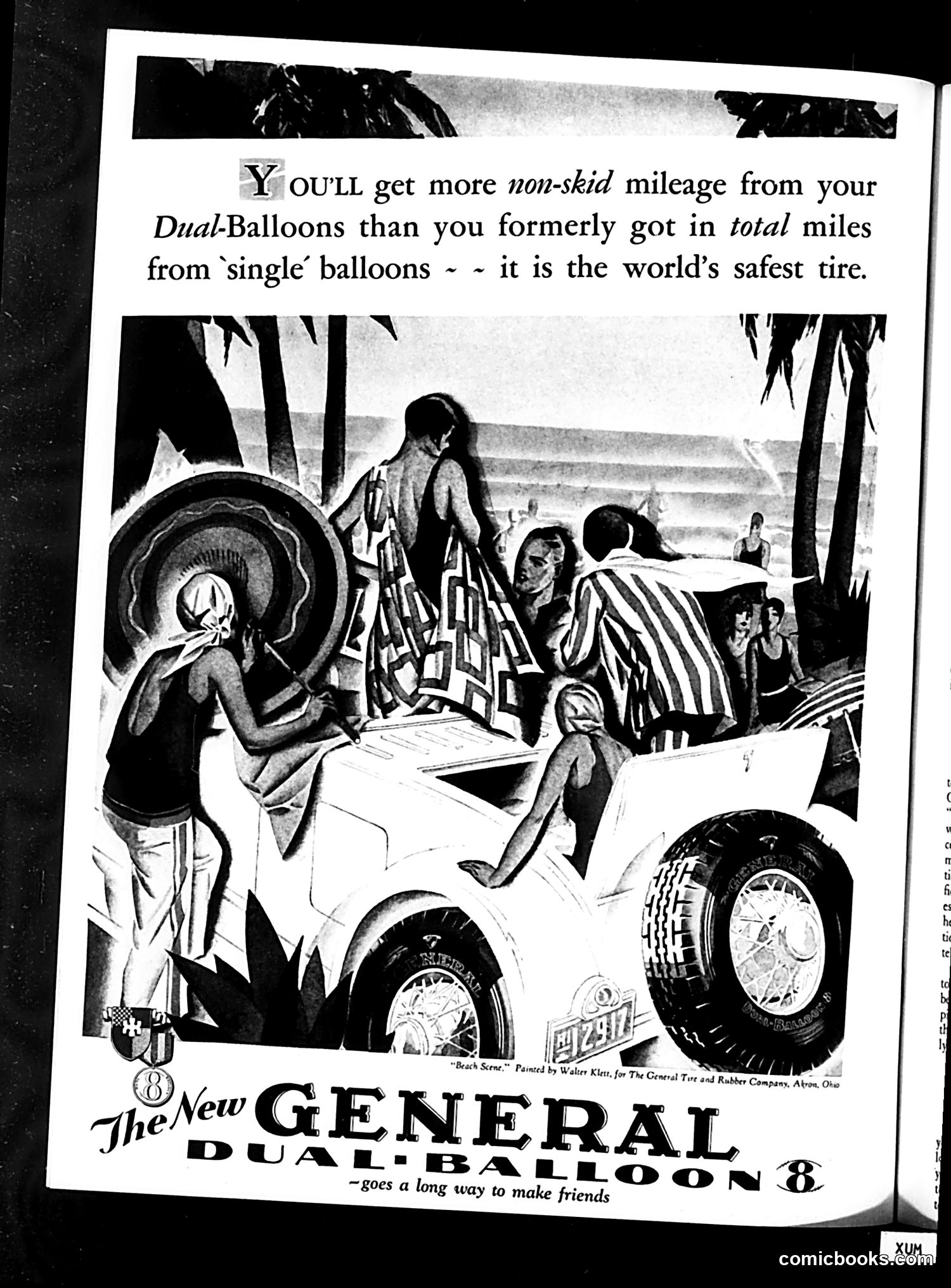
# Analysis This is a **vintage advertisement** for General Dual-Balloon tires, not political satire. The ad claims Dual-Balloon tires deliver superior "non-skid mileage" compared to traditional single-balloon tires, marketing them as "the world's safest tire." The illustration depicts a beach scene with families enjoying leisure time near a parked car, emphasizing safety and reliability for family outings. The tagline "goes a long way to make friends" suggests that purchasing this tire brand signals good judgment to one's social circle. This reflects early-20th-century advertising strategy: associating consumer products with desirable lifestyles (leisure, family, safety) rather than emphasizing technical specifications alone. The "Dual-Balloon" technology appears to be a genuine tire innovation of that era.
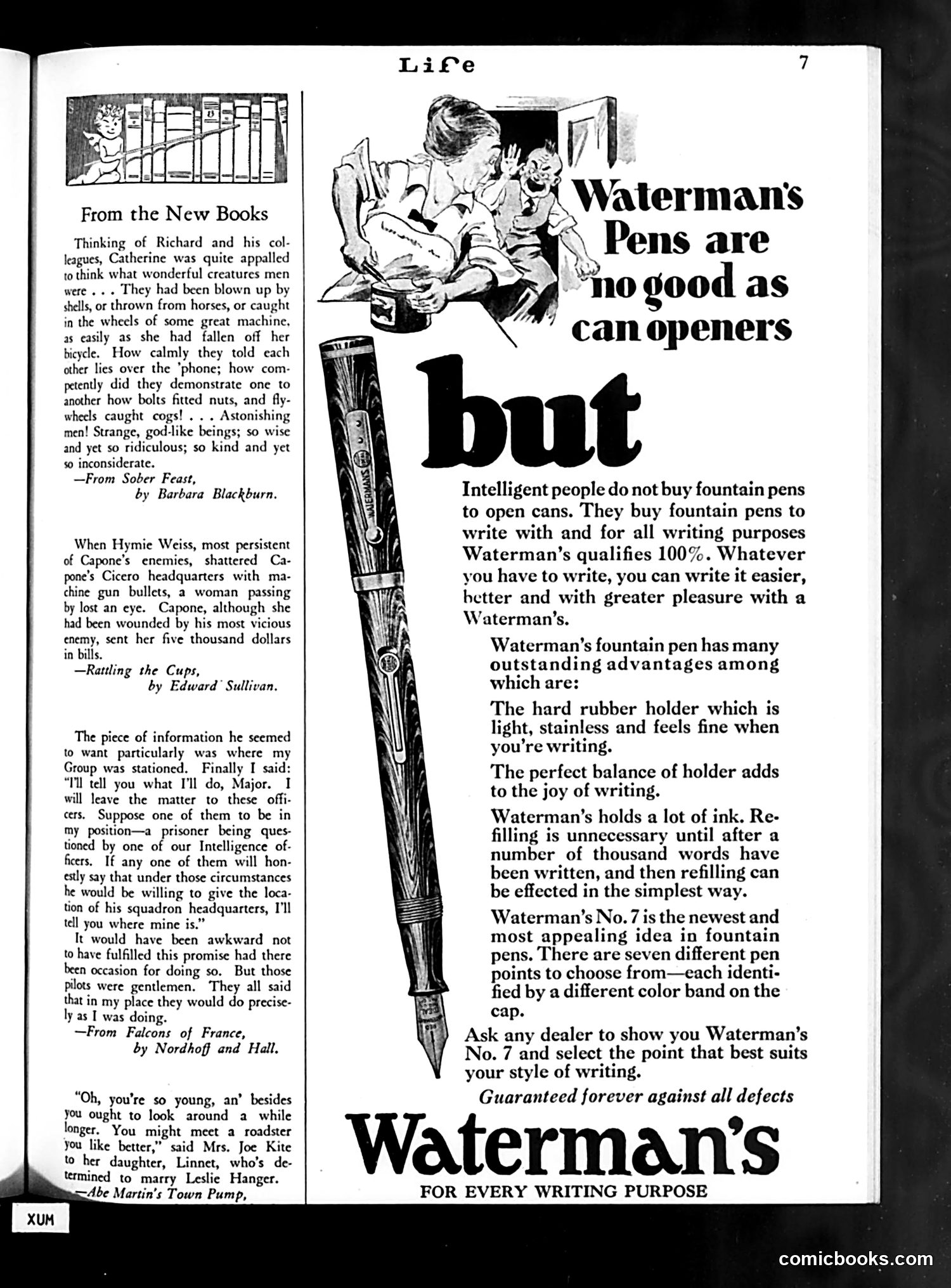
# Analysis This page is **primarily a Waterman's fountain pen advertisement** (right side), not political content. The left side contains literary excerpts—"From the New Books"—quoting passages from novels including *Sober Feast* by Barbara Blackburn, *Rattling the Cups* by Edward Sullivan, and *Falcons of France* by Nordhoff and Hall. These are unrelated to satire or politics. The advertisement's humor is commercial rather than political: it satirizes the common misconception that fountain pens are merely tools for opening cans, arguing that "intelligent people" buy them for actual writing. The illustration shows someone attempting to use a pen as a can opener—a visual joke about misusing the product. This reflects early 20th-century advertising strategy: create humorous scenarios to highlight product superiority.
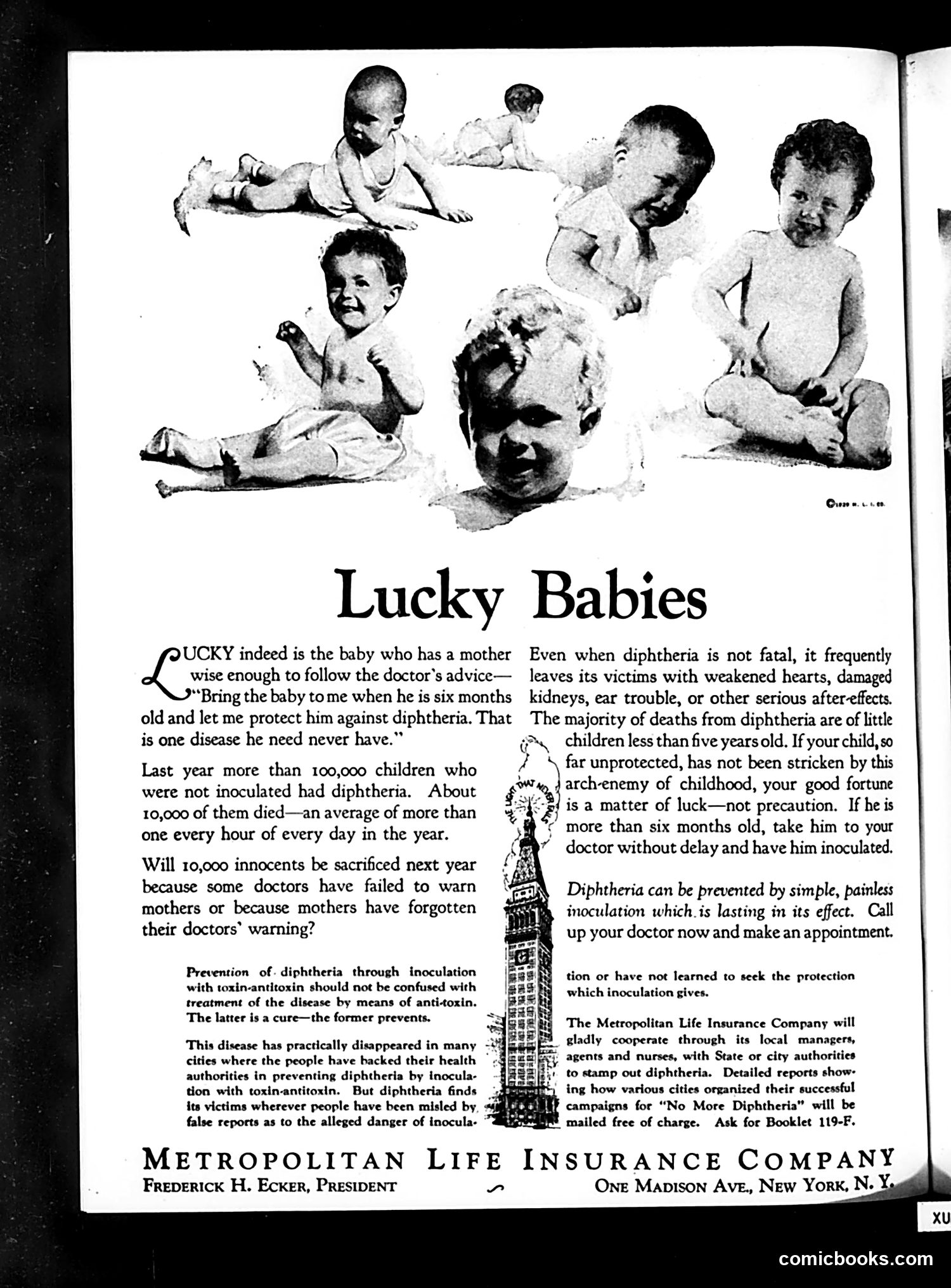
# "Lucky Babies" - Metropolitan Life Insurance Advertisement This is a **public health advertisement**, not satire. Metropolitan Life Insurance Company sponsored this 1910s-era campaign promoting **diphtheria inoculation** for infants. The page presents six photographs of healthy babies to illustrate the concept of "luck"—arguing that babies who survive diphtheria without inoculation are merely fortunate, not protected by medical science. The text cites alarming statistics: over 100,000 uninoculated children contracted diphtheria annually, with roughly 10,000 deaths. The advertisement urges mothers to bring babies to doctors at six months for preventive inoculation, framing medical precaution as responsible parenting rather than optional. The Metropolitan Life company positioned itself as a public health advocate, offering free educational materials to normalize vaccination—a significant moment in early 20th-century American public health messaging.
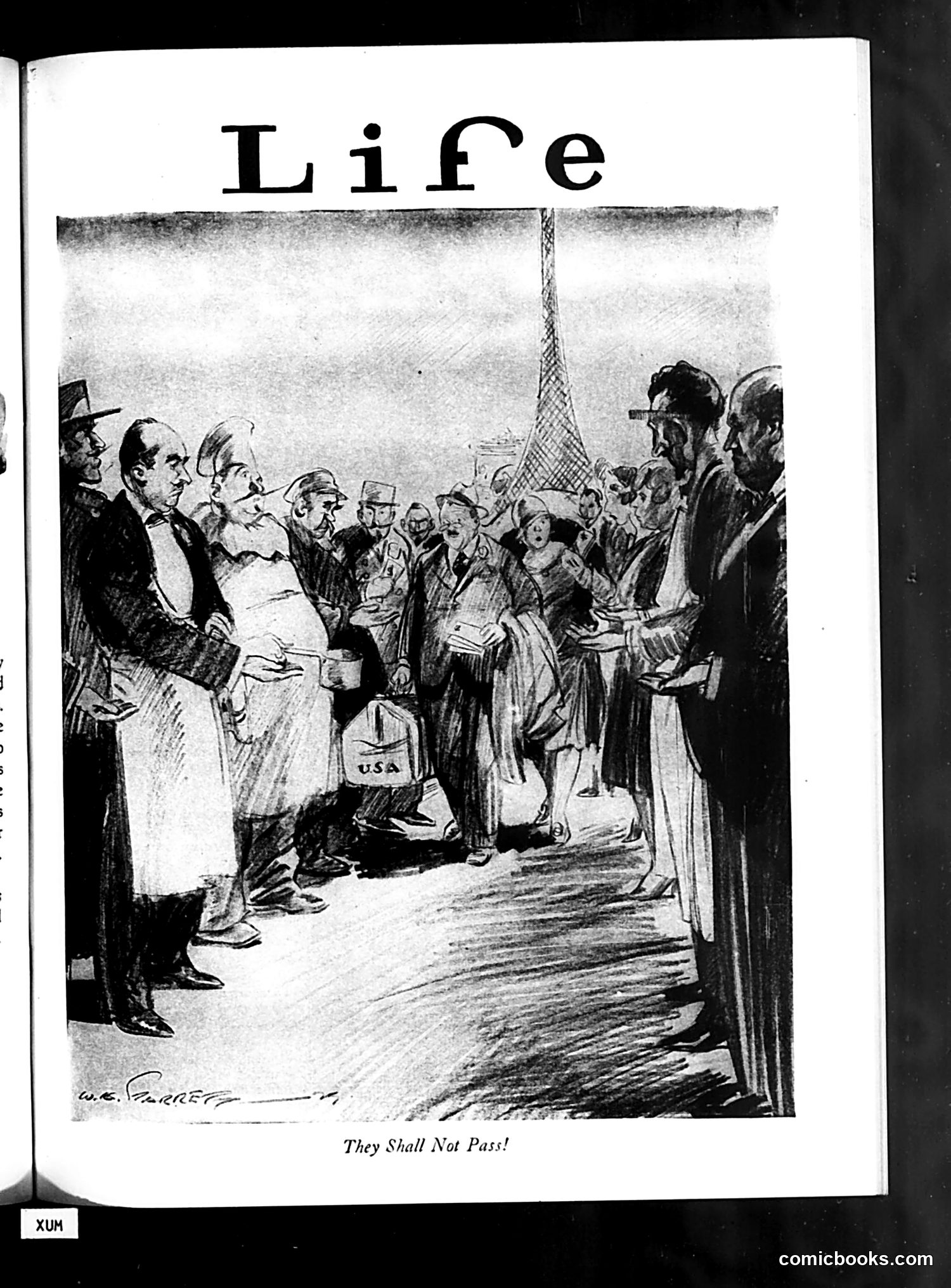
# "They Shall Not Pass!" - Life Magazine Political Cartoon This editorial cartoon depicts immigration control at America's borders. A figure representing "USA" (marked on a bag) stands as a gatekeeper, blocking entry to a diverse crowd of immigrants and refugees. The title "They Shall Not Pass!" references the famous WWI phrase, comparing immigration restriction to military defense. The cartoon satirizes nativist immigration policy by framing newcomers as an invading force to be militarily repelled. The well-dressed official contrasts sharply with the depicted immigrants, emphasizing class and cultural divisions. The artist (signature visible but unclear) uses this comparison to critique the restrictionist sentiment of the era—likely from the 1920s-1930s period when strict immigration quotas were debated or implemented in America.
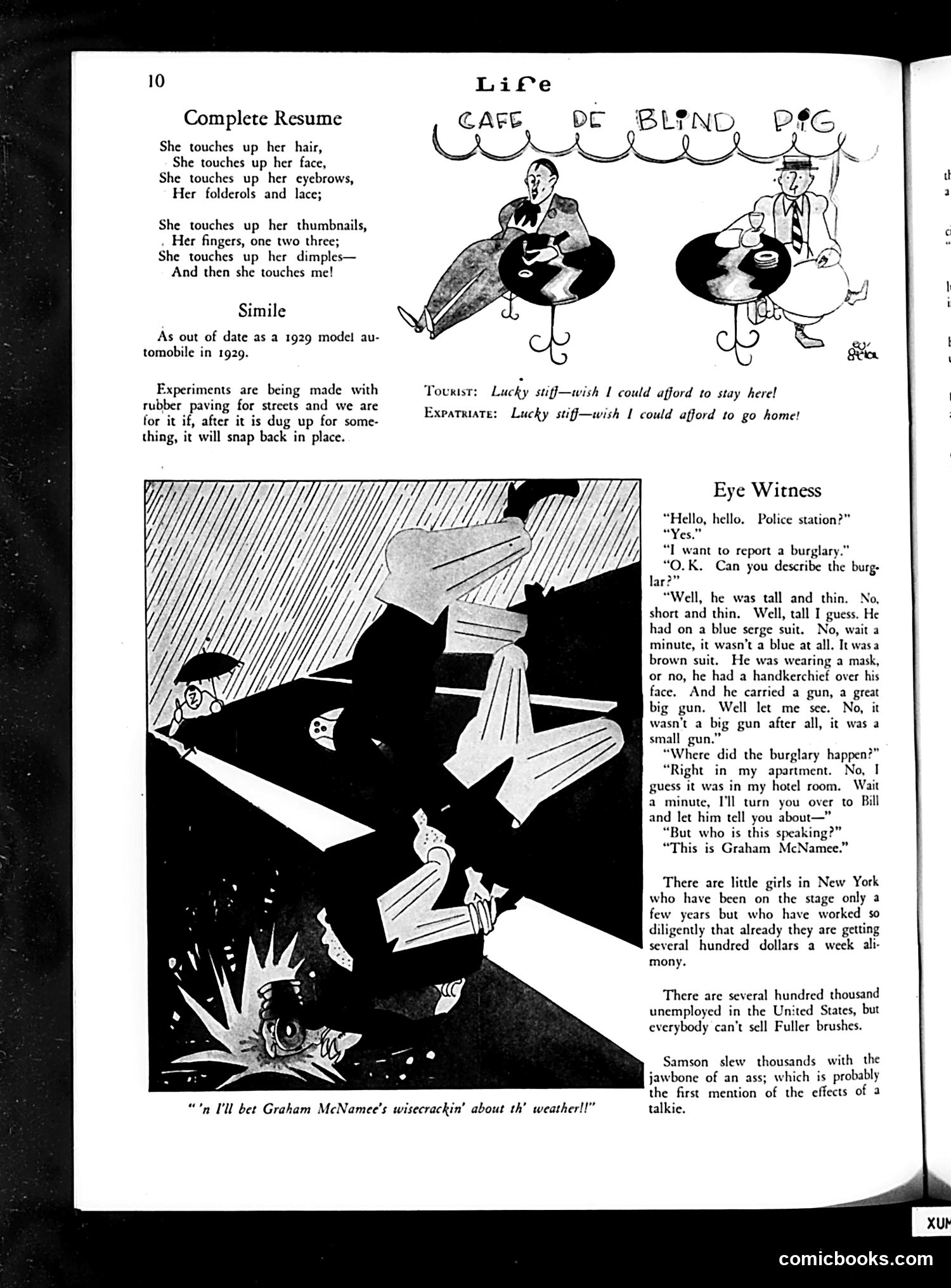
# Analysis of Life Magazine Page This page contains three satirical pieces from Life magazine (a humor publication, not the photo magazine): 1. **"Complete Resume"** and **"Simile"**: Light domestic humor about women's grooming routines and outdated cars. 2. **"Café de Blind Pig"** cartoon: Shows two men at a speakeasy during Prohibition, with one complaining he can't afford to stay while the other laments he can't afford to leave—satirizing the economic desperation of the Great Depression era. 3. **"Eye Witness"**: A sketch of a police report involving a burglary, featuring detailed (and absurdly contradictory) descriptions from witness "Graham McName." This likely mocks radio reporters of the era known for overwrought, verbose commentary. The final paragraph references Samson's jawbone, connecting talkie (sound film) technology to biblical imagery—humor about early 1920s-30s innovation.