A complete issue · 49 pages · 1929
Life — October 11, 1929
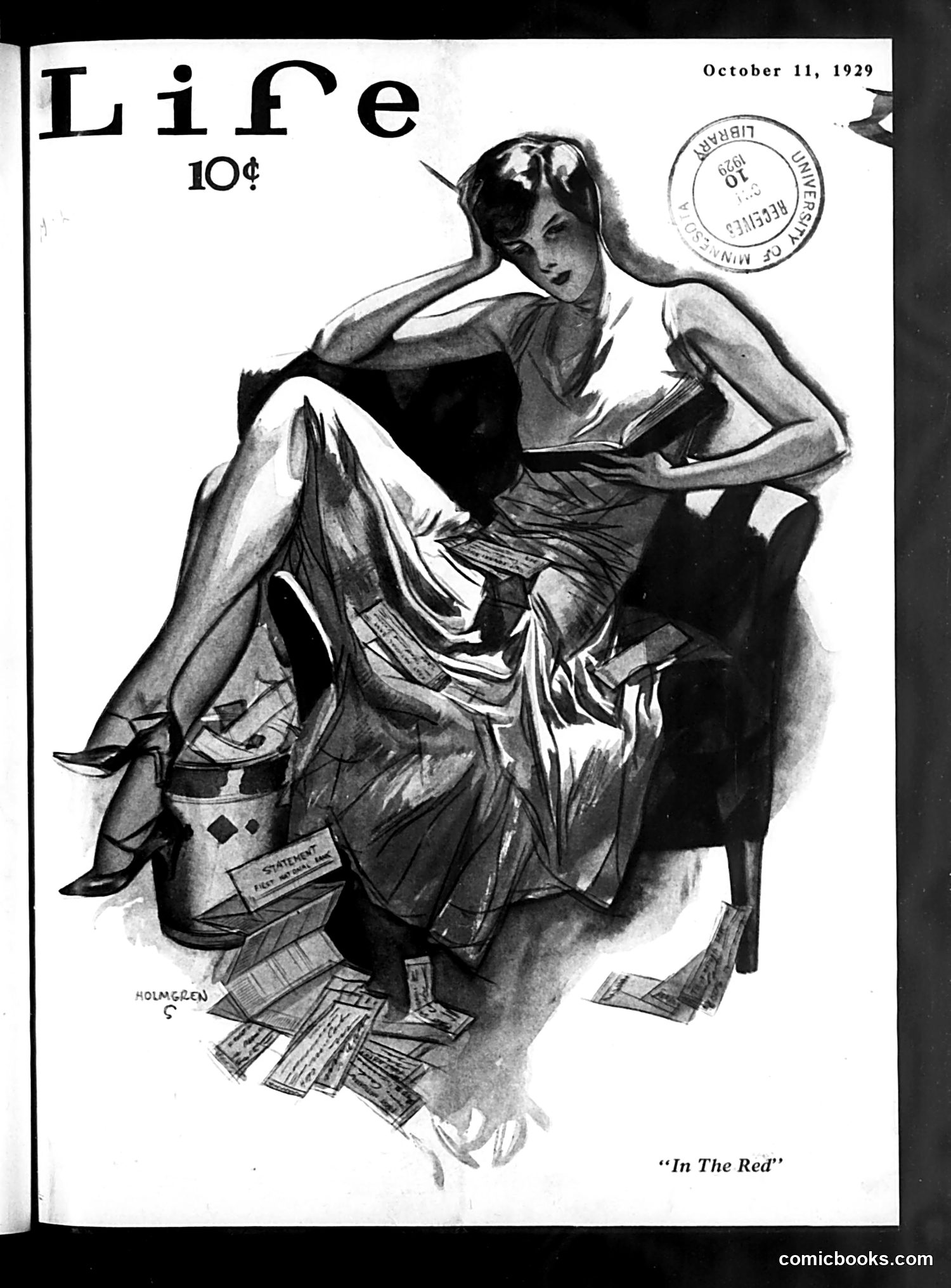
# Analysis of Life Magazine Cover, October 11, 1929 This cover illustration, titled "In The Red," depicts a woman surrounded by scattered financial documents or bills, sitting in a relaxed pose. The phrase "in the red" refers to financial loss or debt. **Historical Context:** This issue was published just days before the **Stock Market Crash of October 29, 1929** (Black Tuesday), which triggered the Great Depression. The timing suggests the artwork anticipated financial catastrophe. **The Satire:** The illustration likely comments on consumer debt and financial vulnerability during the 1920s, depicting a woman casually amid mounting bills—perhaps satirizing either reckless spending habits or the precarious financial position many Americans occupied before the economic collapse. The artist signature reads "Holmgren."
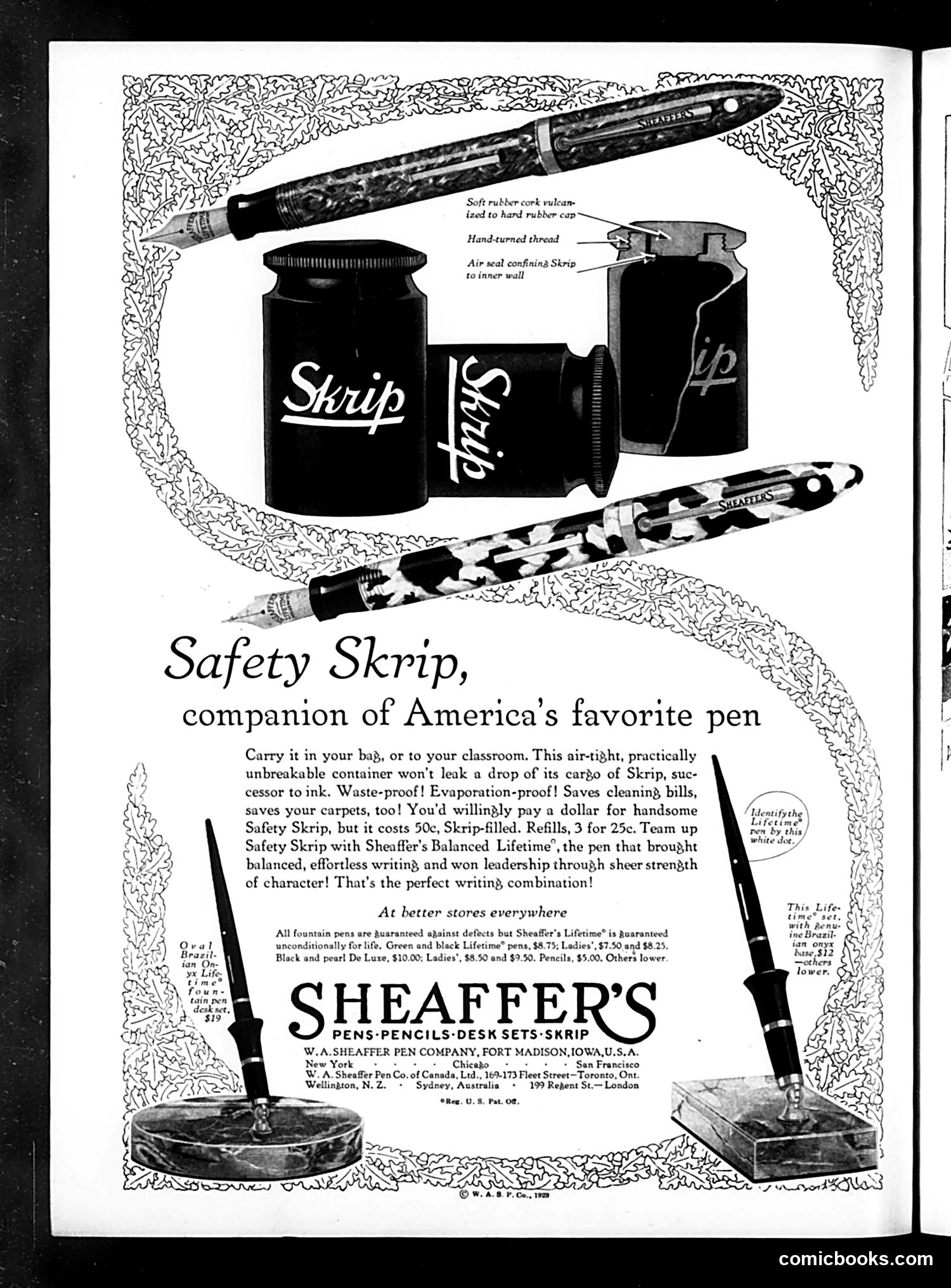
# Analysis This is **not a political cartoon or satire** — it's a straightforward product advertisement. The page promotes "Safety Skrip," an ink container made by Sheaffer's pen company. The ad emphasizes practical benefits: the container is airtight and unbreakable, preventing ink from evaporating or spilling. The detailed technical drawings show the soft rubber cork, hand-turned thread, and air-seal strip. The marketing pitch targets students and office workers who want to avoid mess and cleaning costs. The tagline calls it the "companion of America's favorite pen," tying it to Sheaffer's existing popular fountain pen line. This reflects early-20th-century consumer culture, when fountain pens were common writing instruments and ink containers were genuine household concerns. The ad ran in *Life* magazine alongside other product advertisements.
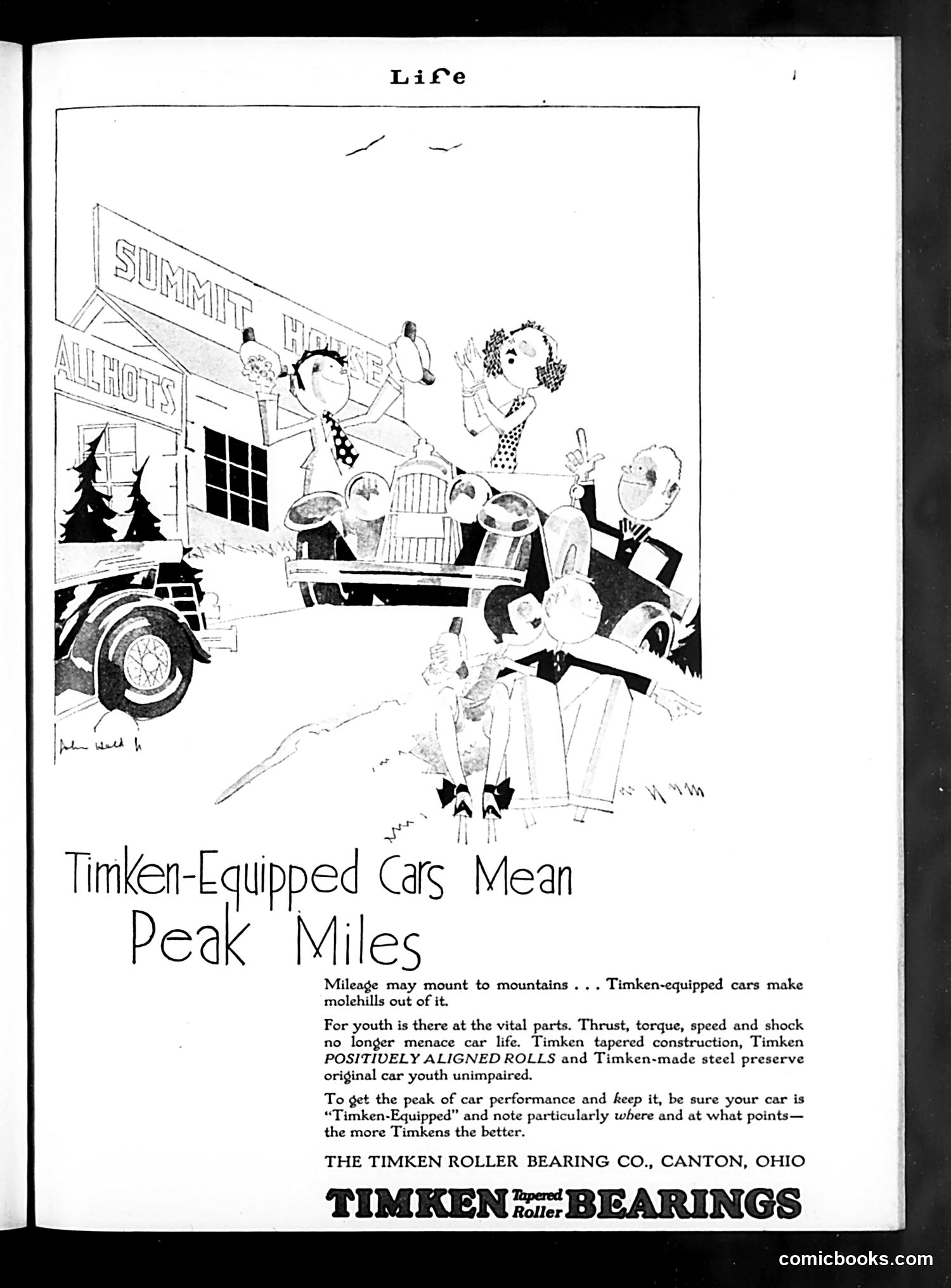
# Analysis This is primarily a **Timken Roller Bearings advertisement** rather than political satire. The illustration depicts a celebratory scene at what appears to be a mountain lodge or resort (marked "Summit House" and "Allotts"), with well-dressed figures celebrating—likely representing successful motorists who've conquered mountain driving. The advertisement's message is straightforward: Timken-equipped cars perform better on challenging terrain. The tagline "Timken-Equipped Cars Mean 'Peak' Miles" uses the mountain setting as a visual pun. The text emphasizes that Timken components—tapered construction, positively aligned rolls, and steel preservation—maintain car performance and youth during demanding driving conditions. This reflects **1920s automotive advertising**, emphasizing mechanical superiority and leisure motoring aspirations rather than containing political commentary.
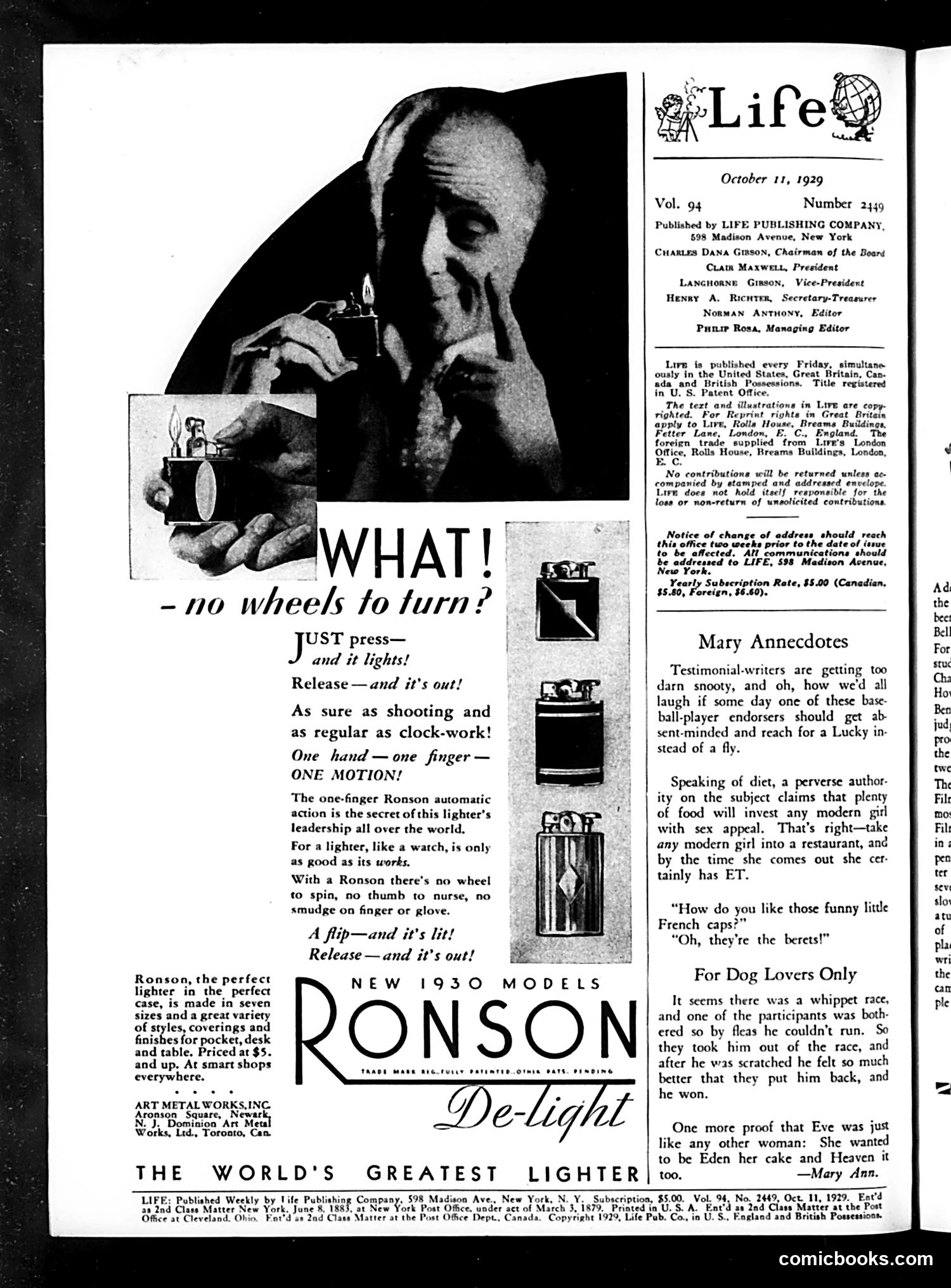
# Life Magazine, October 11, 1929 This page is primarily a **Ronson lighter advertisement** ("The World's Greatest Lighter"), occupying most of the space. The ad uses a large photograph of a man with an exaggerated facial expression demonstrating the lighter's one-finger operation—the main selling point emphasized repeatedly ("One hand—one finger—ONE MOTION!"). The lighter's ease of use is compared to reliability of a watch or shooting mechanism. Multiple smaller product images show the 1930 models available. The right column contains brief humorous articles unrelated to the advertisement, including a piece called "Mary Annecdotes" with light satirical observations about testimonial writers and modern dating culture. The page reflects **1929 consumer marketing** rather than political satire.
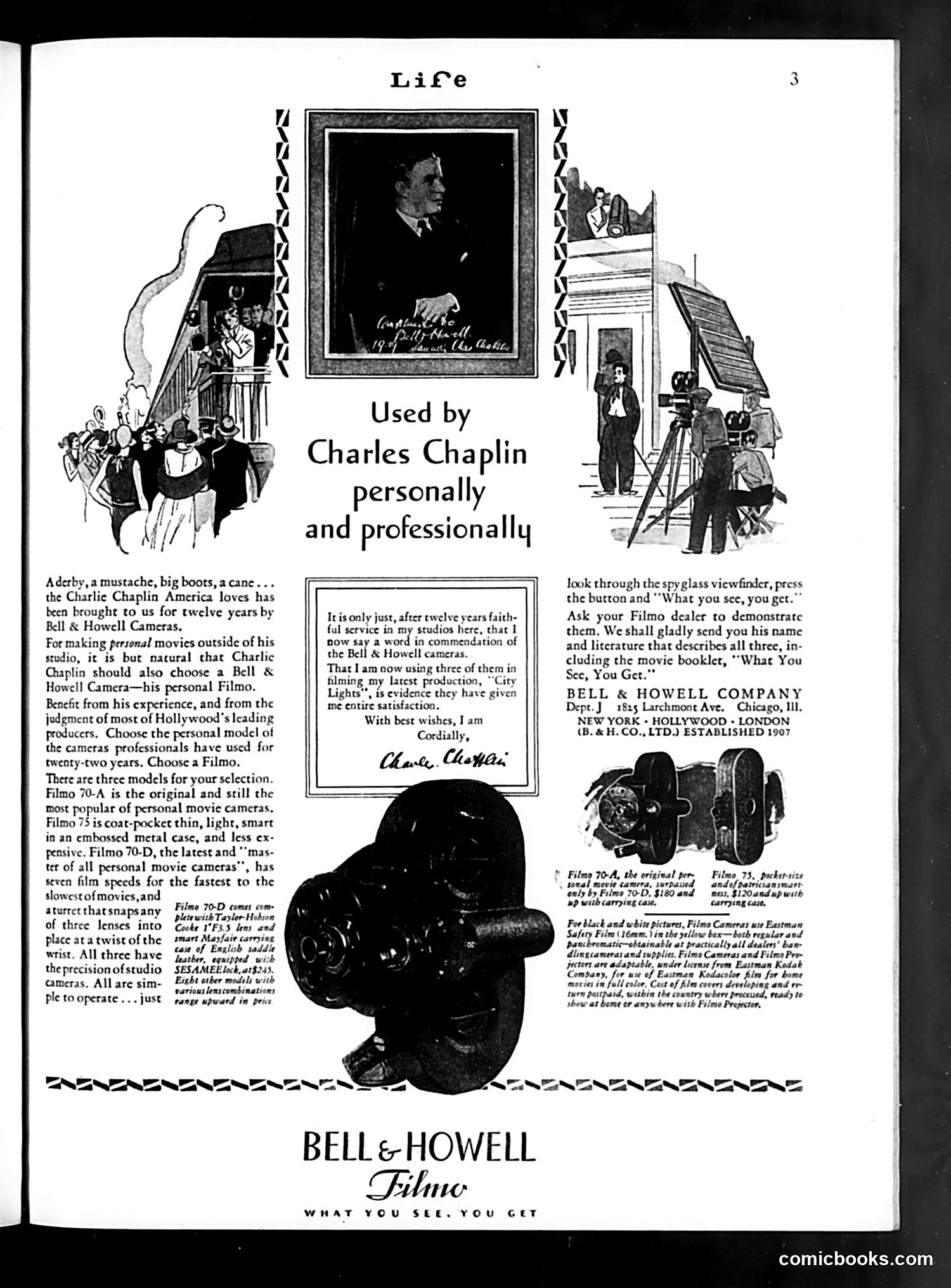
# Analysis This page is primarily **advertising, not satire or political commentary**. It's a Bell & Howell Filmo camera advertisement from *Life* magazine, featuring an endorsement from **Charlie Chaplin**. The ad emphasizes that Chaplin used Bell & Howell cameras for twelve years in his studio work and personal filmmaking. The decorative illustrations flanking the central portrait show theatrical and film-production scenes, reinforcing the product's association with professional cinema. The large camera image at bottom displays the equipment being marketed. The text emphasizes the cameras' precision engineering, range of models, and ease of operation—standard advertising copy positioning the product as suitable for both professional and amateur filmmakers. This is **commercial promotion**, not editorial commentary.
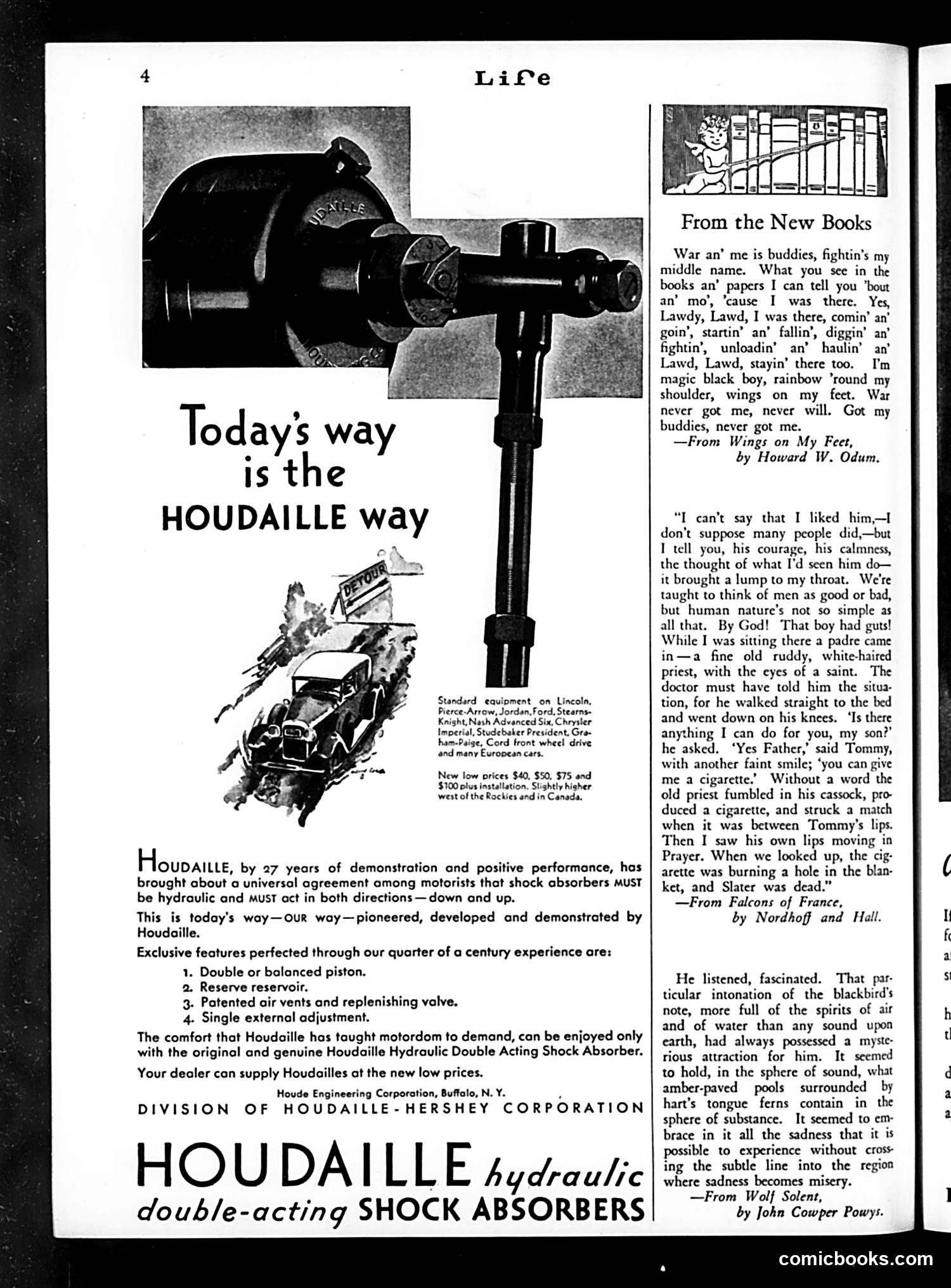
# Page Analysis This page is primarily **advertising**, not satire or political commentary. The left side features a large advertisement for Houdaille hydraulic shock absorbers for automobiles, emphasizing their "double-acting" design and reliability through "27 years of demonstration." The right side contains **"From the New Books"** — literary excerpts from contemporary war and adventure novels, including works by Howard W. Odum and others. These passages reflect post-WWI literature exploring themes of combat experience, courage, and human nature. There is **no political cartoon** on this page. The imagery is entirely commercial and literary. The content reflects 1920s-era American publishing and automotive marketing, with no identifiable satire or social commentary present.
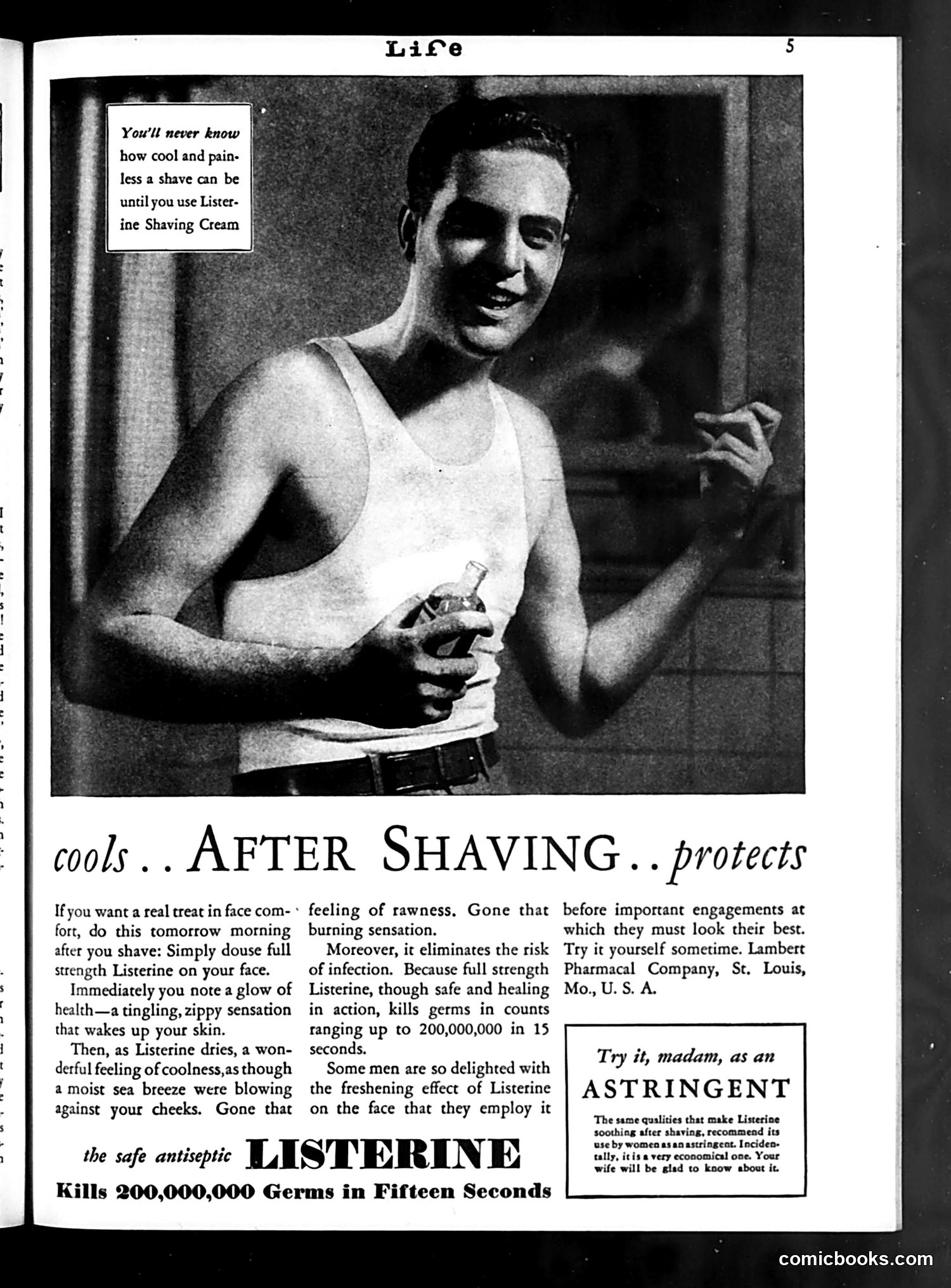
# Listerine Advertisement Analysis This is a **Listerine advertisement**, not a political cartoon. It promotes Listerine as an after-shaving product and antiseptic mouthwash. The ad features a man in an undershirt holding a bottle, smiling contentedly. The headline promises that Listerine "cools...after shaving...protects" and claims it "kills 200,000,000 germs in fifteen seconds." The copy emphasizes the product's soothing sensation post-shave and its antiseptic properties, targeting men concerned with both grooming comfort and hygiene. A sidebar promotes Listerine as an astringent for women. This reflects early-twentieth-century marketing that positioned antiseptics as cure-alls and heavily emphasized germ-killing—a common advertising strategy of that era before modern medical understanding.
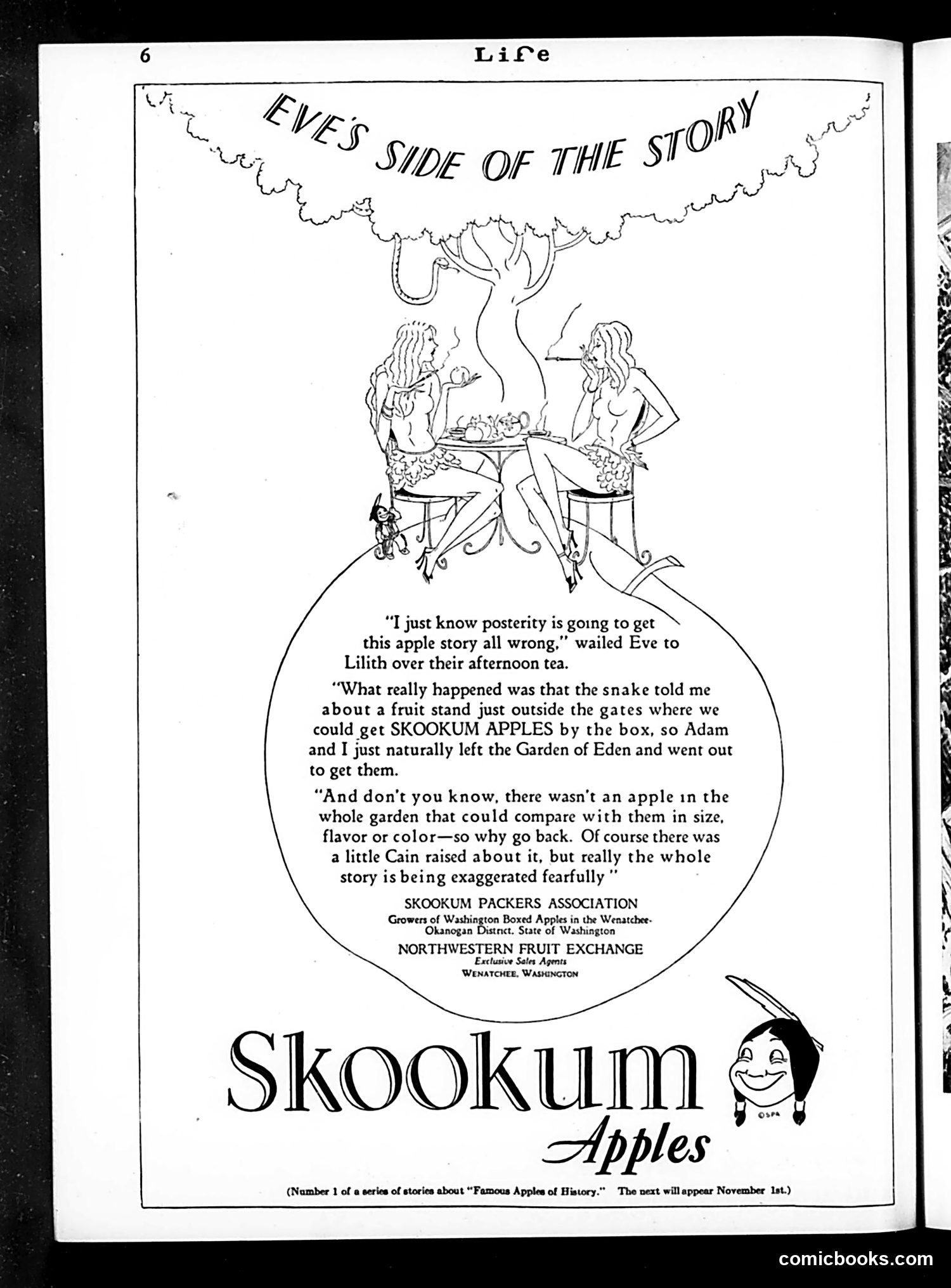
# "Eve's Side of the Story" — Skookum Apples Advertisement This is a **vintage advertisement disguised as humor**, not political satire. The ad presents "Eve's side of the story" regarding the Biblical apple incident. Two women sit beneath a tree while Eve claims the snake actually directed Adam and her to a fruit stand *outside* Eden selling Skookum brand apples—not the forbidden fruit. She dismisses the Fall of Man narrative as exaggerated, blaming gossip around Cain. The joke is an early advertising technique: humorously recontextualizing a famous story to promote a commercial product. Skookum Apples, grown in Washington State, uses playful irreverence toward religious narrative to position their apples as superior and desirable. The mascot apple character at bottom reinforces the brand identity.
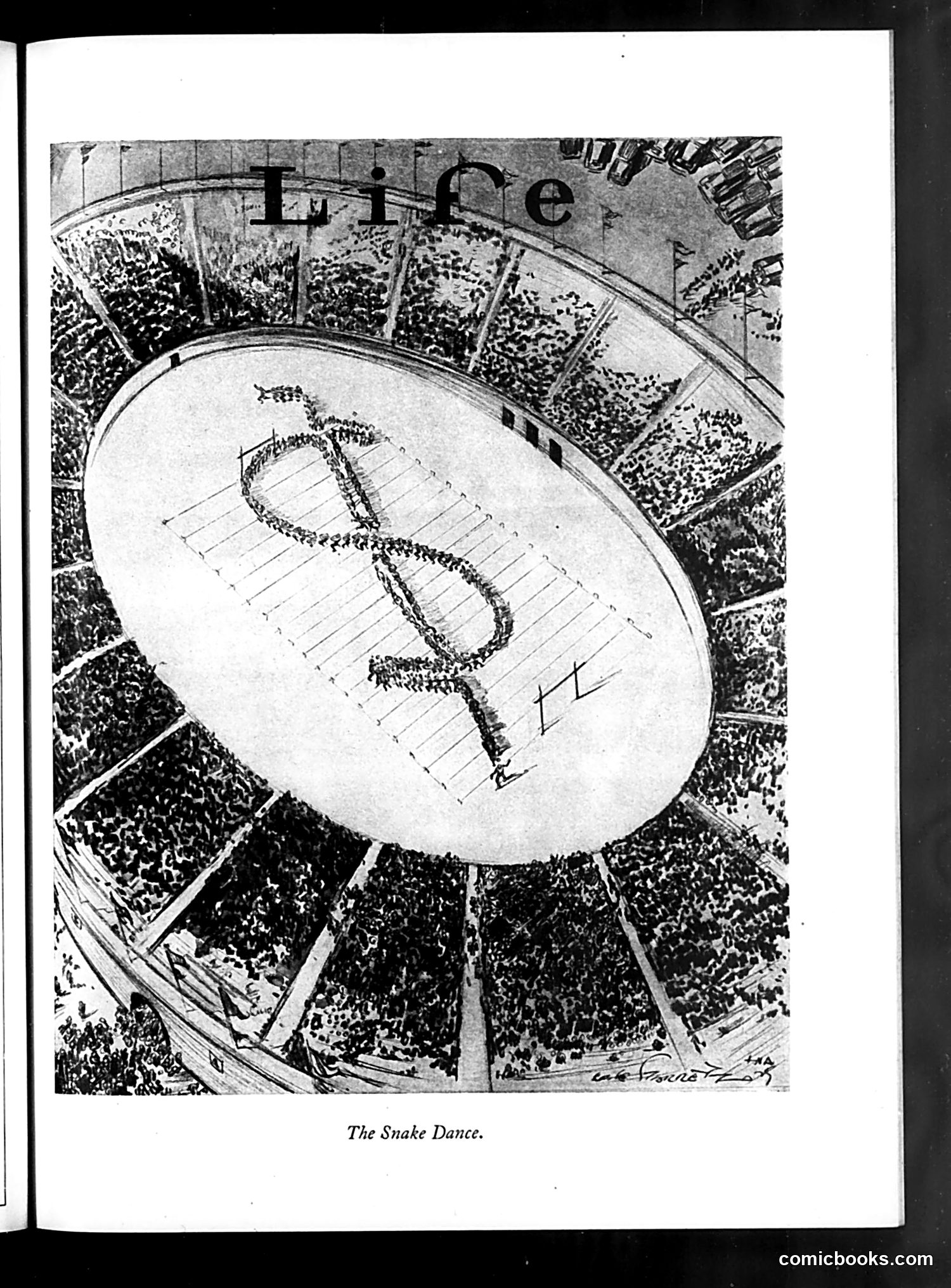
# "The Snake Dance" This aerial photograph shows a large stadium filled with spectators arranged in a serpentine pattern on the field below. The image appears to document an actual organized crowd formation or performance rather than political satire. "The Snake Dance" likely references a real public spectacle—possibly a college tradition, civic pageant, or large-scale organized event popular in early-to-mid 20th century America, when *Life* magazine frequently documented such mass gatherings and social phenomena. The photograph's bird's-eye perspective emphasizes the geometric precision of thousands of people arranged into a snake-like shape, which would have been visually striking and novel to contemporary readers. Without additional context from the magazine issue, the specific occasion remains unclear, though this appears celebratory rather than satirical in intent.
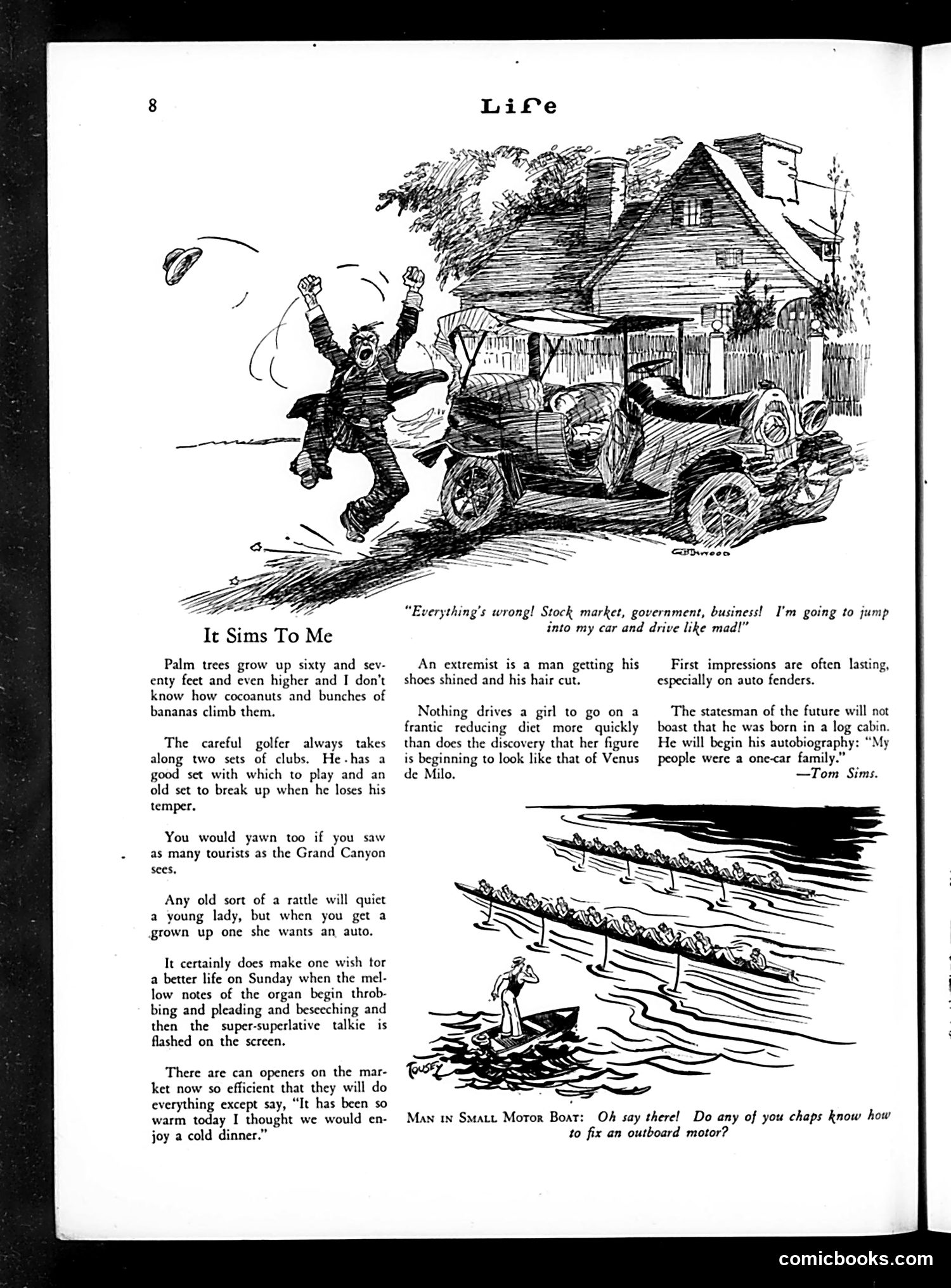
# Analysis: "It Sims To Me" This page from *Life* magazine features satirical commentary attributed to "Tom Sims." The main cartoon depicts a man joyfully jumping beside an automobile, declaring he'll "jump into my car and drive like mad!" in response to troubles with "Stock market, government, business!" This appears to be 1920s-era satire mocking Americans' escapism through automobiles and reckless driving during economic or political turmoil. The cartoon suggests that rather than addressing serious problems, people sought refuge in the newfound thrill of motorcar culture. The accompanying text contains various humorous observations about contemporary life—golf, fashion, and cinema—typical of *Life*'s satirical approach to American social trends. The secondary illustration shows a man in a motorboat, continuing the theme of recreational escape.
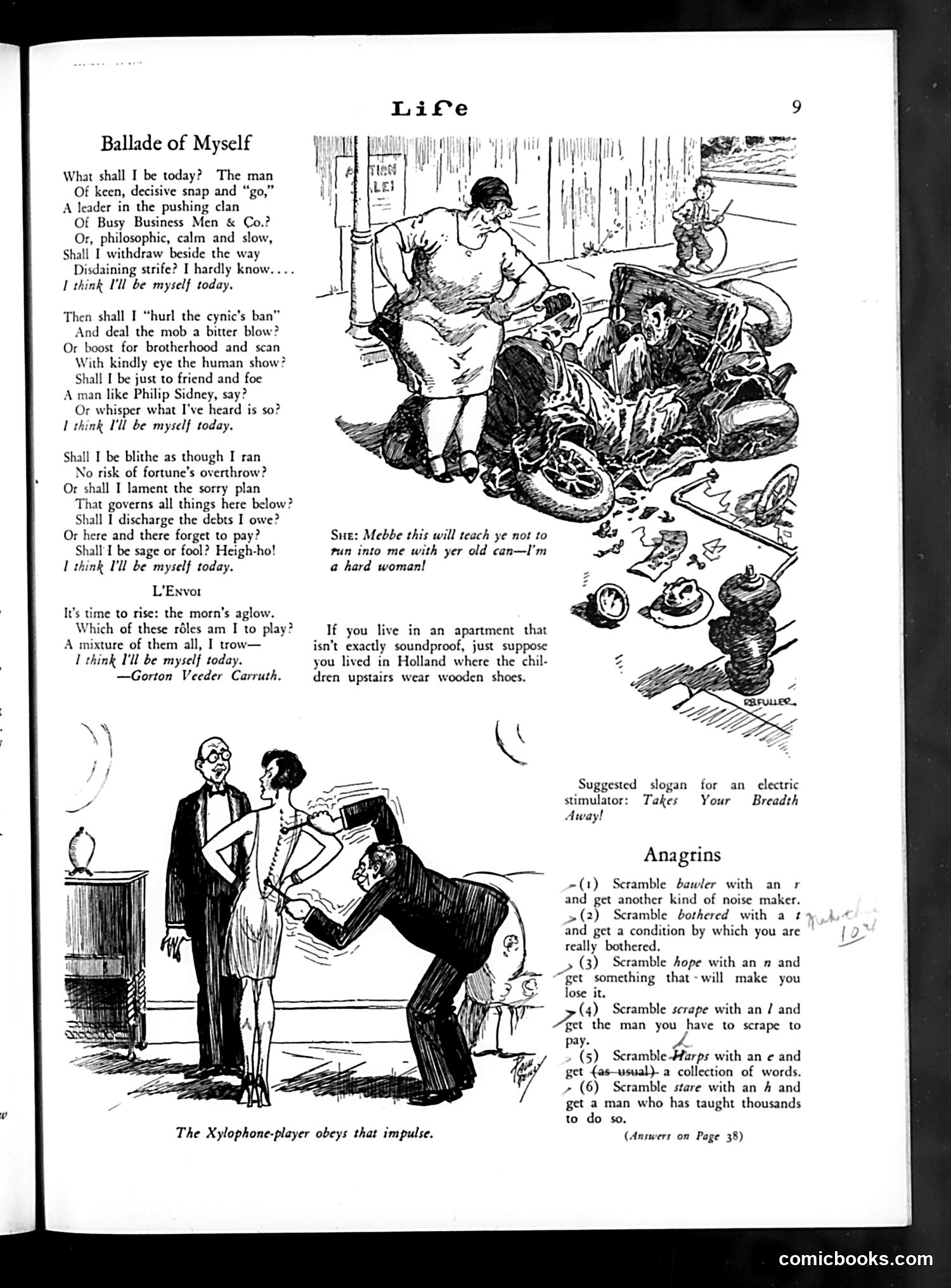
# Page Analysis: Life Magazine, Page 9 This page contains three distinct pieces of satire: 1. **"Ballade of Myself"** — A poem mocking self-centered indecision, likely critiquing contemporary business culture and philosophy. The repeated refrain "I think I'll be myself today" satirizes empty rhetoric about individualism. 2. **Top cartoon** — Shows a woman surrounded by domestic chaos (dishes, cooking implements), with the caption "Mebbe this will teach ye not to run into me with yer old can—I'm a hard woman!" This mocks the emerging stereotype of the independent, liberated woman while also satirizing traditional domestic life. 3. **Bottom cartoon** — Titled "The Xylophone-player obeys that impulse," depicts a formal couple where the man appears to be playing a xylophone on the woman's body. This is sexual satire commenting on social propriety and impulse versus restraint in romantic/social interactions.
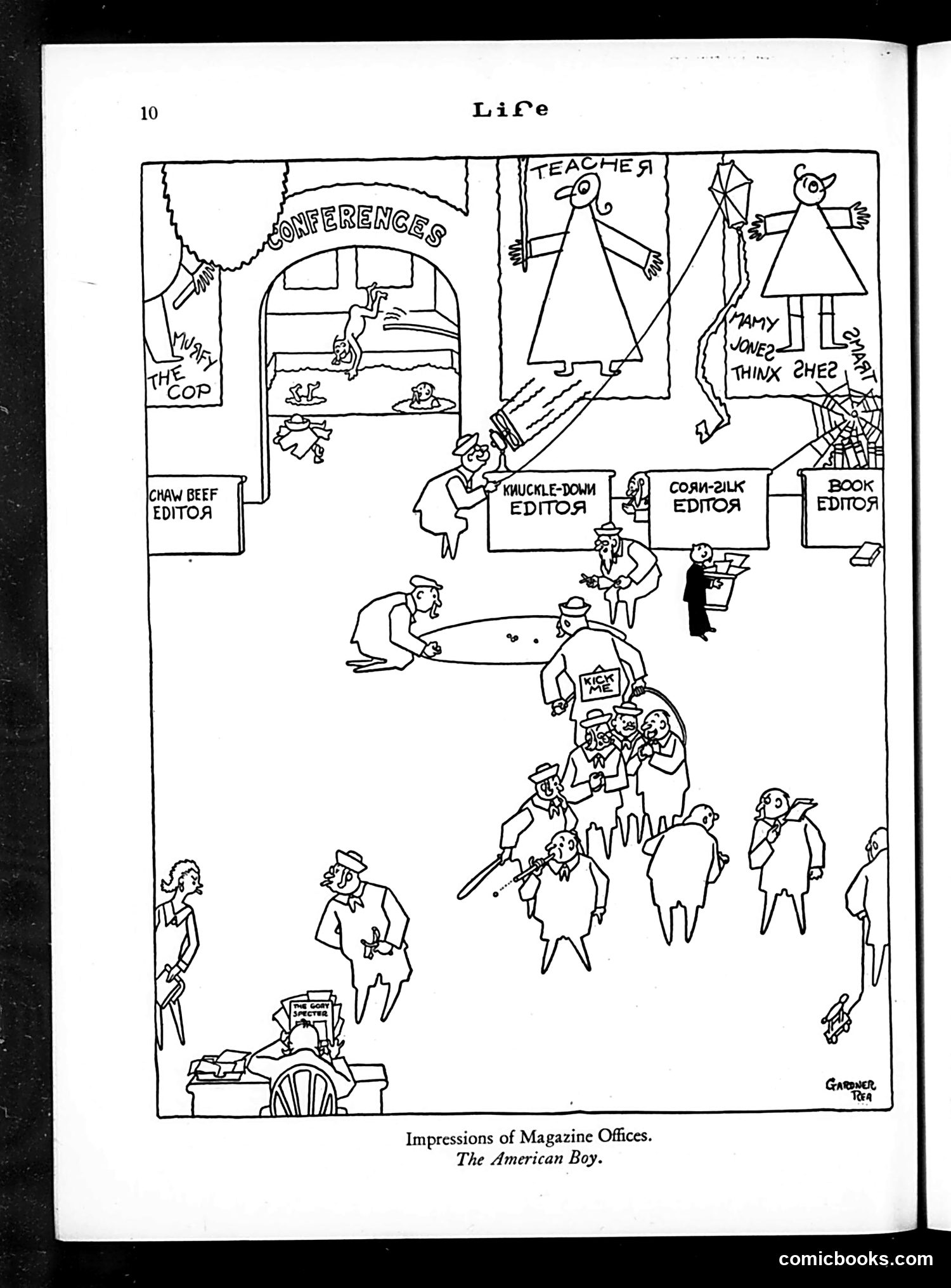
# "Impressions of Magazine Offices" - The American Boy This satirical cartoon depicts the chaotic operations of *The American Boy* magazine's offices. The illustration shows various editorial departments labeled: "Chaw Beef Editor," "Knuckle-Down Editor," "Corn-Silk Editor," and "Book Editor." The cartoon mocks the magazine's perceived focus on rough-and-tumble boys' entertainment through exaggerated scenes: children playing marbles, wrestling, fighting, and causing mayhem. A "Teacher" figure appears distressed at top. The "Conferences" section shows authority figures seemingly ineffectual amid the disorder. The satire suggests *The American Boy* caters to rowdy, mischievous youth interests—emphasizing physical roughhousing and street games—rather than refined or educational content. It's a humorous critique of the magazine's editorial priorities and target demographic.