A complete issue · 36 pages · 1929
Life — August 30, 1929
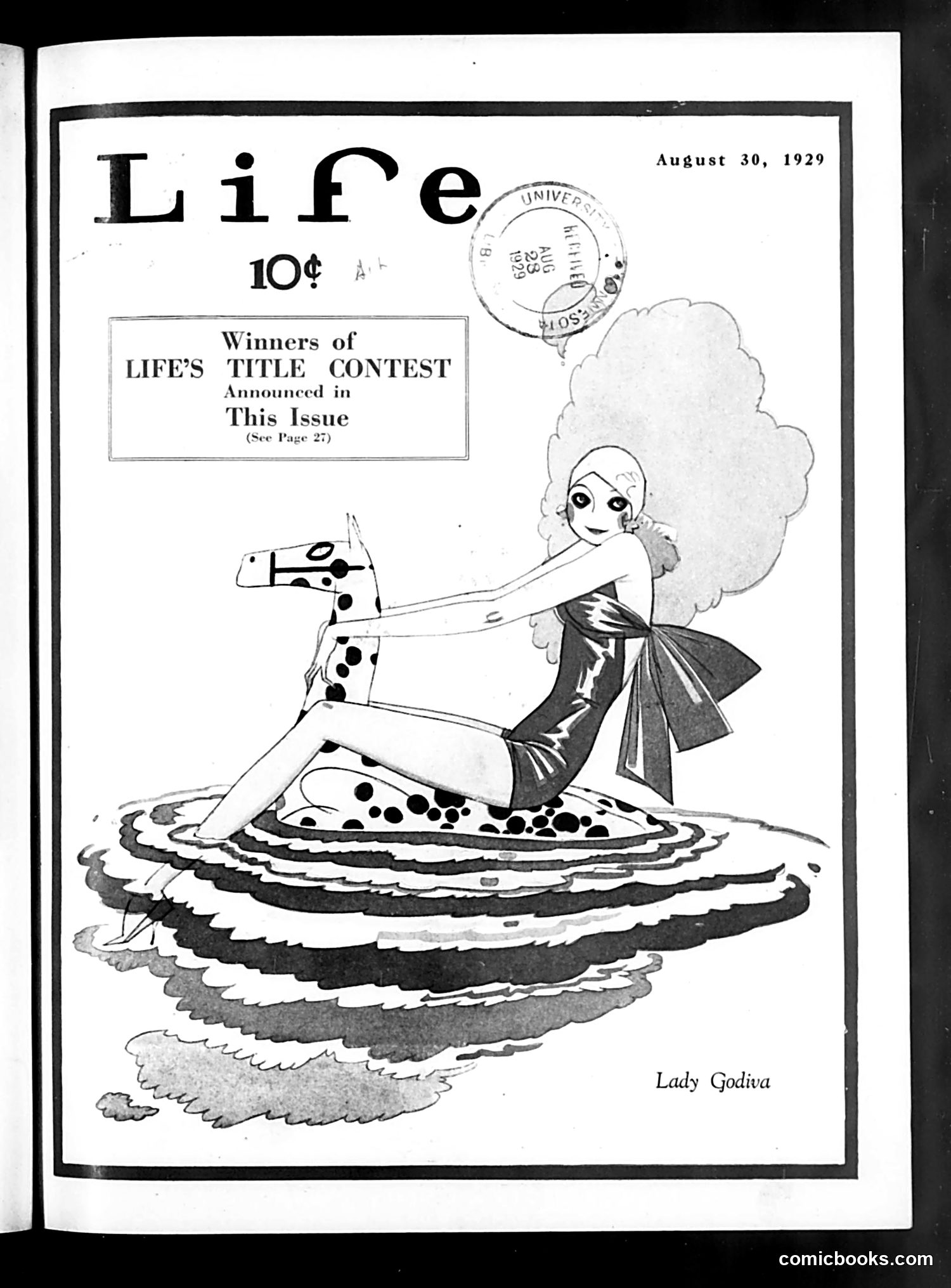
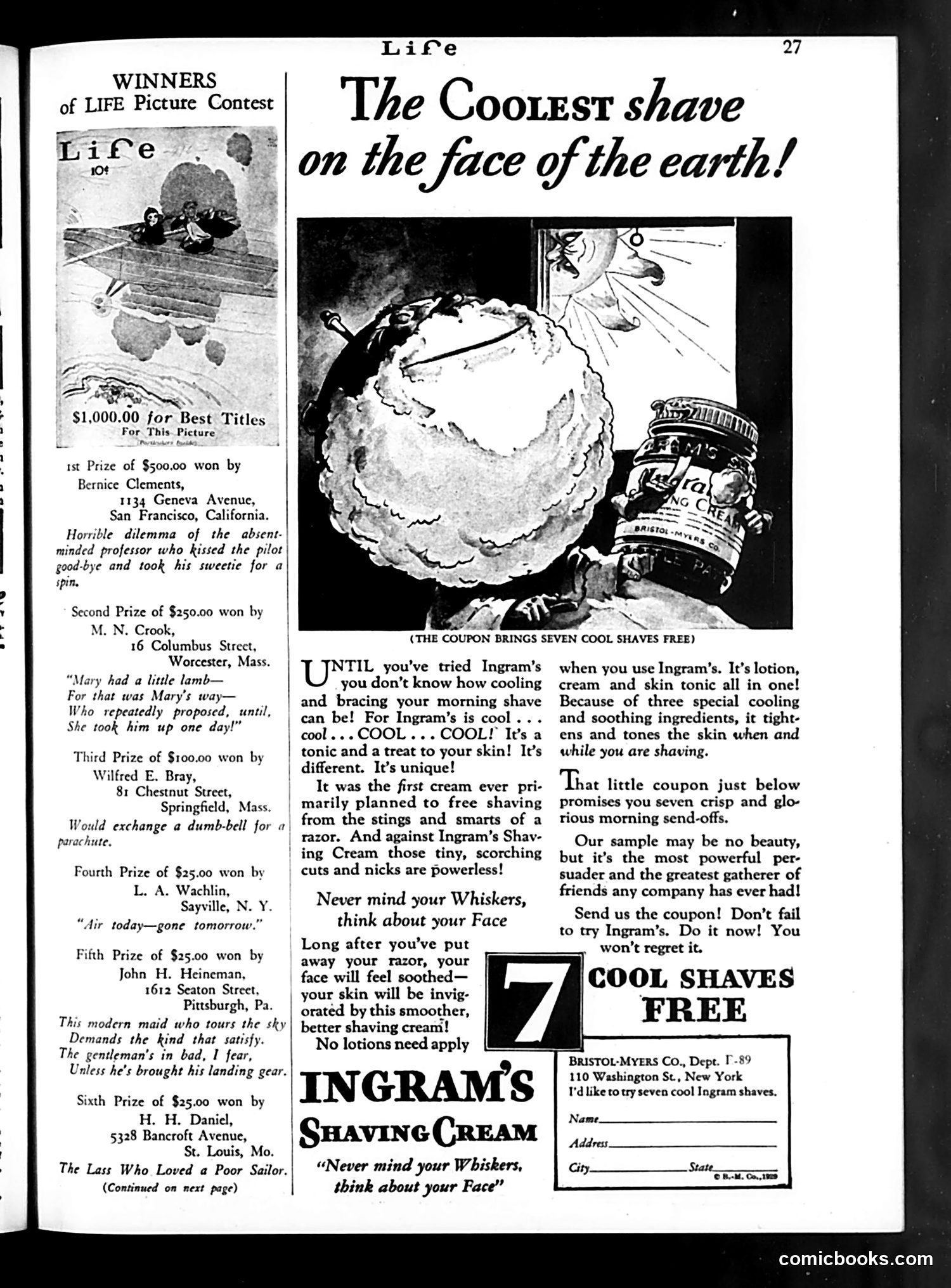
# Analysis of Life Magazine Cover, August 30, 1929 This is the cover of Life magazine, a satirical publication, priced at 10 cents. The illustration titled "Lady Godiva" depicts a stylized woman with voluminous bobbed hair (characteristic of 1920s flapper fashion) sitting on a ornate, cloud-like cushion while holding reins attached to a spotted horse. The image appears to satirize the extravagance and frivolity of the Jazz Age wealthy, specifically mocking wealthy women's indulgent lifestyles. The "Lady Godiva" reference invokes the medieval legend of a noblewoman who rode naked through town, suggesting commentary on shameless displays of wealth or impropriety. The cover also announces a "Life's Title Contest" with winners announced inside (page 27).
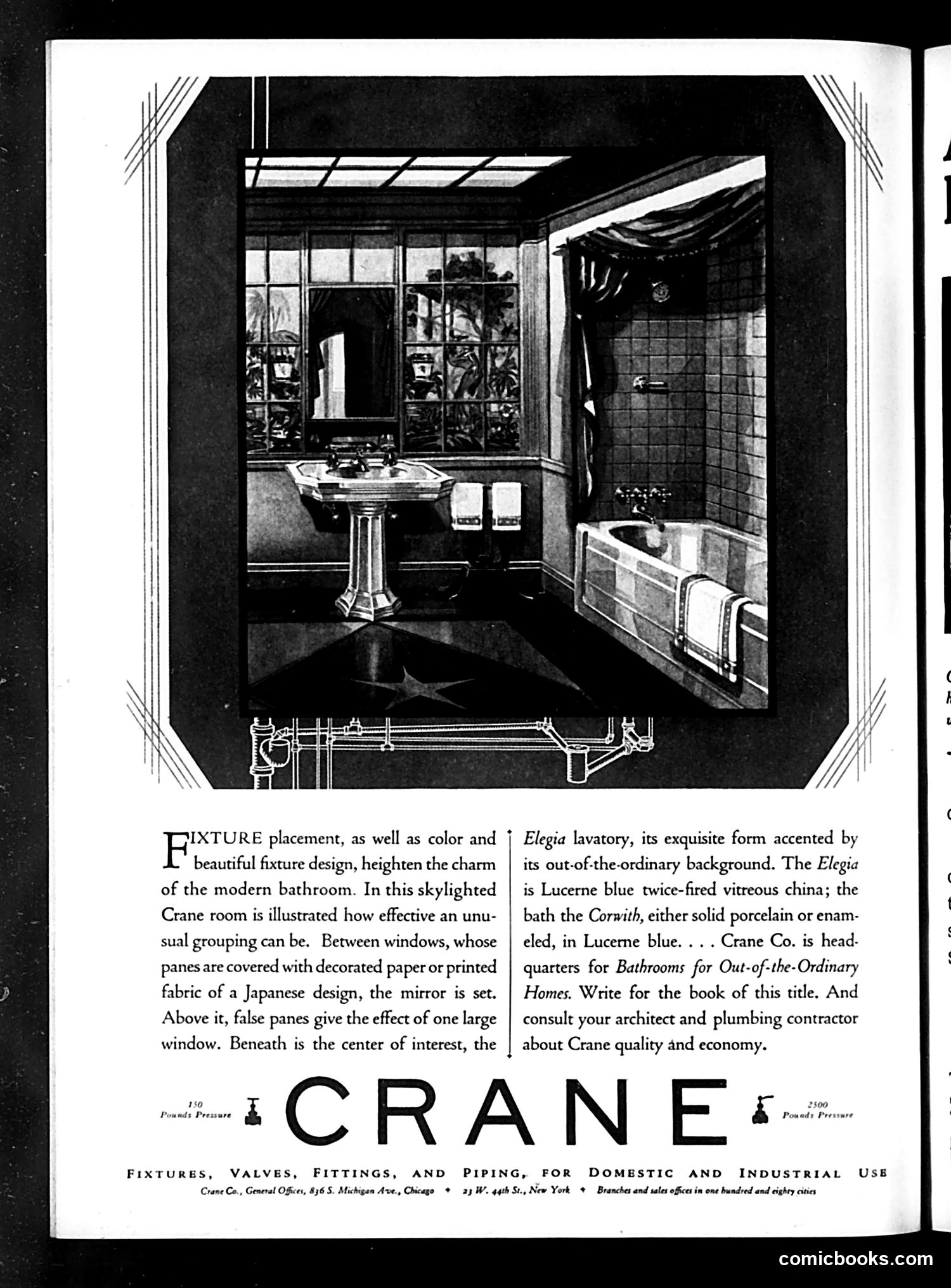
# Analysis This is **not a political cartoon or satire page**—it's a **Crane Company advertisement** for bathroom fixtures from what appears to be an early-to-mid 20th century Life magazine. The image shows a luxurious bathroom interior design featuring a pedestal sink, bathtub with railings, tiled walls, and decorative mirrored windows. The ad copy emphasizes "fixture placement" and "beautiful fixture design" for modern homes, highlighting Crane's Elegia lavatory in "Lucerne blue" and Corwith bath options. The text markets these as "Bathrooms for Out-of-the-Ordinary Homes," positioning Crane as the manufacturer for quality, economical bathroom design. There is no political or social satire present—this is straightforward product advertising emphasizing modern plumbing aesthetics and design innovation.
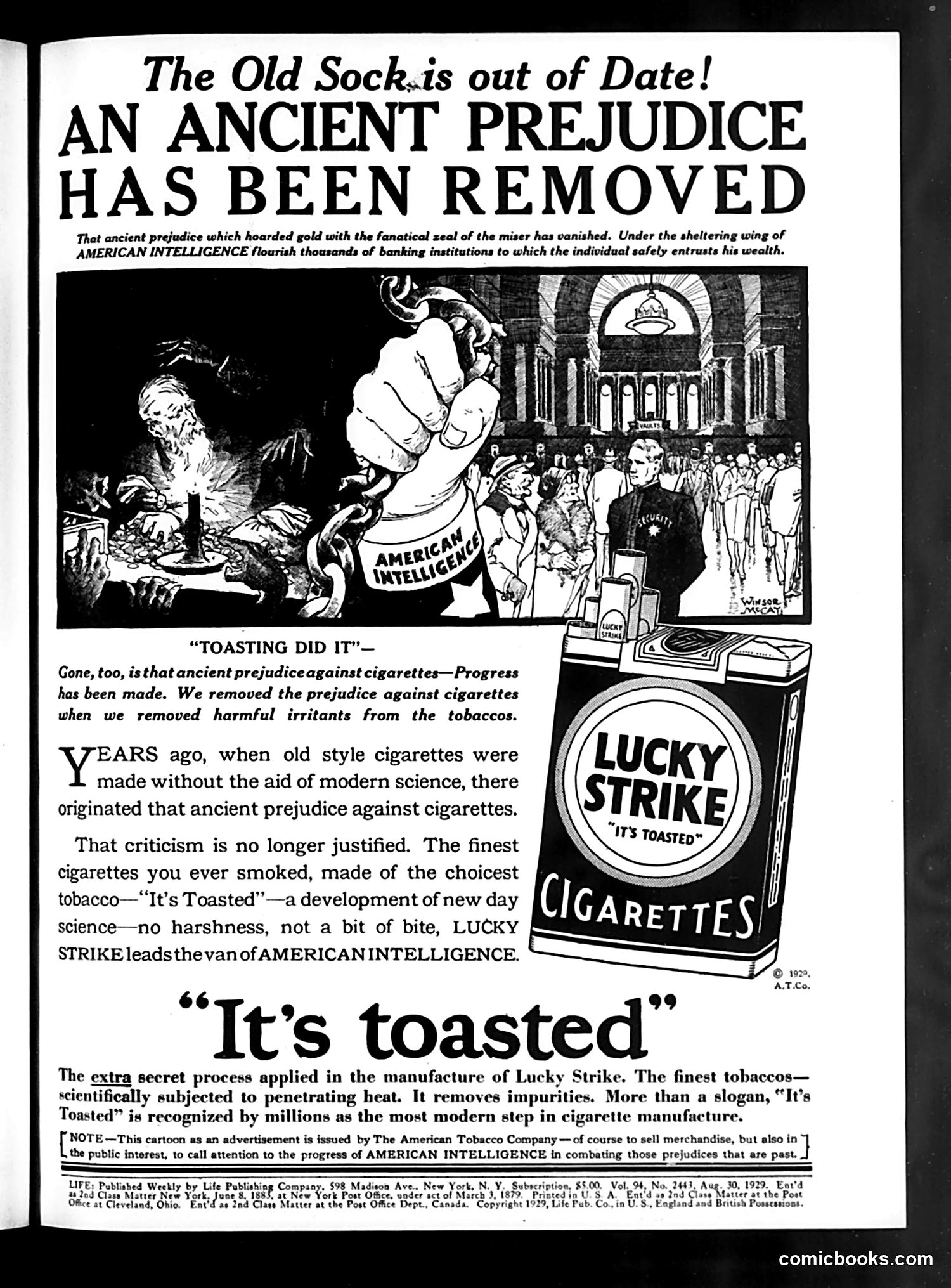
# Analysis: Lucky Strike Cigarettes Advertisement This is a **cigarette advertisement disguised as editorial content**, not genuine satire. The page uses nationalist rhetoric and pseudo-scientific claims to market Lucky Strike cigarettes. The illustration shows a giant hand labeled "American Intelligence" crushing snakes (representing "ancient prejudice against cigarettes"). The accompanying text falsely claims that scientific advancement—specifically Lucky Strike's "toasting" process—has removed harmful elements from tobacco, making old anti-smoking concerns obsolete. The ad conflates product innovation with progress and patriotism, suggesting skepticism toward cigarettes is backward thinking. This represents aggressive early-20th-century tobacco marketing that exploited American faith in science and modernity to overcome legitimate health concerns—before cigarettes' actual dangers were widely acknowledged.
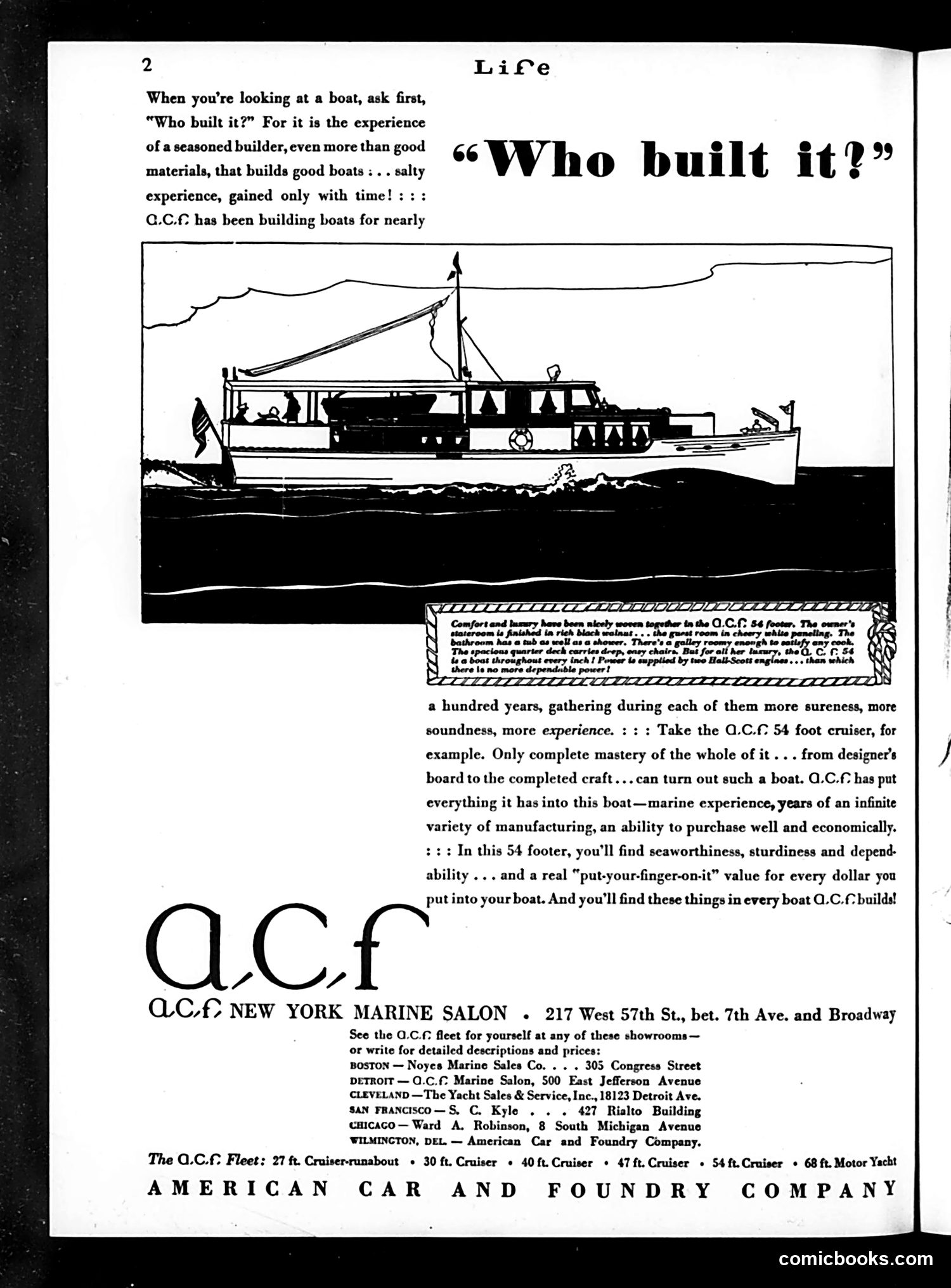
This page is primarily **advertising, not satire or political commentary**. It's a full-page advertisement for O.C.F. (American Car and Foundry Company) boats, specifically promoting their 54-foot cruiser model. The ad uses the headline "Who built it?" to emphasize O.C.F.'s century of boat-building experience and craftsmanship. The illustration shows a motor yacht with detailed cross-section information about its construction and amenities (rich mahogany interior, comfortable quarters, Hall-Scott engines). The text argues that a boat's quality depends on the builder's experience and skill—materials alone don't suffice. O.C.F. claims their accumulated expertise ensures seaworthiness, durability, and value across their entire fleet of vessels. This is straightforward product marketing targeting affluent leisure-boat buyers.
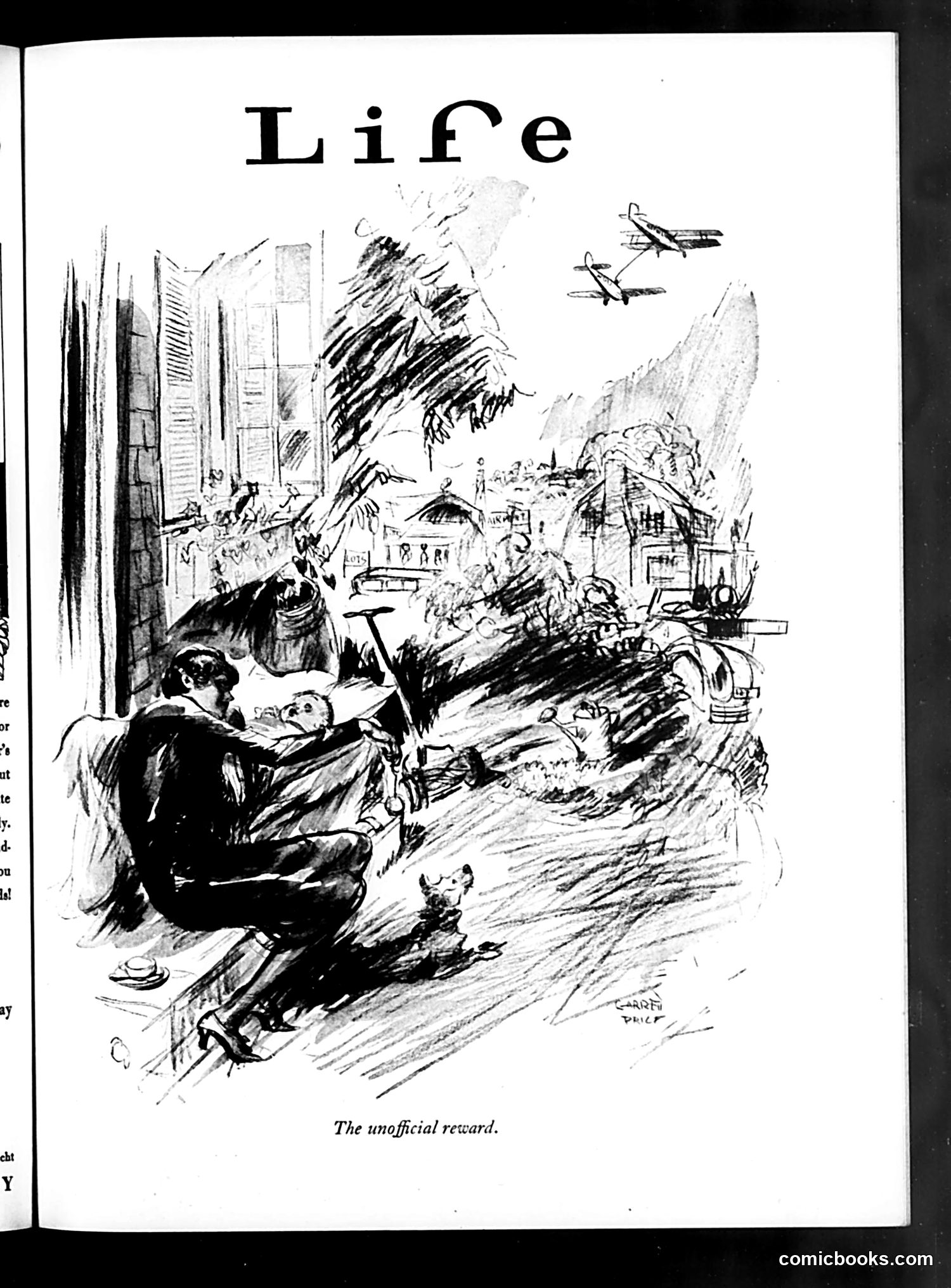
# "Life" Magazine Cartoon Analysis This page titled "Life" features a sketch captioned "The unofficial record." The illustration shows a man sitting on what appears to be a ledge or step, holding papers while observing a chaotic urban scene below. The scene depicts destruction—burning buildings, collapsed structures, and general devastation—with two military aircraft flying overhead. The cartoon appears to satirize the gap between official governmental reports and actual wartime conditions. The "unofficial record" likely refers to honest documentation of war damage that contradicts sanitized official statements. Given the aircraft and urban destruction, this probably comments on bombing campaigns or their aftermath, contrasting reality with propagandistic or censored accounts. The specific historical context remains unclear without additional publication details.
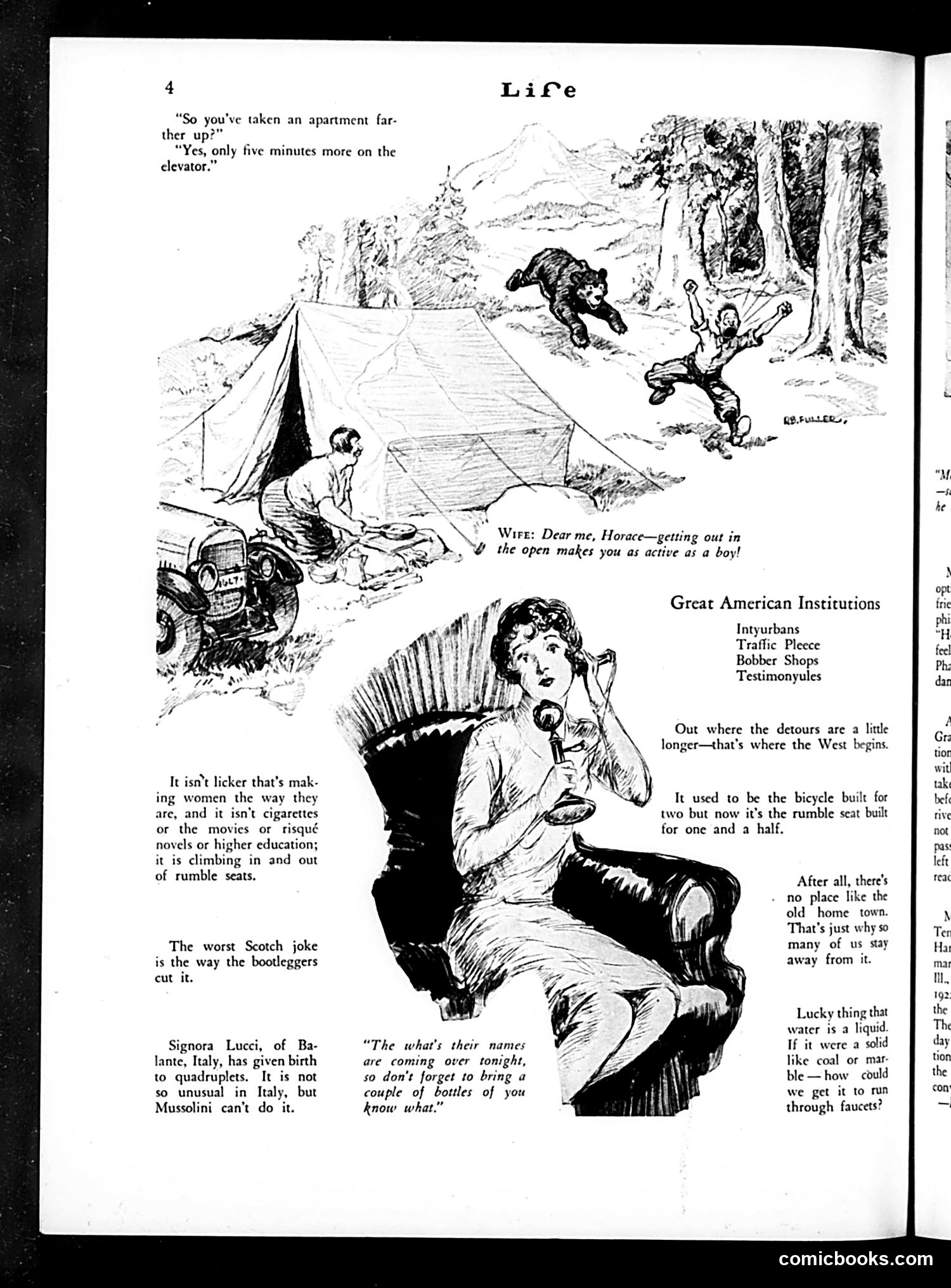
# Analysis of Life Magazine Page This page satirizes American domestic life and social institutions through humor. The top cartoon depicts a camping scene where a wife compliments her husband Horace on becoming "active as a boy" outdoors—contrasting urban life with rugged recreation. The section titled "Great American Institutions" mockingly lists "Inturbans / Traffic Fleece / Bobber Shops / Testimonyules"—playing on words to critique modern conveniences and social practices. The lower illustration shows a woman on the telephone discussing an evening party, with accompanying text joking about bootleggers, Scotch whiskey, and bringing bottles to social gatherings—likely referencing Prohibition-era speakeasy culture and the illegal alcohol trade. The overall tone mocks contemporary American social customs, consumerism, and the gap between small-town nostalgia and urban reality.
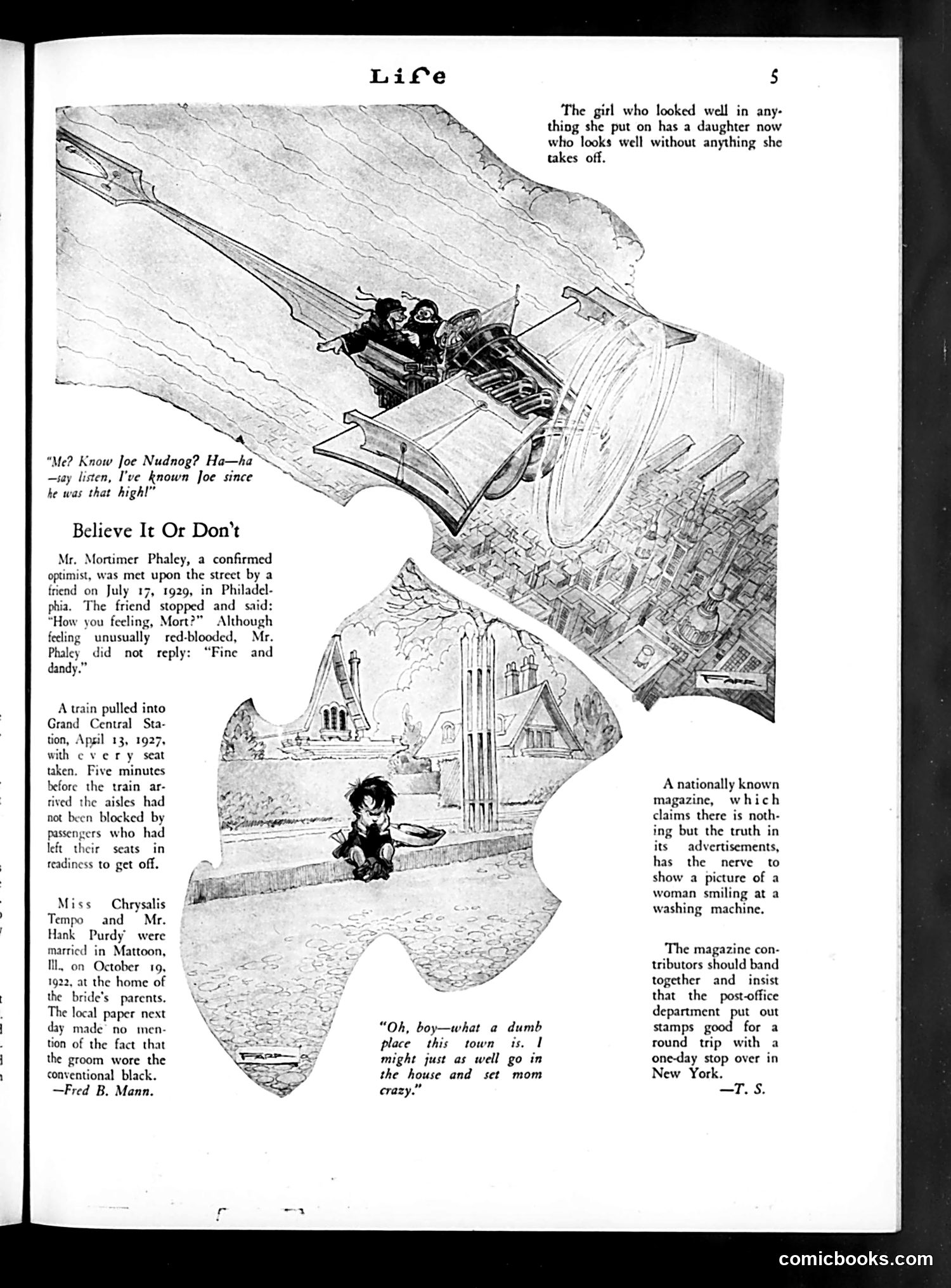
# Analysis of Life Magazine Page 5 This page contains three distinct humor pieces: 1. **Top cartoon**: Shows two people on a roller coaster with dialogue "Me? Know Joe Nudnog? Ha—ha—say listen, I've known Joe since he was that high!" The joke satirizes social pretension—people claiming familiarity with others they barely know. 2. **"Believe It Or Don't" section**: Anecdotes about odd coincidences (a man meeting a friend while unusually flushed, a train departing exactly when all passengers were seated, a groom wearing conventional black to his wedding). These mock the magazine's tendency to highlight trivial or fabricated "remarkable" occurrences. 3. **Bottom cartoon**: A boy in a shabby town says "Oh, boy—what a dumb place this town is. I might just as well go in the house and set mom crazy." This satirizes small-town tedium and youthful restlessness.
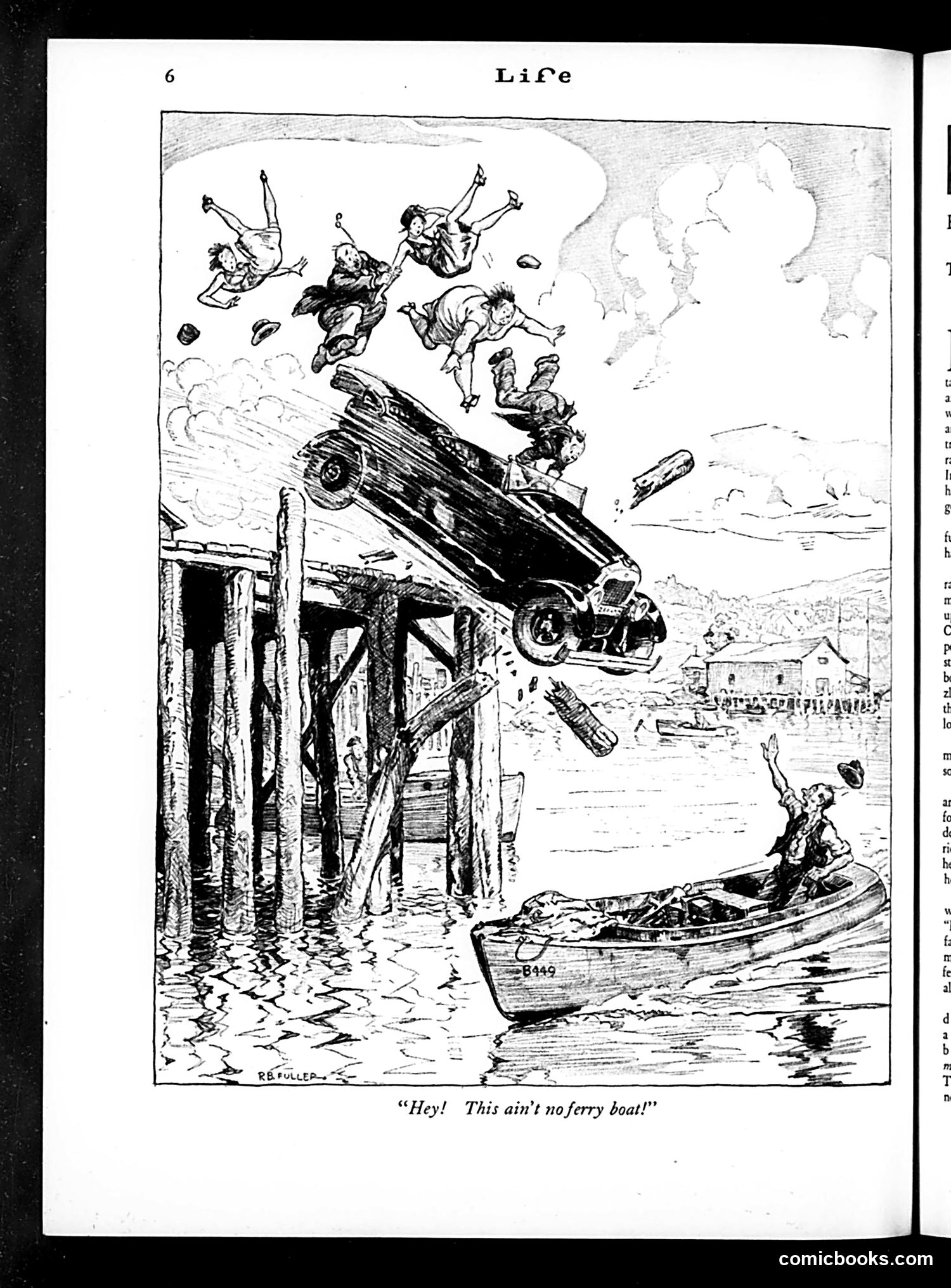
# Analysis This cartoon depicts a chaotic scene where a truck has crashed off a wooden pier into water below, with people and cargo flying through the air. A man in a small boat below shouts "Hey! This ain't no ferry boat!" The humor is straightforward slapstick: the truck driver appears to have mistaken the pier for a ferry landing and driven straight off. The passenger's complaint plays on the absurdity—he's pointing out that a small rowboat is obviously not a vehicle ferry, yet the truck has just treated it as such. This is visual comedy about vehicular mishap and human error rather than political satire. The artist's signature appears to be "R.B. Fuller" or similar. The cartoon simply mocks careless driving and poor judgment without referencing specific political figures or events.
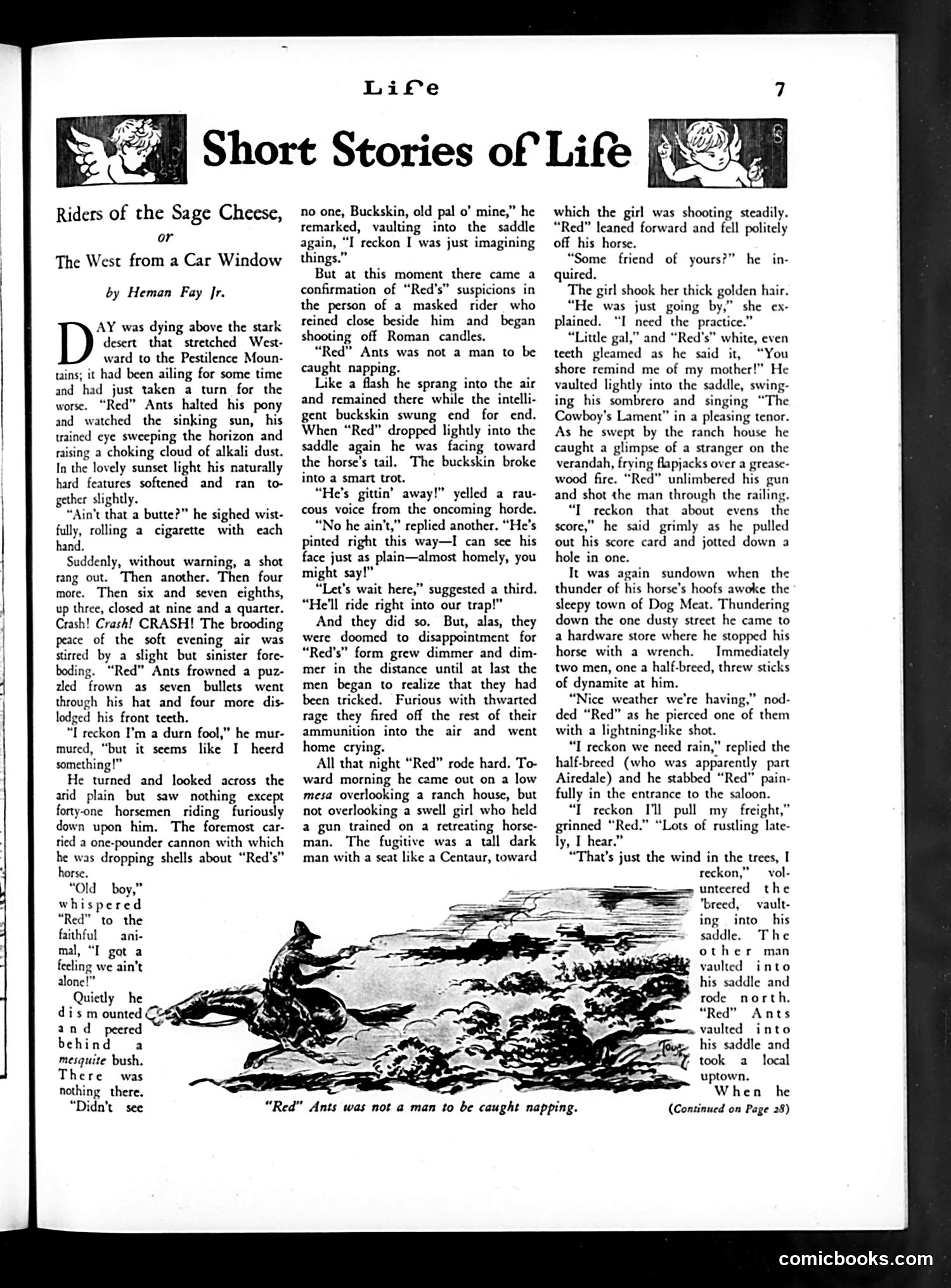
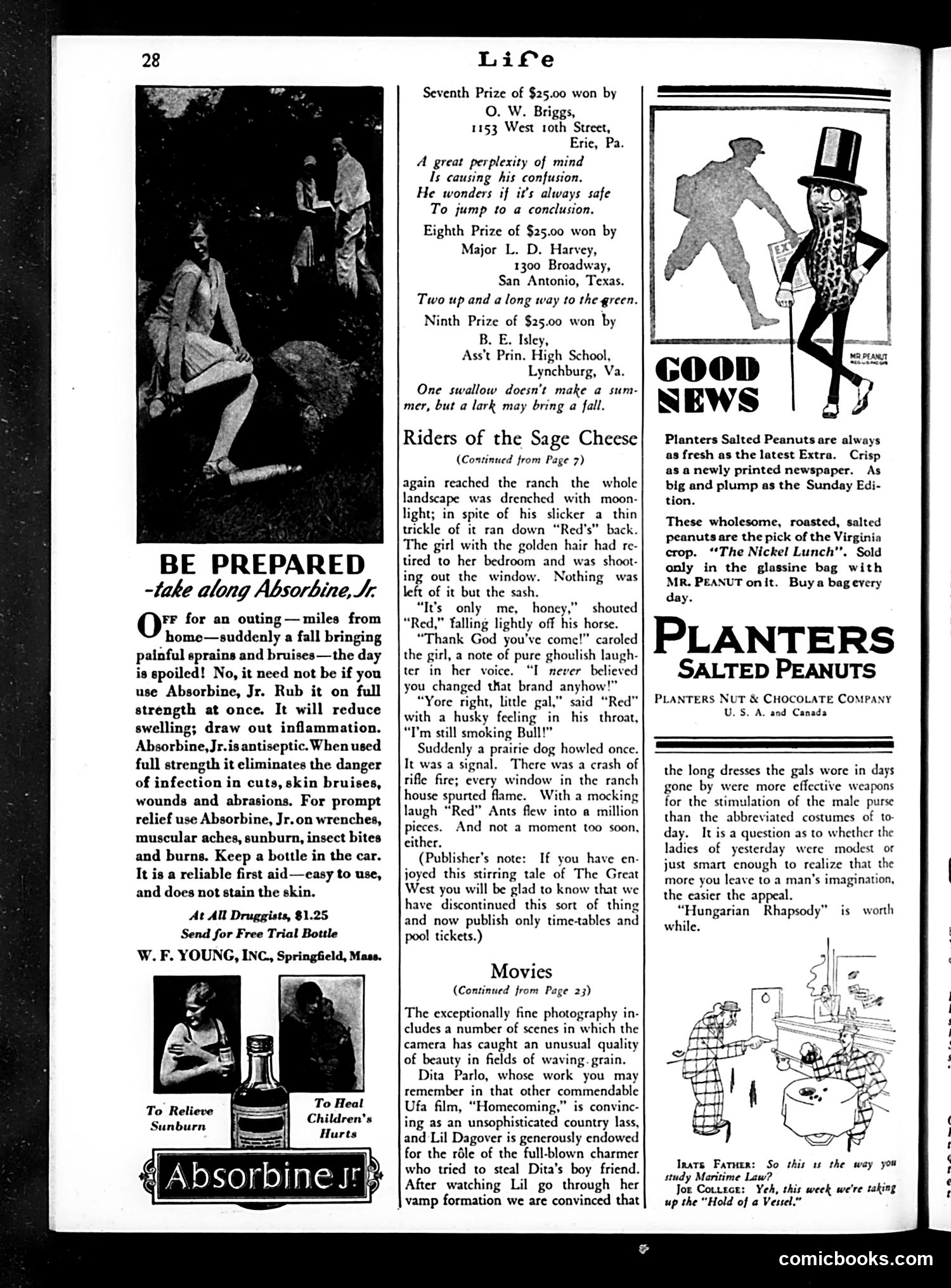
# Analysis This page contains a short story titled "Riders of the Sage Cheese, or The West from a Car Window" by Herman Fay Jr., rather than political satire or editorial cartoons. The narrative is a Western adventure featuring a character named "Red" Ants, a cowboy pursued by mounted horsemen across the desert. The story appears to be humorous fiction playing on Western genre conventions—the title's "Sage Cheese" pun suggests comic intent. The single illustration shows Red Ants on horseback being chased across arid terrain, matching the action described in the text. This is entertainment content typical of Life magazine's satirical humor section, not political commentary. The satire here is literary rather than political—poking fun at Western adventure tropes rather than addressing contemporary events.
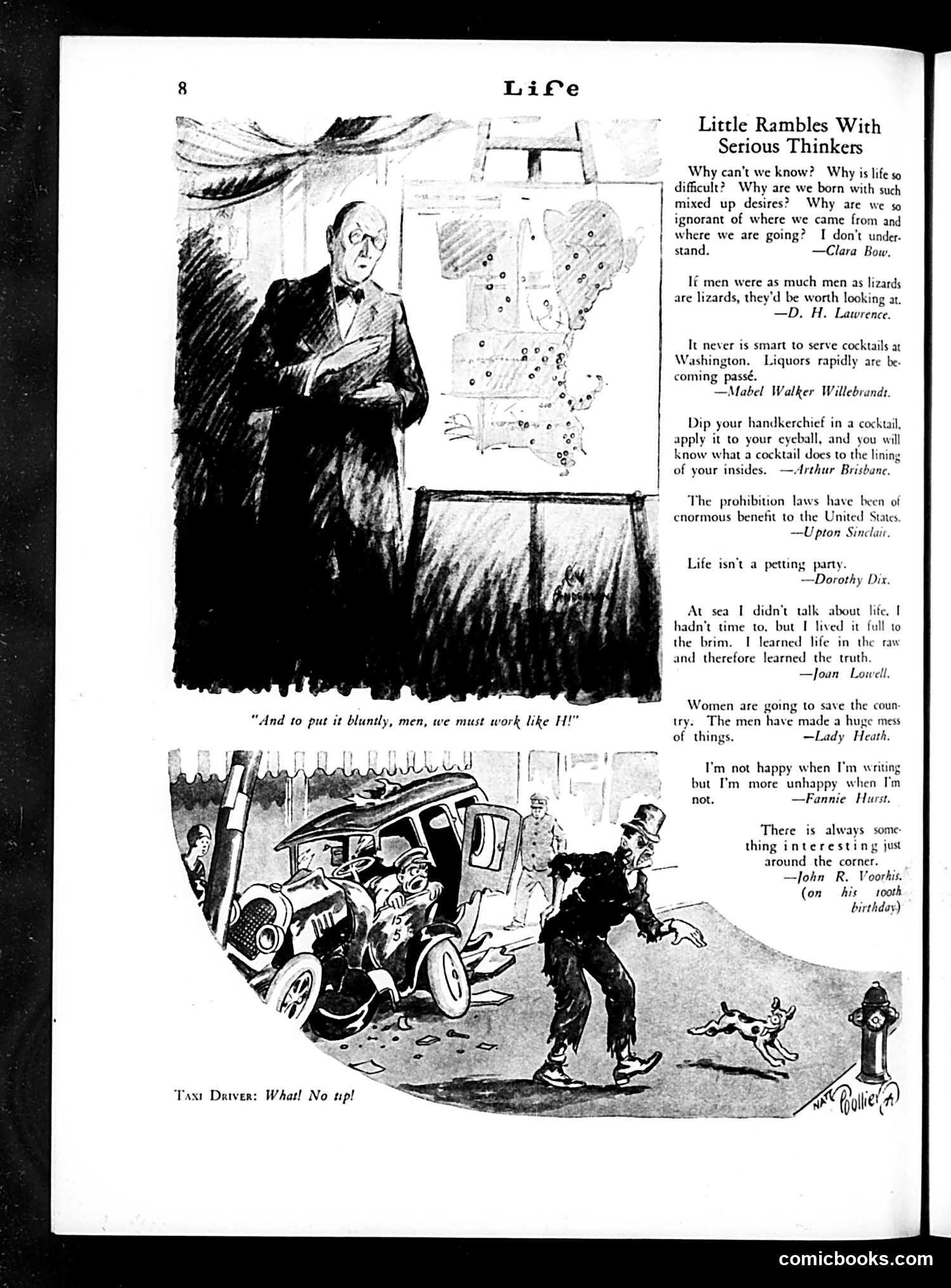
# Analysis of Life Magazine Page 8 This page features two cartoon illustrations with philosophical quotations titled "Little Rambles With Serious Thinkers." The **top cartoon** shows a man studying a map of the United States, with the caption "And to put it bluntly, men, we must work like H—!" This appears to satirize post-WWI workplace demands or industrial labor rhetoric. The **bottom cartoon**, captioned "Taxi Driver: What! No up!" depicts a collision scene where a taxi driver reacts with shock—likely commenting on the custom of tipping (or lack thereof). The "no up" refers to the absence of a gratuity. Both cartoons use humor to critique contemporary American social behaviors: intense work culture and tipping practices. The accompanying quotes from various writers reflect 1920s intellectual commentary on life's difficulties and contradictions.
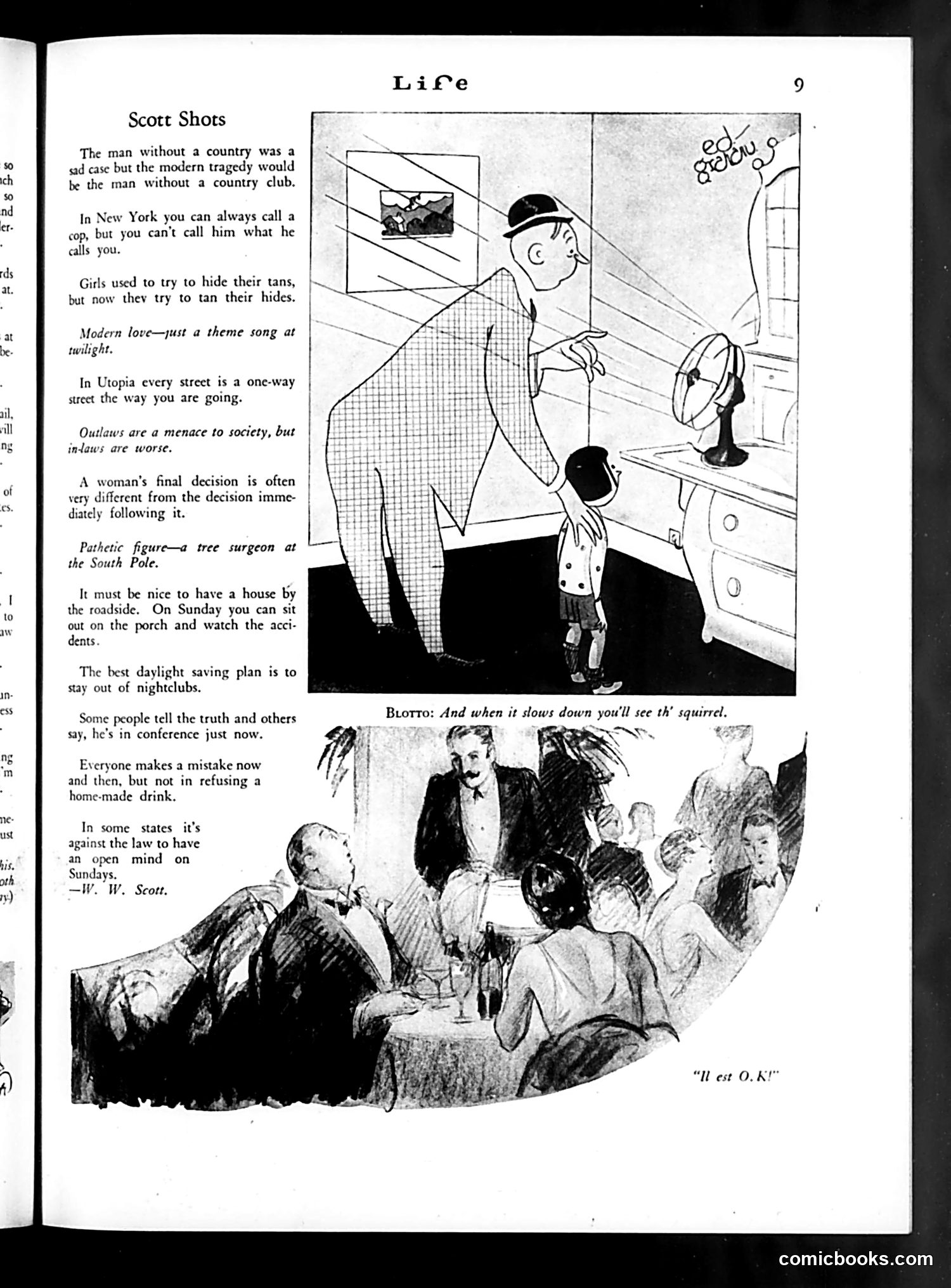
# Analysis of Life Magazine Page 9 This page contains satirical commentary by Scott Shots alongside two cartoon illustrations. The **top cartoon** depicts a man showing a child a fan, with the caption "And when it slows down you'll see th' squirrel." The joke appears to be about optical illusion or trick vision—a common parlor trick where a fan's blades, when slowing, create the illusion of an image. The **bottom cartoon** shows a dinner party scene with the caption "It eat O.K!" suggesting someone sampling unfamiliar or questionable food and reluctantly approving it. The accompanying **text snippets** are humorous observations about modern life—observations about New York police, tanning, love songs, and various social behaviors. The overall tone is wry commentary on 1920s American urban society and social conventions.
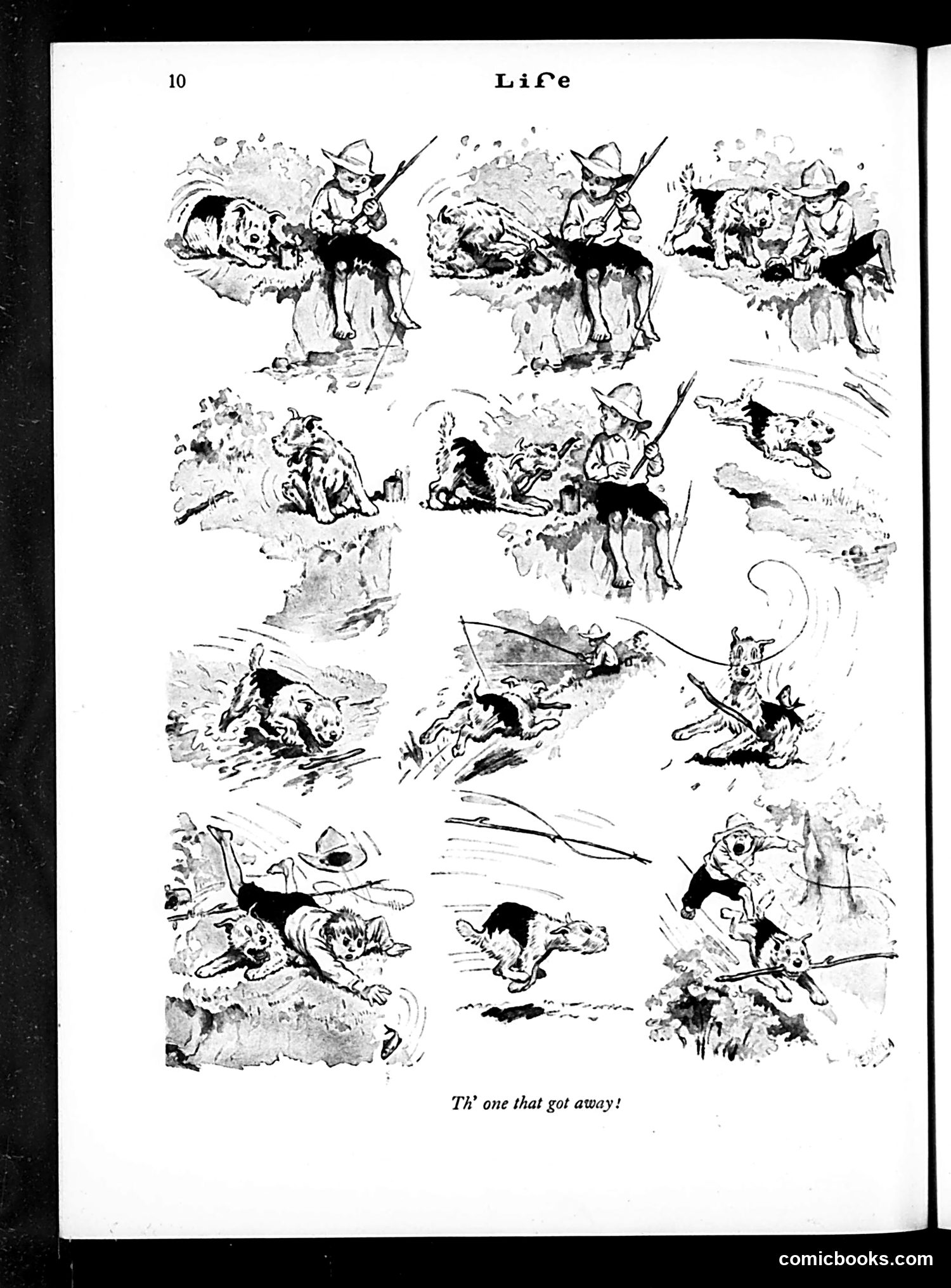
# Analysis This page from *Life* magazine presents a humorous sequential cartoon titled "Th' one that got away!" The narrative follows what appears to be a fishing expedition gone wrong. The comic depicts hunters or fishermen pursuing game (likely rabbits or similar small animals based on the drawings). The sequence shows various failed attempts at catching prey—the animals escaping through different tactics across multiple panels. The repeated failures and the final caption "Th' one that got away!" suggest this is satirizing the common hunting/fishing trope where the quarry consistently eludes capture. This appears to be gentle, non-political humor about outdoor incompetence rather than social commentary. The style is consistent with early-to-mid 20th century *Life* magazine's comedic content.