A complete issue · 36 pages · 1929
Life — August 23, 1929
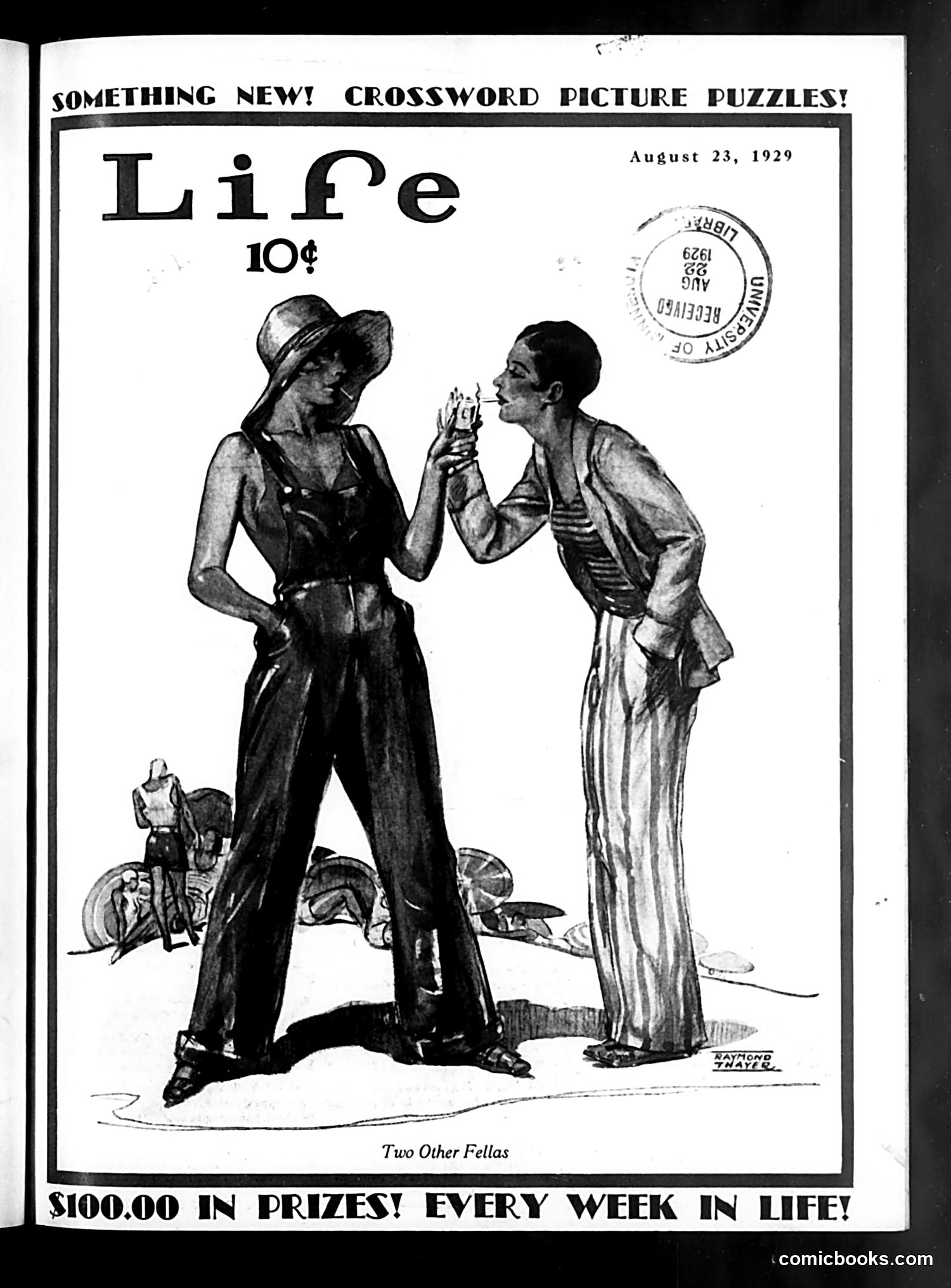
# Life Magazine Cover Analysis - August 23, 1929 This is a Life magazine cover featuring an illustration titled "Two Other Fellas." The image shows two men in 1920s attire engaged in conversation near a beach, with swimming equipment visible in the background. The cover advertises "SOMETHING NEW! CROSSWORD PICTURE PUZZLES!" and "$100.00 IN PRIZES! EVERY WEEK IN LIFE!" This reflects Life's shift toward interactive entertainment content during the late 1920s. The illustration itself appears to be a humorous domestic or social scene typical of Life's satirical approach to contemporary manners and relationships. Without clearer identifying details or captions, the specific satirical target remains unclear, though the casual beach setting and the figures' body language suggest commentary on social interactions or dating customs of the Jazz Age era.
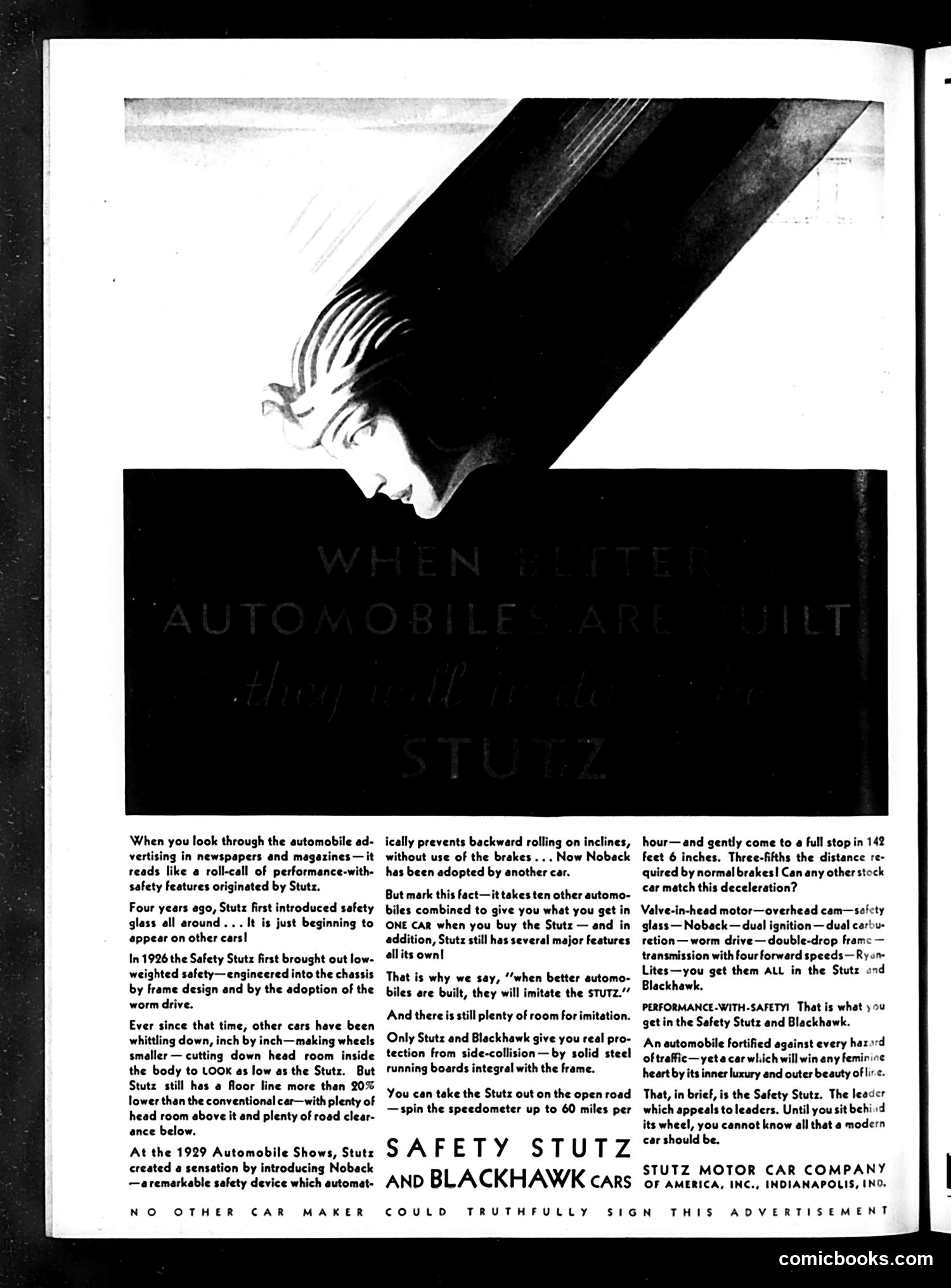
# Analysis This page is **primarily an advertisement**, not satire or political commentary. It promotes Safety Stutz and Blackhawk automobiles made by Stutz Motor Car Company of Indianapolis. The illustration shows a stylized profile of a woman's head tilted back, with a large black diagonal shape (likely representing a car hood or chassis element) overhead. This is a design-focused advertisement emphasizing the car's engineering innovations. The text discusses Stutz's safety features introduced in 1929, including safety glass and the Noback device preventing backward rolling on inclines. It positions Stutz and Blackhawk as performance vehicles with advanced safety technology, claiming "no other car maker could truthfully sign this advertisement." There is **no political satire** present—this is straightforward commercial advertising from the automobile industry's early safety-feature era.
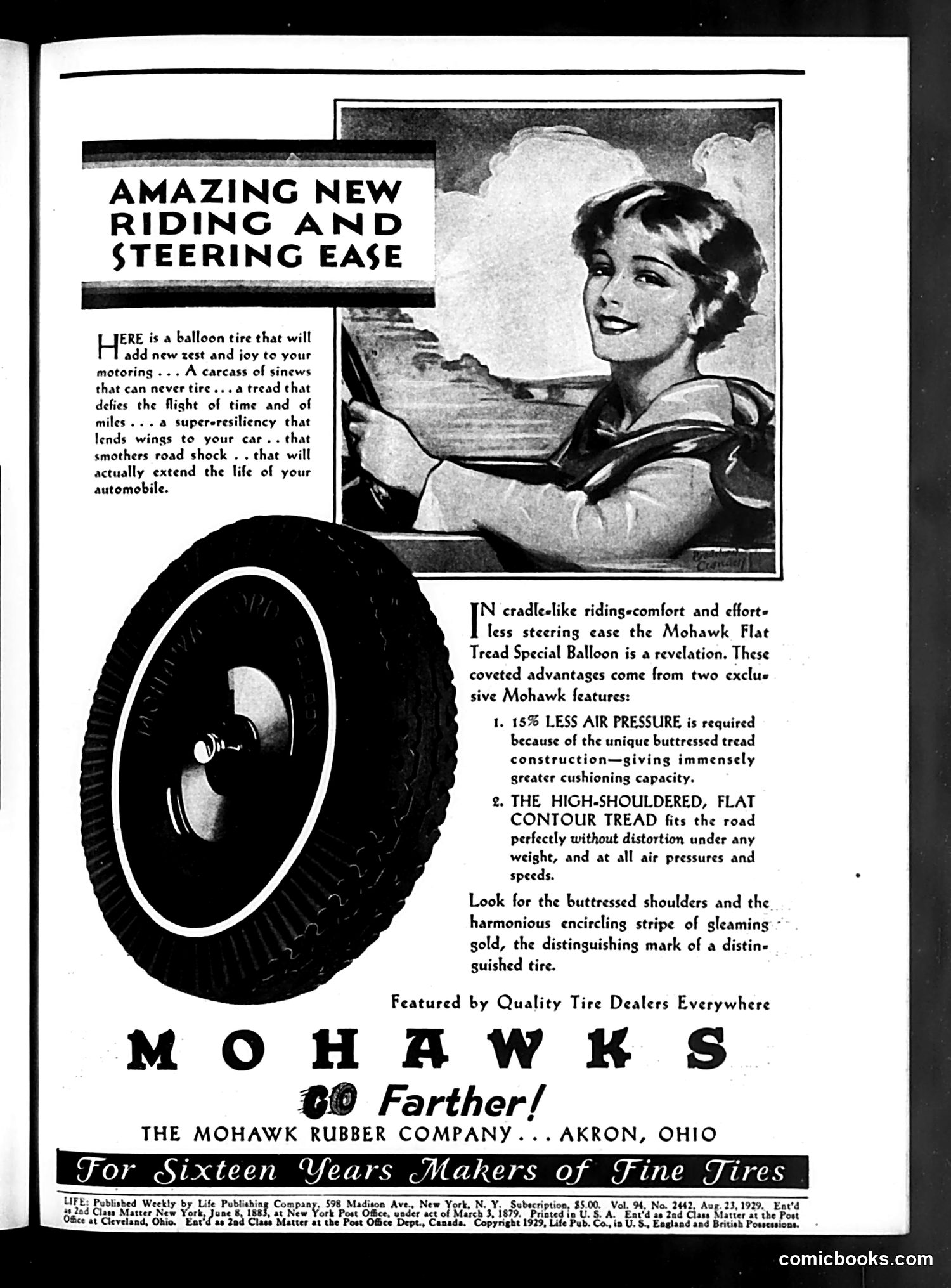
# Analysis This page is **primarily an advertisement**, not satire or political content. It's a 1929 promotional ad for Mohawk brand automobile tires, specifically the "Flat Tread Special Balloon" model. The ad features a smiling woman driver to appeal to the growing market of female motorists in the late 1920s. The accompanying copy emphasizes comfort and ease—"cradle-like riding comfort and effortless steering ease"—positioning the tire as luxurious and modern. The two key selling points highlighted are reduced air pressure requirements and a flat-contour tread design. The ad notes these tires were "Featured by Quality Tire Dealers Everywhere" and credits Mohawk's "Sixteen Years" as tire manufacturers based in Akron, Ohio. This represents typical automotive advertising of the Jazz Age period, targeting the expanding consumer car market.
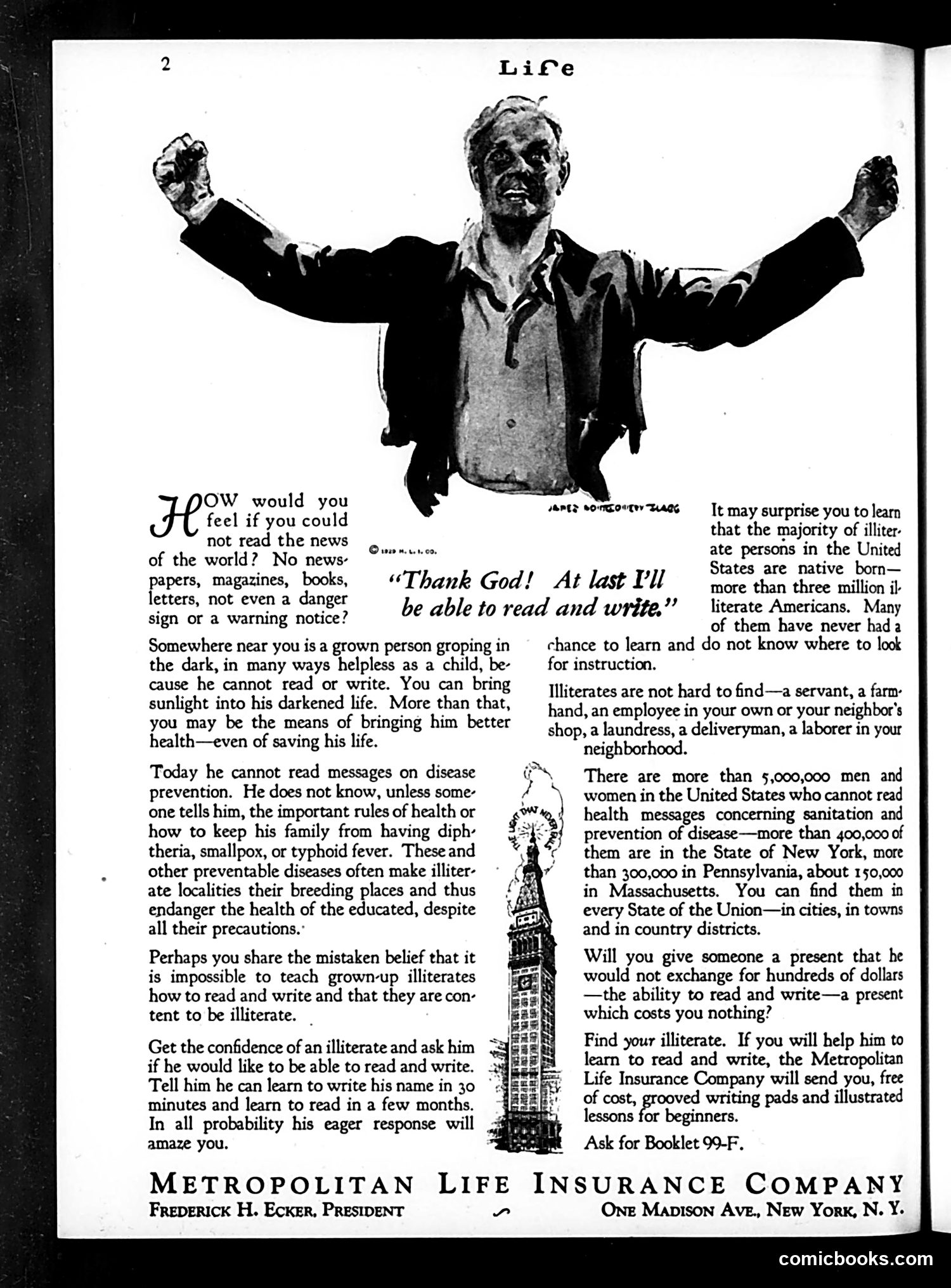
# Analysis This page is primarily a **Metropolitan Life Insurance Company advertisement**, not satire or political commentary. The image shows a jubilant man with arms raised, captioned "Thank God! At last I'll be able to read and write." The ad addresses **adult illiteracy in early 20th-century America**, claiming over 5 million illiterate adults existed nationwide. It argues that teaching illiterates to read is feasible and valuable—potentially preventing disease spread through health ignorance and improving overall wellbeing. The advertisement encourages readers to identify illiterate acquaintances (servants, farmhands, laborers) and help them learn using free materials Metropolitan Life would provide. The tone is paternalistic, reflecting contemporary attitudes toward education as a moral/civic duty. This represents corporate social responsibility messaging of that era, using uplift narratives to promote brand goodwill while addressing genuine literacy gaps.
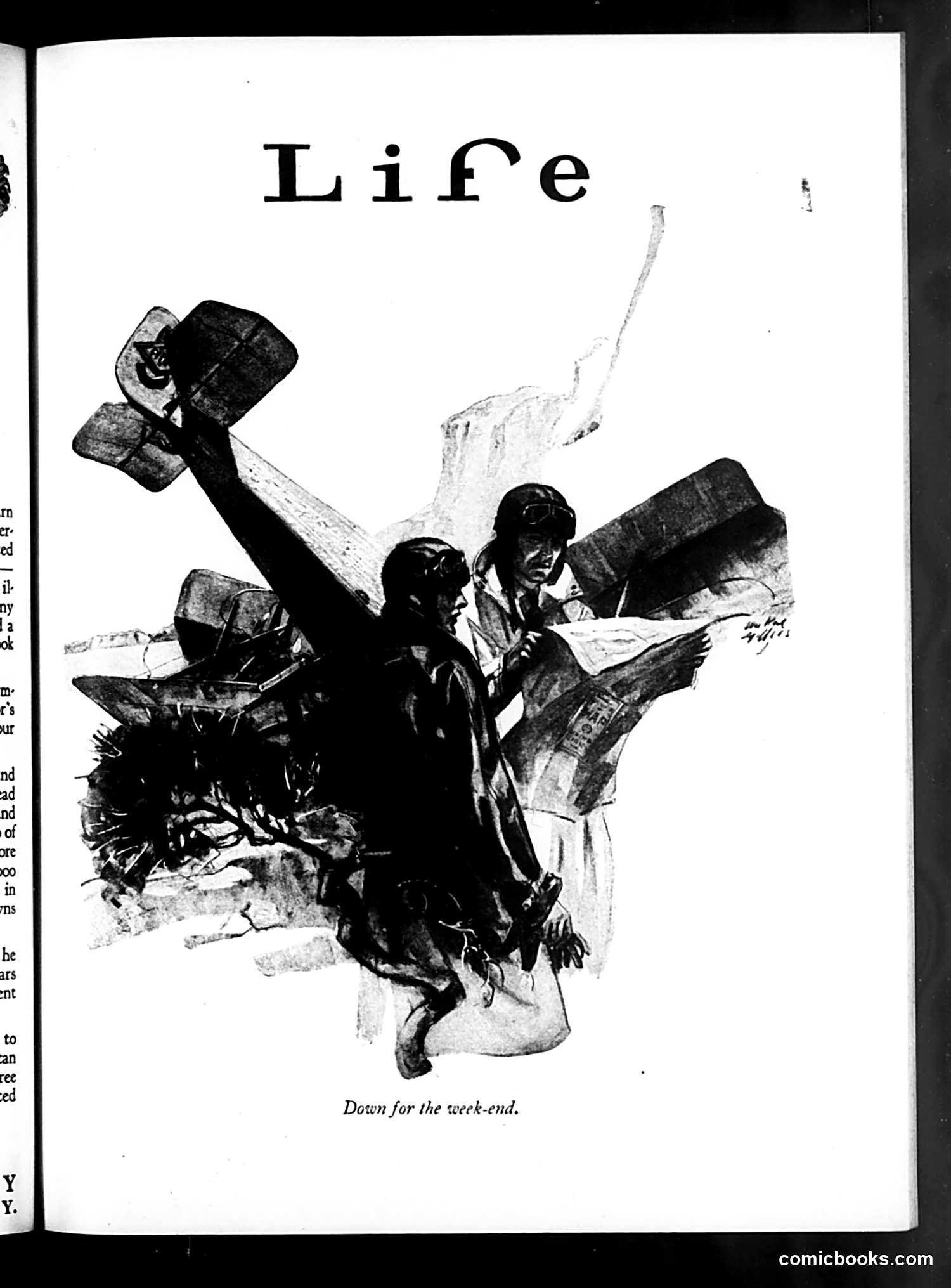
# "Down for the week-end" This Life magazine page satirizes wealthy urbanites heading to the countryside for leisure. The illustration shows three figures in suits tumbling chaotically off what appears to be a vehicle or conveyance, accompanied by baggage and a dog. The humor stems from the contrast between the aspirational image of a relaxing weekend escape and the actual comic chaos of travel—overpacked luggage, ungainly poses, and general disarray. The caption "Down for the week-end" plays on this tension between the genteel expectation and messy reality. This reflects early-20th-century Life magazine's satirical focus on upper-class American leisure habits and the emerging phenomenon of weekend getaways that had become fashionable among the affluent.
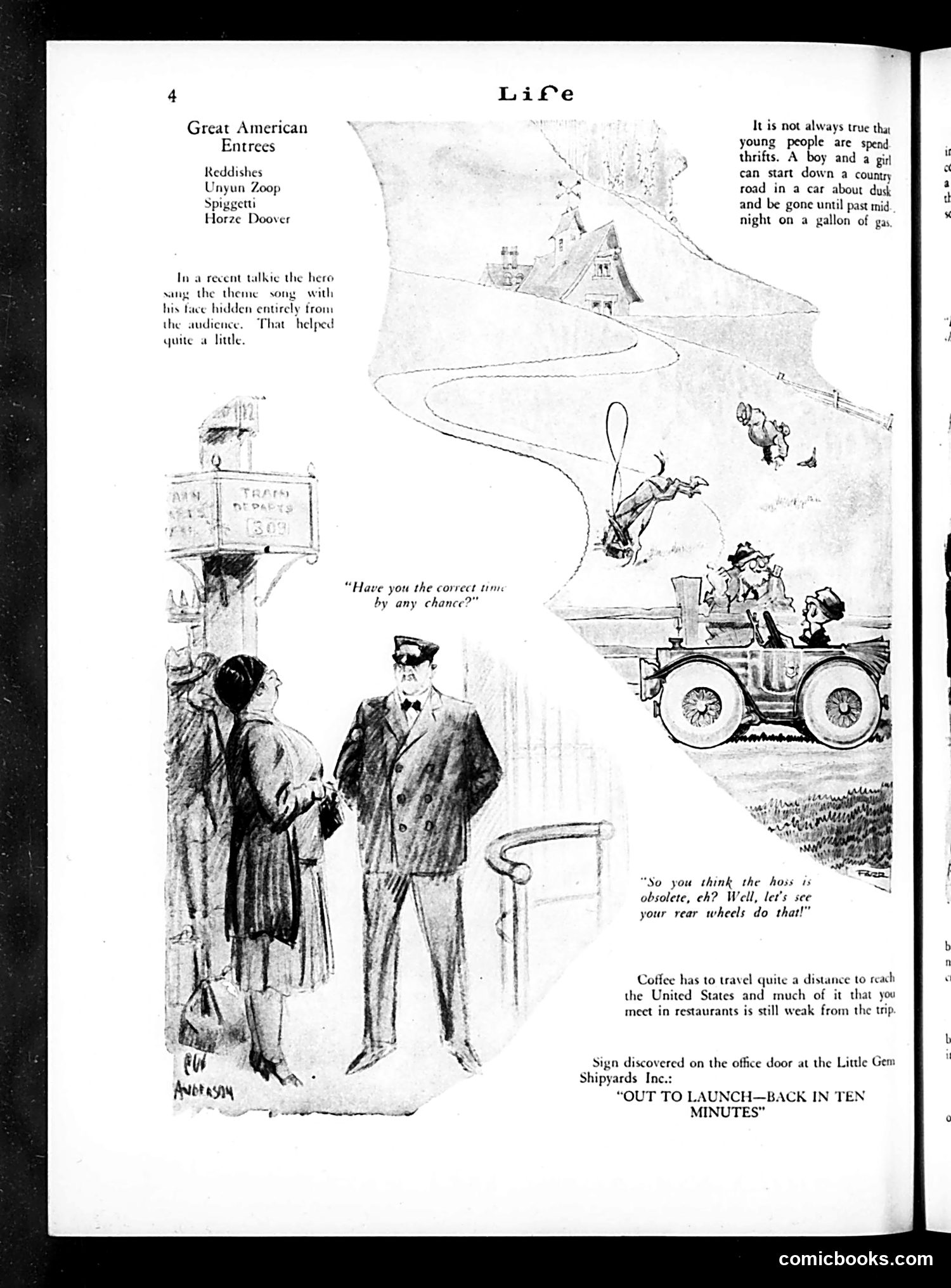
# Life Magazine Page Analysis This page contains two distinct cartoons satirizing early 20th-century American life. **Left cartoon**: A man asks a woman at a water fountain, "Have you the correct time by any chance?" The joke appears to mock social pretense—using an elaborate excuse to start a conversation, suggesting men employed transparent pick-up lines. **Right cartoon**: Shows a car with passengers asking about "rear wheels," with the caption questioning whether "the boss is obsolete." This satirizes automobile innovation and changing workplace hierarchies as cars modernized transportation. **Header section** lists "Great American Entrees" (Reddishes, Uyun Zoop, Spaghetti, Horze Doover)—likely mock exotic food names, typical of Life's satirical humor. The page reflects 1920s-era anxieties about modernization, dating customs, and technological disruption.
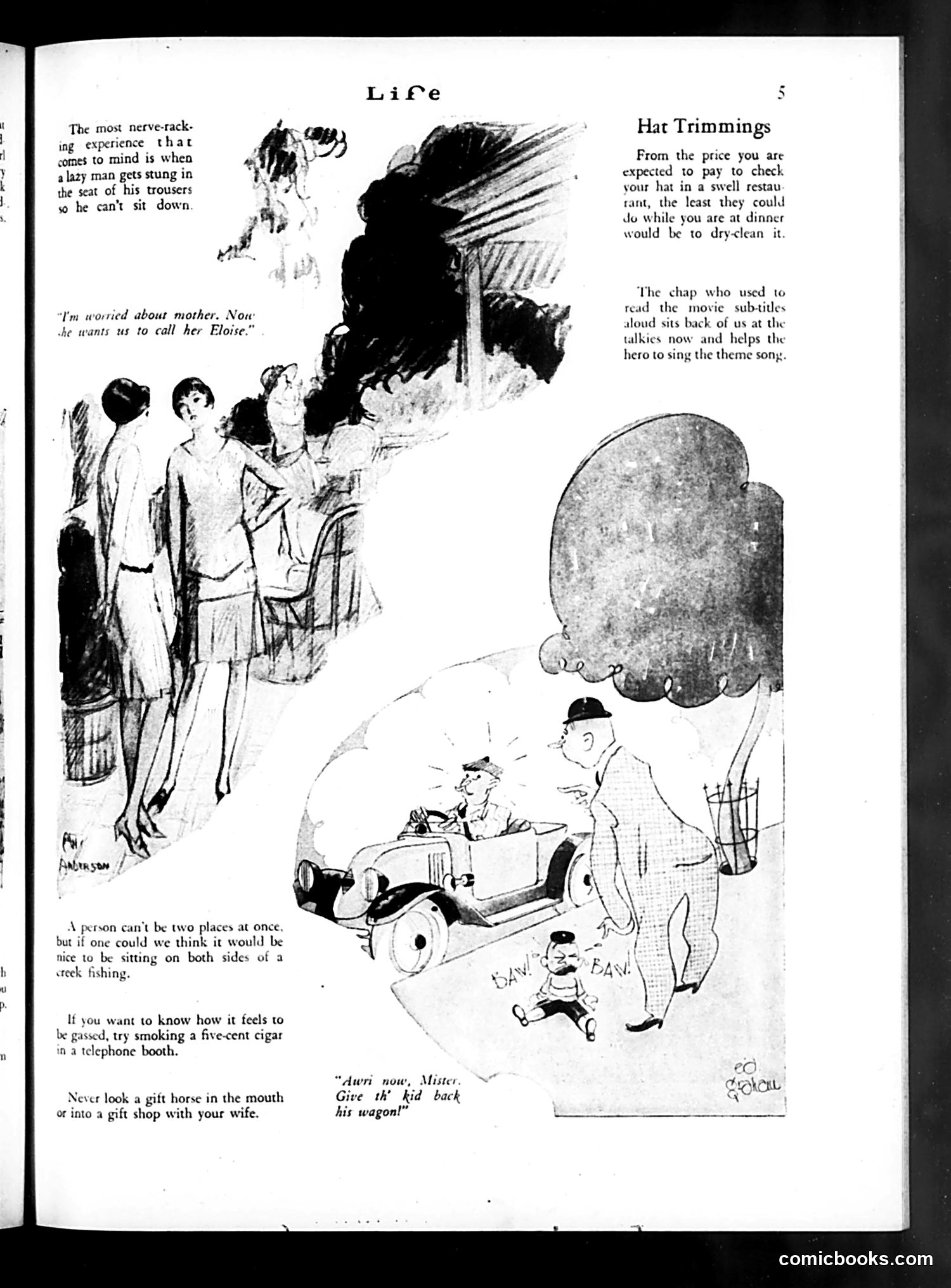
# Analysis of Life Magazine Page 5 This page contains humorous social commentary and cartoons typical of Life magazine's satirical format. The **top cartoon** depicts a domestic scene where a lazy man lounges while his wife expresses concern about calling their mother Eloise—a joke about nagging spouses and family obligations. The **"Hat Trimmings" section** offers dry observations about hat maintenance and movie theater etiquette, mocking pretentious social customs of the era. The **lower cartoon** shows a slapstick scene with a toy wagon and figures, captioned "Darn now, Mister. Give th' kid back his wagon!"—suggesting theft or misappropriation played for humor. Throughout, brief quips mock contemporary social behaviors: gift-giving etiquette, phone booth smoking, and marital dynamics. The cartoons target middle-class American customs and behaviors with gentle, period-appropriate satire.
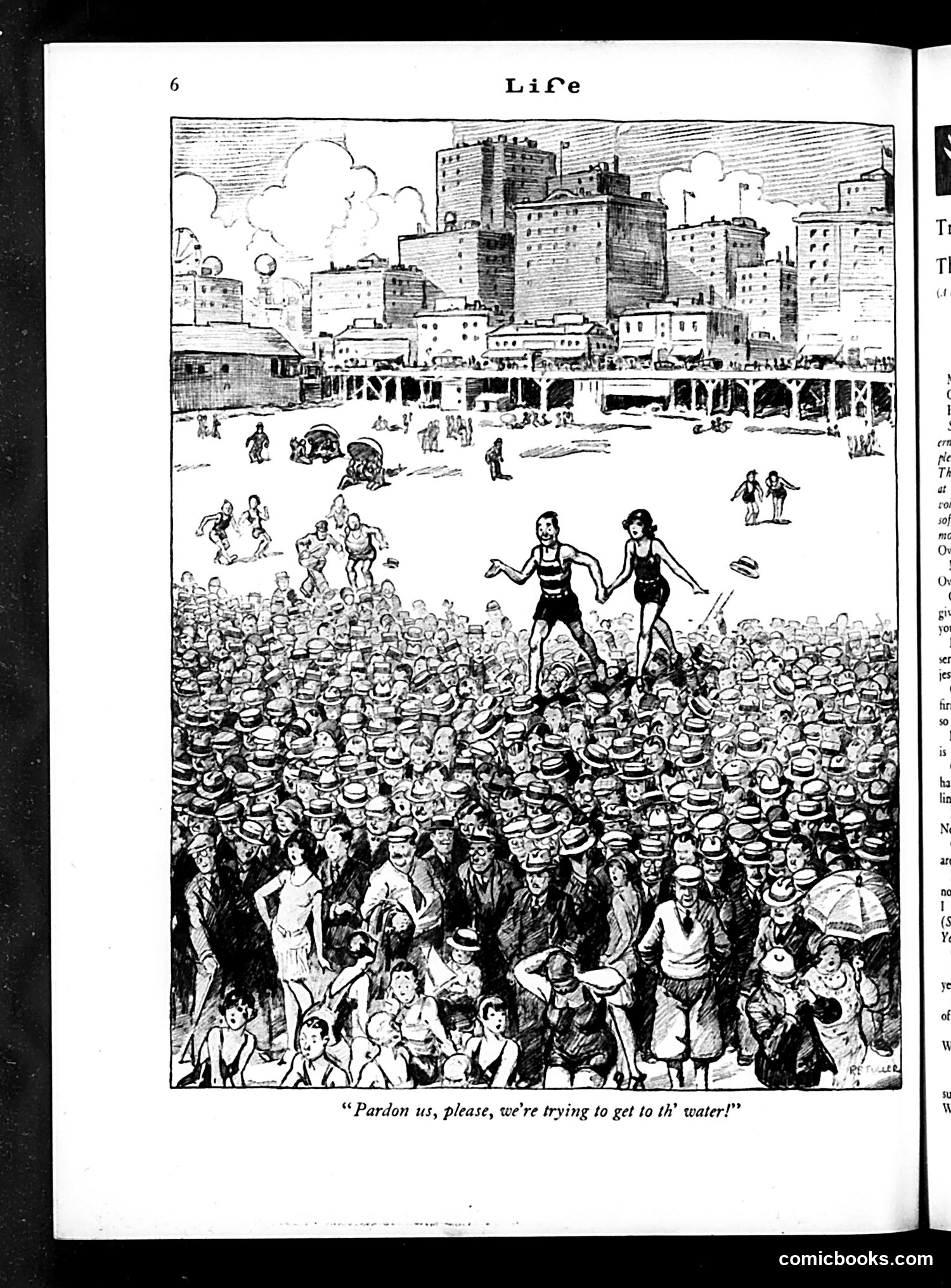
# Analysis This single-panel cartoon depicts a crowded beach scene with thousands of swimmers packed densely together in the water. Two women in swimsuits stand prominently on the sand, addressing the crowd with the caption: "Pardon us, please, we're trying to get to th' water!" The satire comments on **overcrowding at public beaches**, likely during the early-to-mid 20th century when beach recreation became increasingly popular among urban Americans. The cartoon mocks the absurdity of beach congestion—so many people are already in the water that two more swimmers cannot even reach it. The formal hats and clothing visible in the crowd suggest this reflects Depression-era or post-Depression leisure culture, when public beaches became accessible mass-recreation destinations. The joke is about the tension between democratic access to public spaces and the resulting chaos from overwhelming popularity.
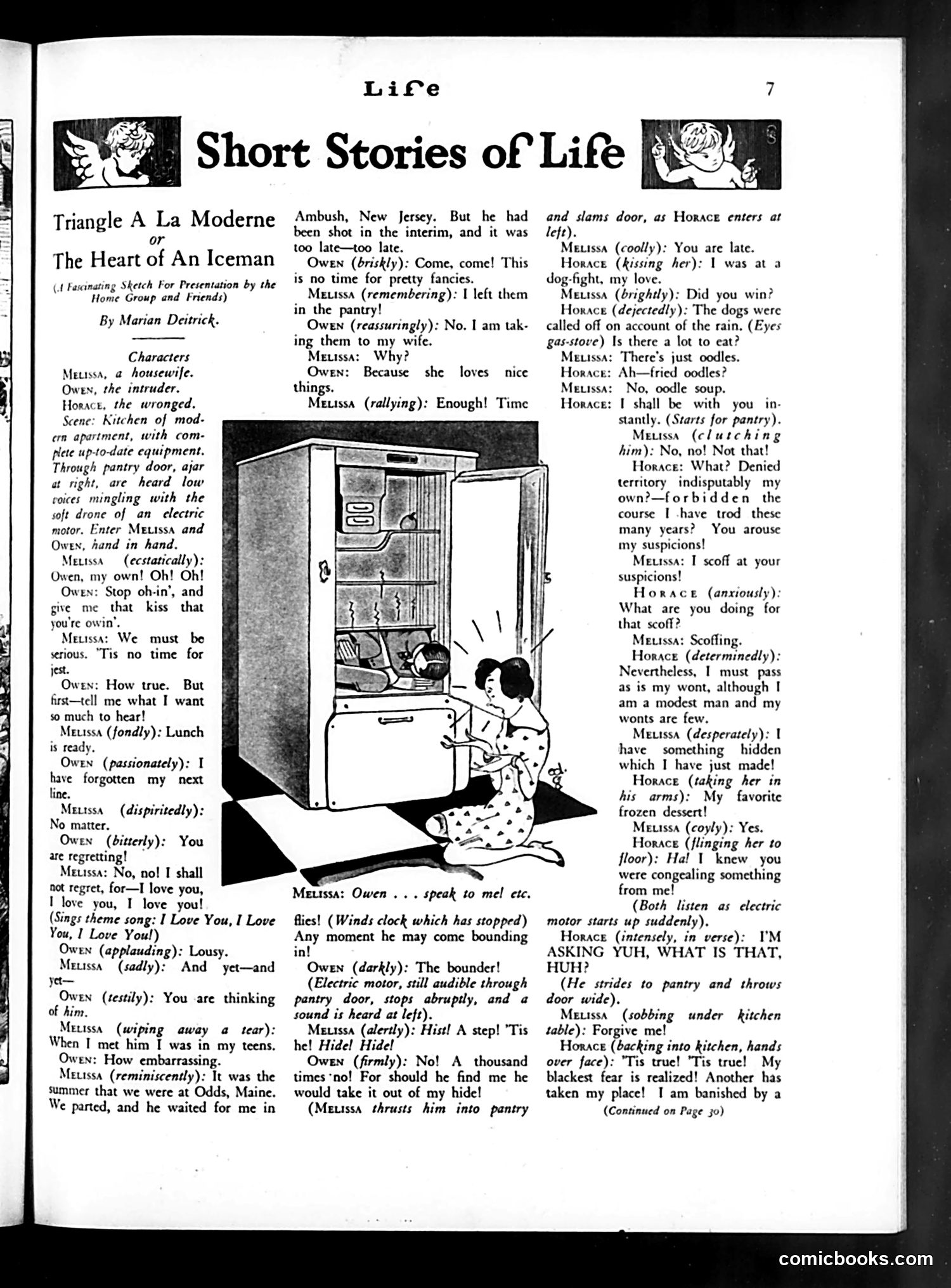
# "Triangle A La Moderne or The Heart of An Iceman" This is a domestic comedy sketch by Marian Deitrick about marital tension. The plot involves **Melissa** (a housewife) and **Owen** (her husband), with **Horace** (an intruder) arriving unexpectedly. The humor centers on **mistaken identity and jealousy**: Owen has been shot and is acting suspiciously, which Melissa interprets as infidelity. When Horace enters through the pantry door, Melissa assumes he's Owen's lover, creating farcical confusion. The "iceman" reference in the title likely alludes to the common "iceman" trope in period comedies—a stock figure used to suggest illicit affairs. The sketch satirizes both marital paranoia and the melodramatic domestic scandals popular in early 20th-century humor.
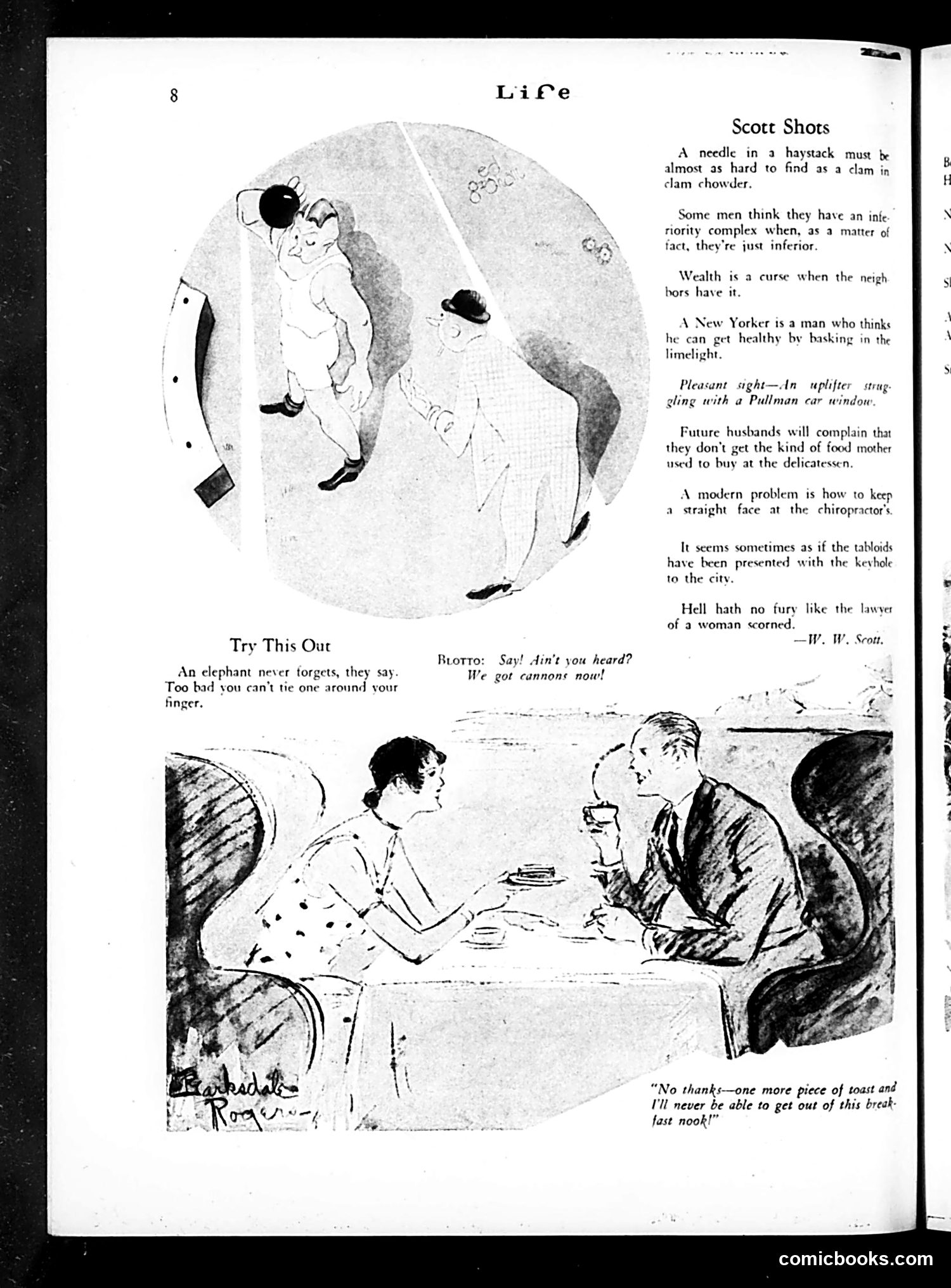
# Analysis of Life Magazine Page 8 This page contains two distinct sections: **"Scott Shots"** (top right): A collection of brief satirical observations about contemporary society, including quips about inferiority complexes, wealth, New Yorkers, Pullman car etiquette, food quality, chiropractors, and legal matters. These are general social commentary rather than political satire. **"Try This Out"** (bottom): A cartoon showing a couple dining, with the woman saying "Say! Ain't you heard? We got cannon now!" The man replies "No thanks—one more piece of toast and I'll never be able to get out of this break fast nook!" The joke plays on "cannon" (a military weapon) as wordplay, but the humor seems to rely on the woman's somewhat oblivious excitement about armaments during what appears to be a domestic moment. The satire targets either wartime preoccupation or absurd dinner conversation.
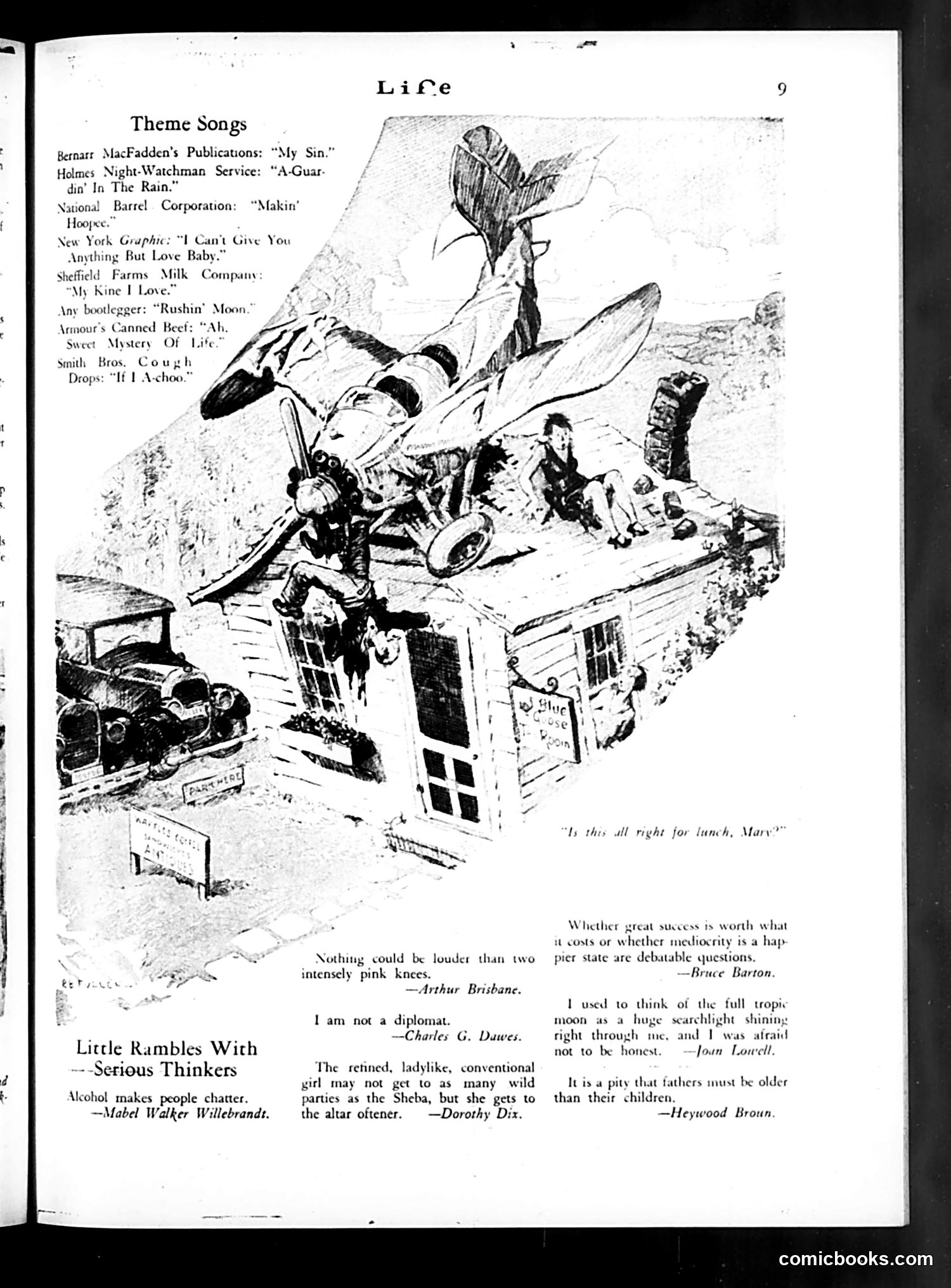
# Analysis This page from *Life* magazine contains a large cartoon and quotation section titled "Little Rambles With Serious Thinkers." The main cartoon depicts a domestic scene where a woman (labeled "Mary" in the caption) appears to have crashed an airplane into a farmhouse. The caption reads: "Is this all right for lunch, Mary?" The humor satirizes women drivers and aviation—emerging technologies of the era—by suggesting a wife's recklessness with a vehicle has catastrophic consequences. The juxtaposition of casual domesticity ("lunch") with violent destruction creates absurdist comedy typical of *Life's* style. Below are unrelated quotations on various topics (success, diplomacy, gender roles) attributed to contemporary figures and celebrities, presented as philosophical observations. This format was common in *Life* for light social commentary.
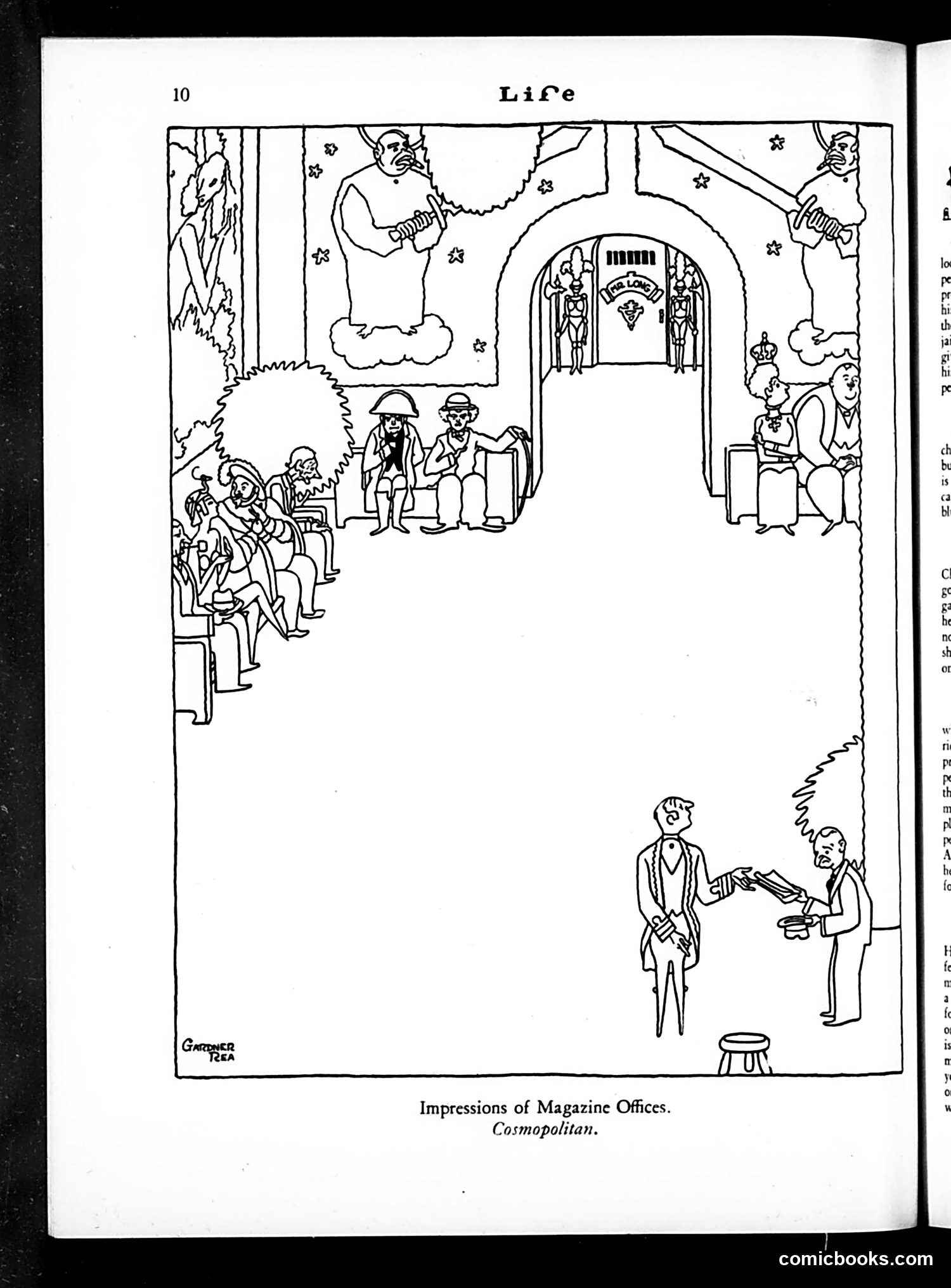
# Analysis of "Impressions of Magazine Offices" This is a satirical cartoon depicting the contrast between the heavenly/idealized vision of magazine work and its mundane reality. The upper portion shows angels and celestial imagery—a vision of magazine offices as ethereal, blessed spaces. The lower portion grounds this in reality: two ordinary businessmen conducting a transaction outdoors, appearing to haggle or negotiate over what looks like payment or manuscripts. The cartoon mocks the romantic notion people hold about working in publishing and journalism. The title "Cosmopolitan" suggests this satirizes that specific magazine's public image versus actual office operations—likely focused on the commercialism and negotiation that actually drive magazine business, rather than any artistic or editorial ideals.