
Penny Dreadfuls, 1839 · page 45 of 77
The Adamus exul of Grotius; or The Prototype of Paradise Lost — page 45: what you’re looking at
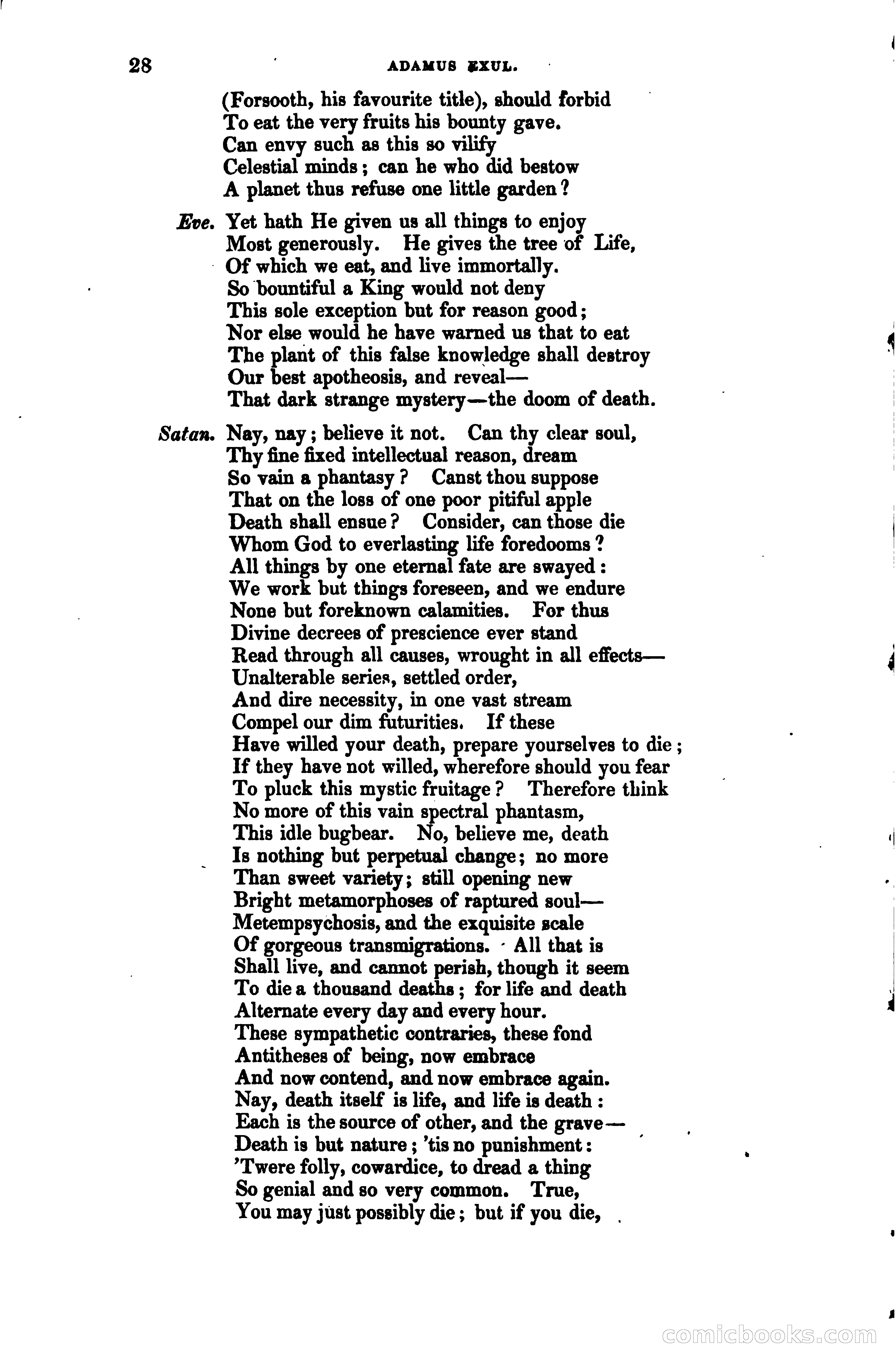
A restored page from Penny Dreadfuls, 1839. Page through the whole issue in the reader above.
📄 Transcribed text from this page (OCR, searchable)
Machine-transcribed from the original scan — historical spelling and the odd misread are preserved.
28 Eve. ADAMUS €XUL. (Forsooth, his favourite title), should forbid To eat the very fruits his bounty gave. Can envy such as this so vilify Celestial minds; can he who did bestow A planet thus refuse one little garden ? Yet hath He given us all things to enjoy Most generously. He gives the tree of Life, - Of which we eat, and live immortally. Satan. So bountiful a King would not deny This sole exception but for reason good ; Nor else would he have warned us that to eat The plant of this false knowledge shall destroy Our best apotheosis, and reveal— That dark strange mystery—the doom of death. Nay, nay; believe it not. Can thy clear soul, Thy fine fixed intellectual reason, dream So vain a phantasy? Canst thou suppose That on the loss of one poor pitiful apple Death shall ensue? Consider, can those die Whom God to everlasting life foredooms ? All things by one eternal fate are swayed : We work but things foreseen, and we endure None but foreknown calamities. For thus Divine decrees of prescience ever stand Read through all causes, wrought in all effects— Unalterable series, settled order, And dire necessity, in one vast stream Compel our dim futurities. If these Have willed your death, prepare yourselves to die ; If they have not willed, wherefore should you fear To pluck this mystic fruitage? Therefore think No more of this vain spectral phantasm, This idle bugbear. No, believe me, death Is nothing but perpetual change; no more Than sweet variety; still opening new Bright metamorphoses of raptured soul— Metempsychosis, and the exquisite scale Of gorgeous transmigrations. - All that is Shall live, and cannot perish, though it seem To diea thousand deaths; for life and death Alternate every day and every hour. These sympathetic contraries, these fond Antitheses of being, now embrace And now contend, and now embrace again. Nay, death itself is life, and life is death : Each is the source of other, and the grave — Death is but nature ; ’tis no punishment : ’Twere folly, cowardice, to dread a thing So genial and so very common. True, You may just possibly die; but if you die, . (C@ inn @ DOO <S (c@