
Penny Dreadfuls, 1839 · page 15 of 77
The Adamus exul of Grotius; or The Prototype of Paradise Lost — page 15: what you’re looking at
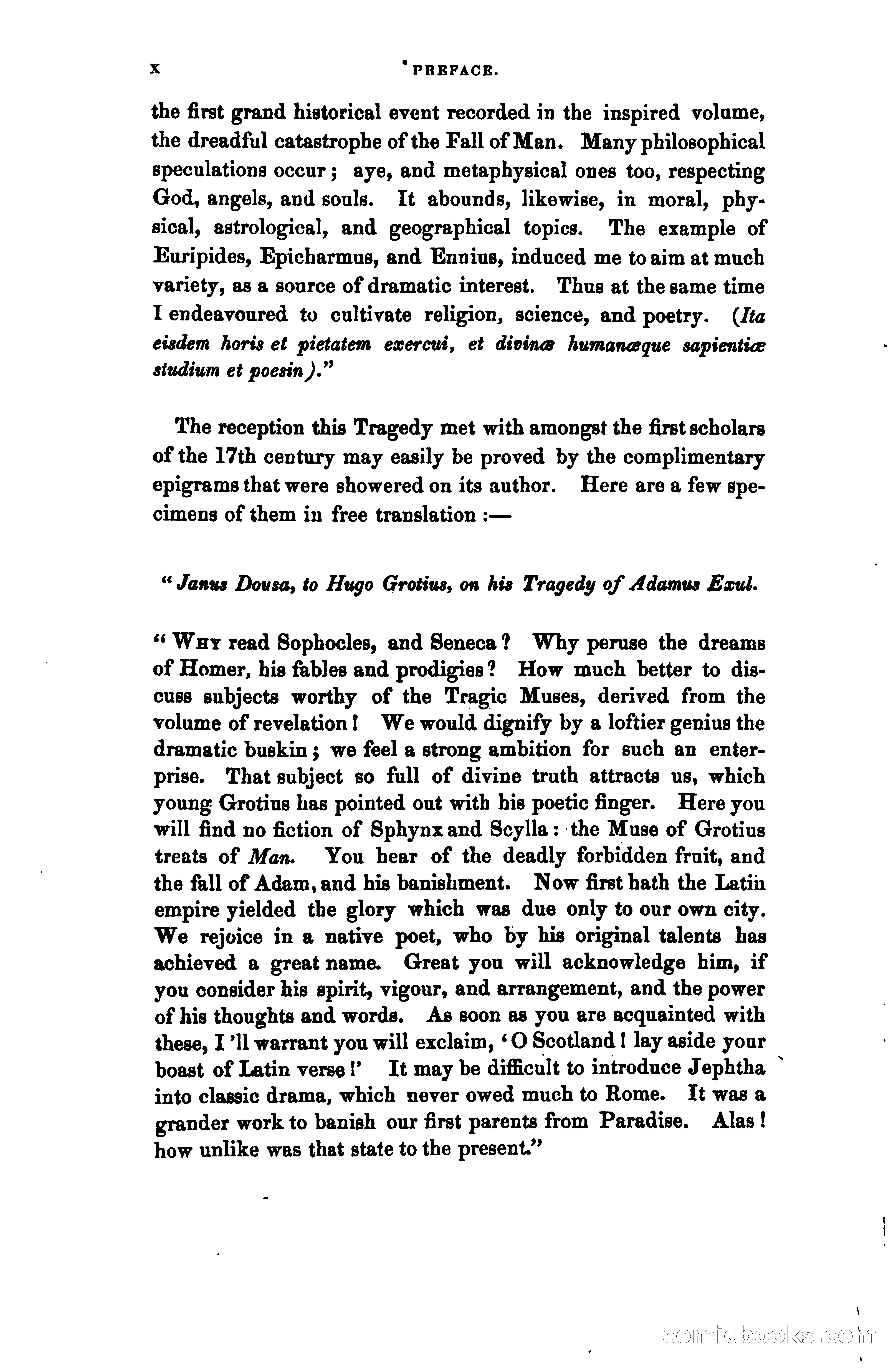
A restored page from Penny Dreadfuls, 1839. Page through the whole issue in the reader above.
📄 Transcribed text from this page (OCR, searchable)
Machine-transcribed from the original scan — historical spelling and the odd misread are preserved.
x * PREFACE. the first grand historical event recorded in the inspired volume, the dreadful catastrophe of the Fall of Man. Many philosophical speculations occur; aye, and metaphysical ones too, respecting God, angels, and souls. It abounds, likewise, in moral, phy- sical, astrological, and geographical topics. The example of Euripides, Epicharmus, and Ennius, induced me to aim at much variety, as a source of dramatic interest. Thus at the same time I endeavoured to cultivate religion, science, and poetry. (Jta etsdem horis et pietatem exercut, et divine humaneque sapientie studium et poesin ).” The reception this Tragedy met with amongst the first scholars of the 17th century may easily be proved by the complimentary epigrams that were showered on its author. Here are a few spe- cimens of them in free translation :— “ Janus Dousa, to Hugo Grotius, on his Tragedy of Adamus Exul. ‘¢ Way read Sophocles, and Seneca? Why peruse the dreams of Homer, his fables and prodigies? How much better to dis- cuss subjects worthy of the Tragic Muses, derived from the volume of revelation! We would dignify by a loftier genius the dramatic buskin ; we feel a strong ambition for such an enter- prise. That subject so full of divine truth attracts us, which young Grotius has pointed out with his poetic finger. Here you will find no fiction of Sphynx and Scylla: the Muse of Grotius treats of Man. You hear of the deadly forbidden fruit, and the fall of Adam, and his banishment. Now first hath the Latin empire yielded the glory which was due only to our own city. We rejoice in a native poet, who by his original talents has achieved a greatname. Great you will acknowledge him, if you consider his spirit, vigour, and arrangement, and the power of his thoughts and words. As soon as you are acquainted with these, I ’ll warrant you will exclaim, ‘O Scotland ! lay aside your boast of Latin verse!’ It may be difficult to introduce Jephtha ~ into classic drama, which never owed much to Rome. It was a grander work to banish our first parents from Paradise. Alas! how unlike was that state to the present.” COL @ DOO <S (c@