
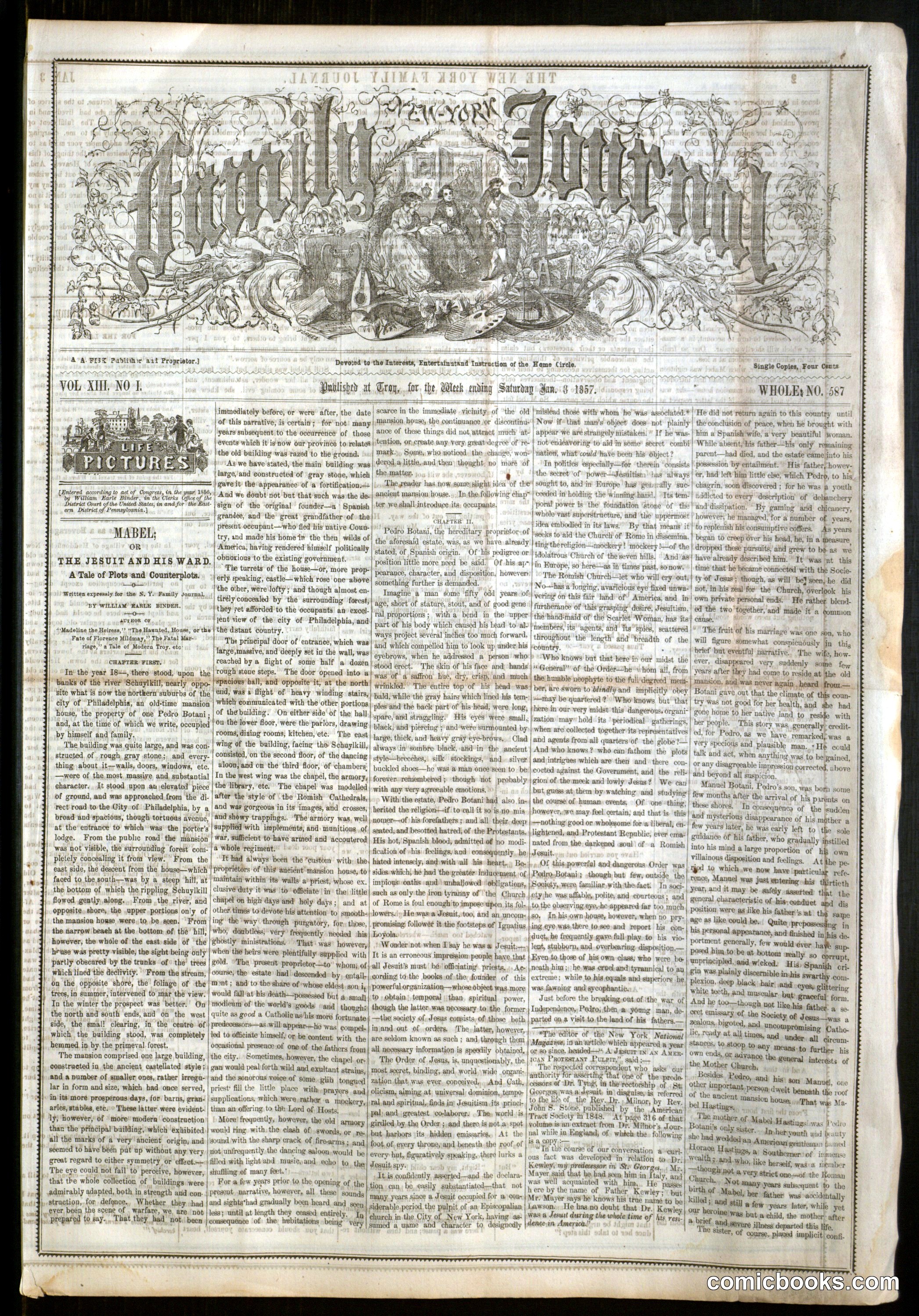
This penny weekly's ornate cover depicts a crowded urban street scene—merchants, laborers, and well-dressed figures navigate a dense Victorian cityscape rendered in elaborate woodcut. The decorative letterpress title dominates, flanked by classical flourishes and allegorical figures.
Penny papers like this fed working-class readers' hunger for serialized sensation: crime reports, melodramatic fiction, and lurid tales of murder and betrayal, printed cheaply on rough paper and hawked on streets. These publications, dismissed by genteel society, established the template modern comics would inherit—episodic narratives, visual spectacle, and serial publication that kept readers returning. Caricatures of immigrants and working poor reflected the era's anxieties about urban crowding and class conflict. Such journals were the nineteenth-century precursor to comic books: accessible, disposable entertainment for mass audiences.
About this artifact
- Date
- January 3, 1857
- Rights
- Public domain — free to view, share, and reuse.
- Restoration
- Digitally restored and hosted by comicbooks.com.
Part of our mission to preserve and restore the public-domain heritage of the medium.