
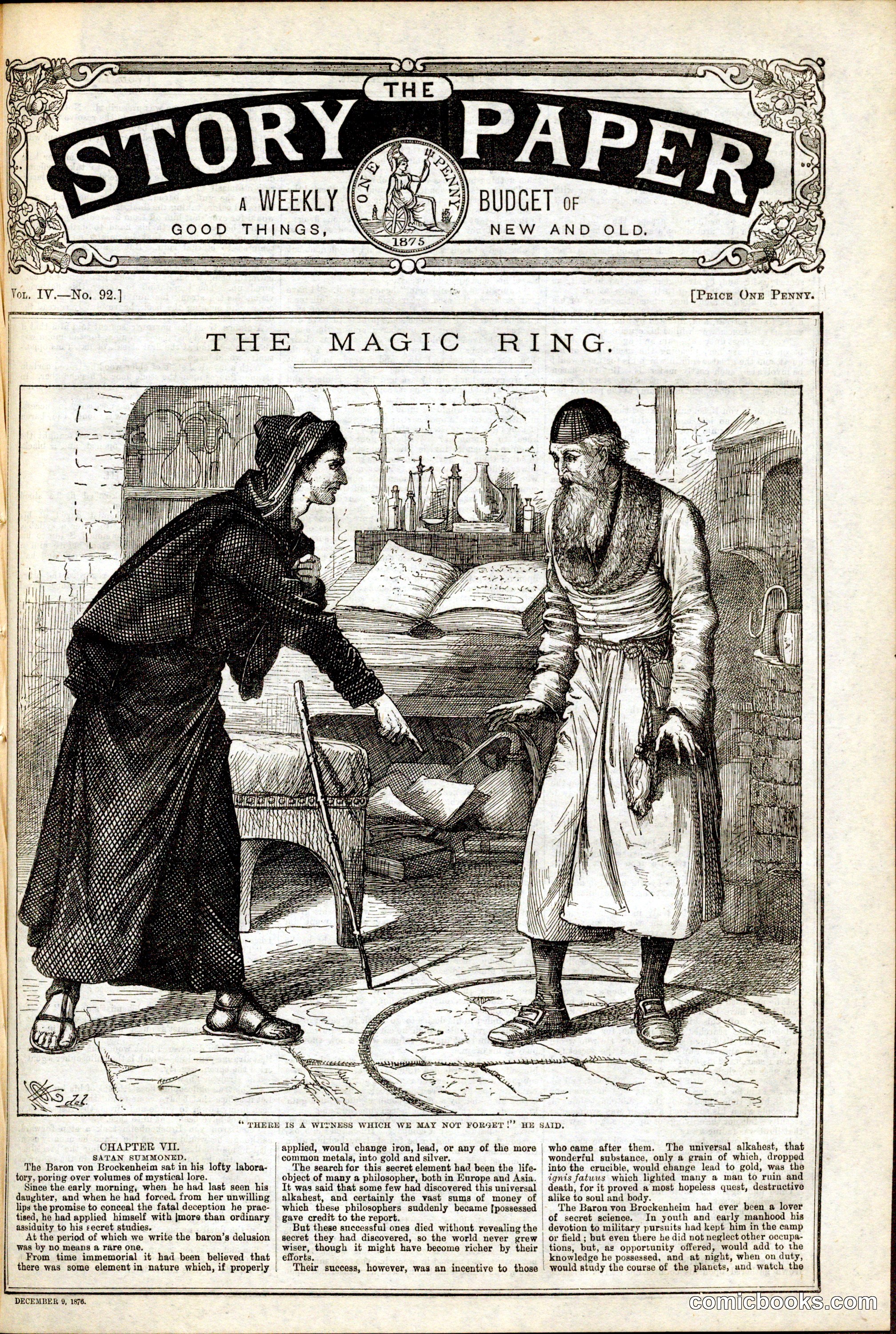
A woodcut illustration depicts two figures in a medieval chamber: a young woman in dark traveling clothes approaches an elderly bearded man in robes, who gestures toward an open book and mystical apparatus on a table between them. The scene promises supernatural intrigue.
This penny weekly serialized melodramatic fiction for working-class readers hungry for sensation. Stories of magic, crime, and the fantastic appeared in weekly installments costing a penny, making entertainment accessible beyond middle-class means. Such publications, dismissed by respectable society, established the template for modern comics: serialized narrative art combining illustration with text, cliffhanger chapter endings, and democratic subject matter drawn from folklore, crime, and the fantastic rather than literary canon. The format would evolve through dime novels and pulp magazines into twentieth-century comic books.
📖 This public-domain issue is being restored page-by-page for our free reader — check back soon.
About this artifact
- Date
- December 9, 1876
- Rights
- Public domain — free to view, share, and reuse.
- Restoration
- Digitally restored and hosted by ComicBooks.com · high-resolution version available.
Part of our mission to preserve and restore the public-domain heritage of the medium.