
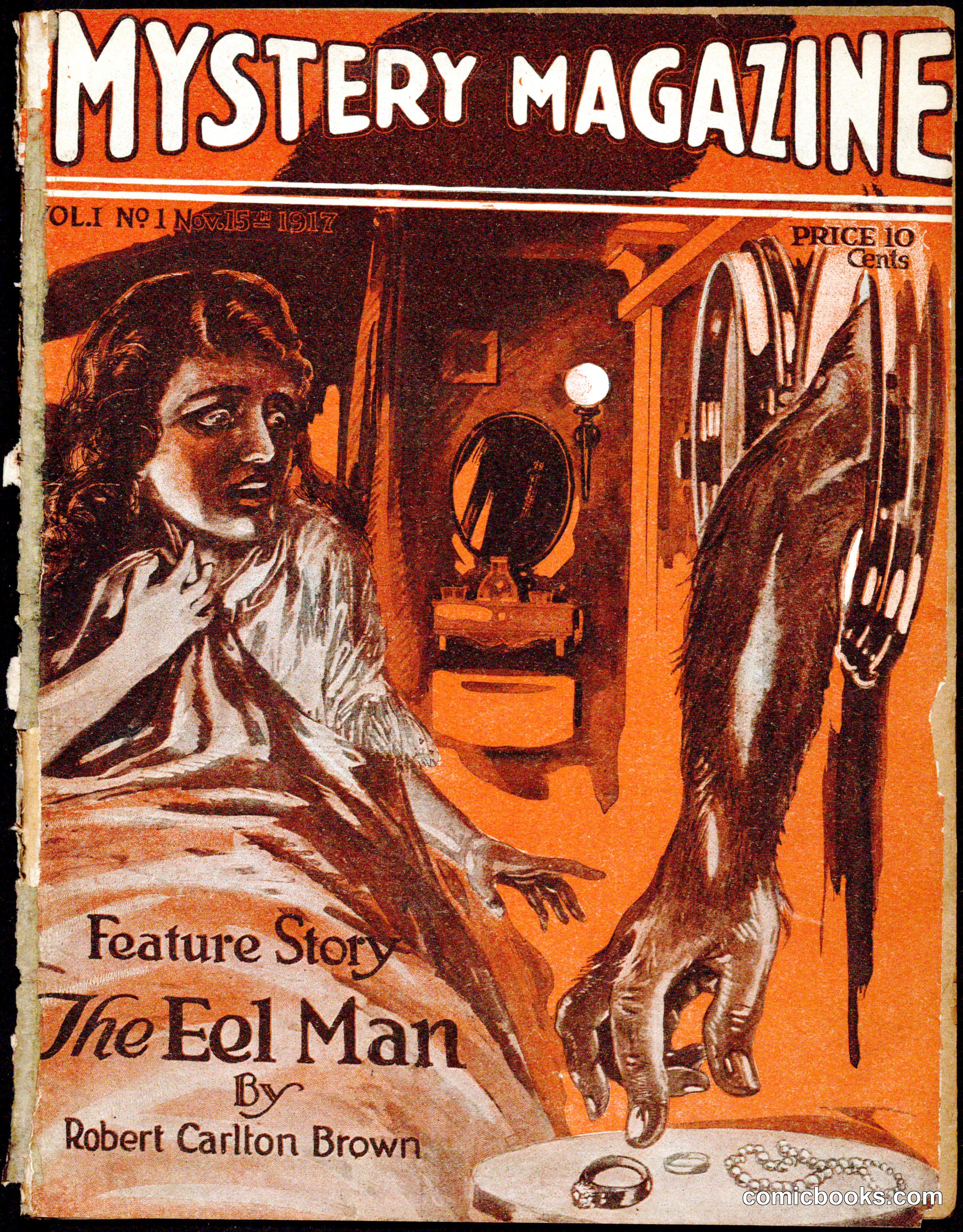
A woman in nightclothes recoils in terror as a grotesque figure enters her bedroom—the cover promises Robert Carlton Brown's feature story, "The Eel Man." At ten cents, this pulp magazine inherited the mantle of Victorian penny dreadfuls, those serialized tales of crime, supernatural horror, and melodrama that had captivated working-class readers for decades. Where penny bloods thrived on lurid woodcut covers and serialized installments, pulp magazines brought cheaper printing and faster distribution to an expanding audience hungry for sensation. The eel-man's dehumanized features embody pulp's fascination with transgressive bodies and primal fear. These magazines bridged nineteenth-century serial fiction and the modern comic book, establishing visual sensationalism and narrative cliffhangers as popular entertainment's core mechanics.
📖 This public-domain issue is being restored page-by-page for our free reader — check back soon.
About this artifact
- Date
- November 15, 1917
- Rights
- Public domain — free to view, share, and reuse.
- Restoration
- Digitally restored and hosted by ComicBooks.com · high-resolution version available.
Part of our mission to preserve and restore the public-domain heritage of the medium.