
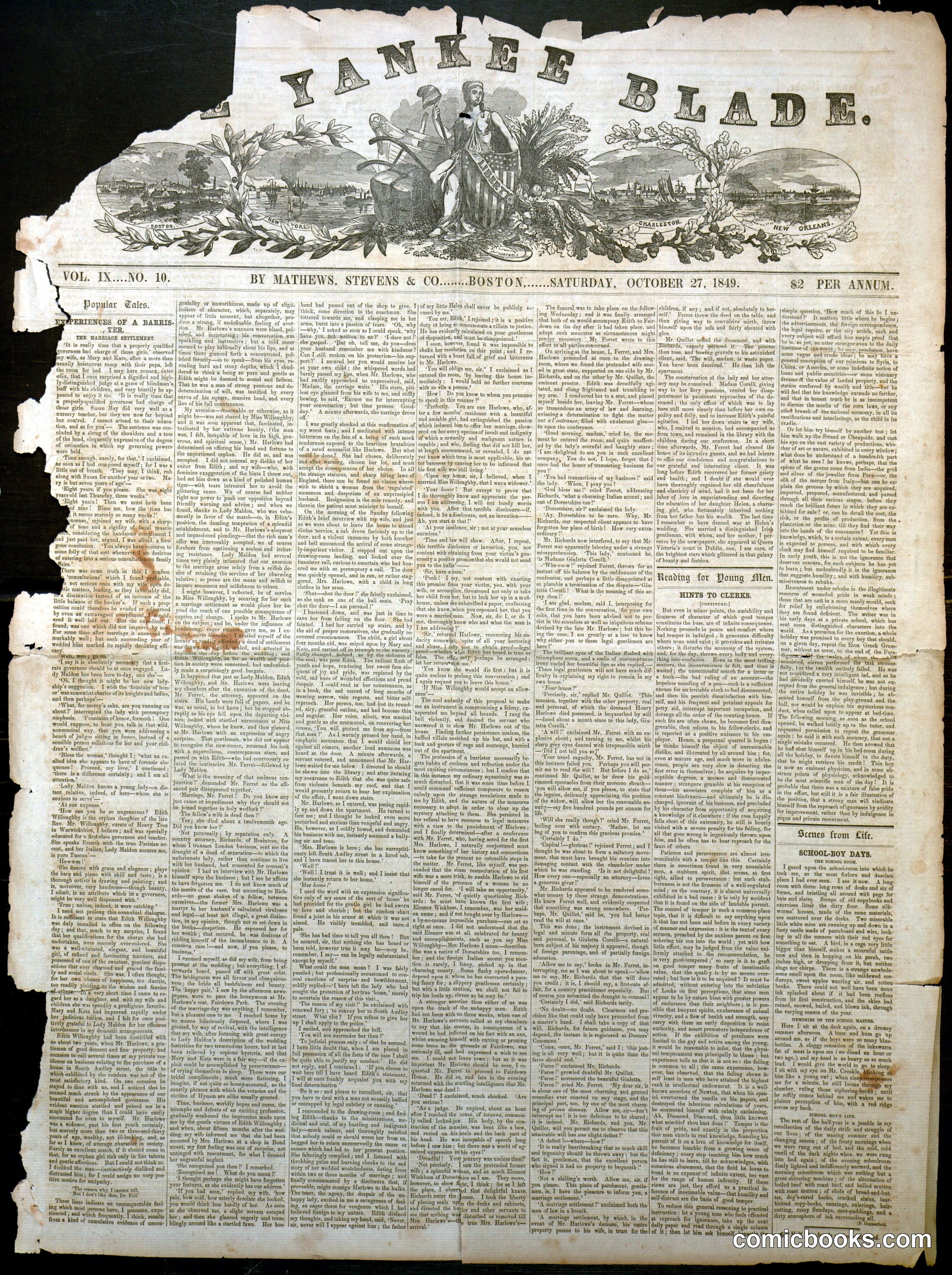
This Boston weekly cost a penny and reached thousands of working-class readers hungry for serialized melodrama. The ornate masthead—crowded with figures, landscapes, and allegorical women—promised adventure, crime, and moral instruction wrapped together. Penny bloods and penny dreadfuls flooded Britain and America in the 1840s–50s, offering installment fiction far cheaper than novels: tales of highwaymen, murders, seductions, and supernatural terrors. Working people devoured these stories despite middle-class disapproval. Publishers churned out dozens of competing titles, each more sensational than the last. This direct ancestor of the modern comic book proved that mass-market entertainment built on serialization, lurid imagery, and affordable pricing could sustain a genuine popular hunger for narrative thrills.
About this artifact
- Date
- October 27, 1849
- Rights
- Public domain — free to view, share, and reuse.
- Restoration
- Digitally restored and hosted by comicbooks.com.
Part of our mission to preserve and restore the public-domain heritage of the medium.