
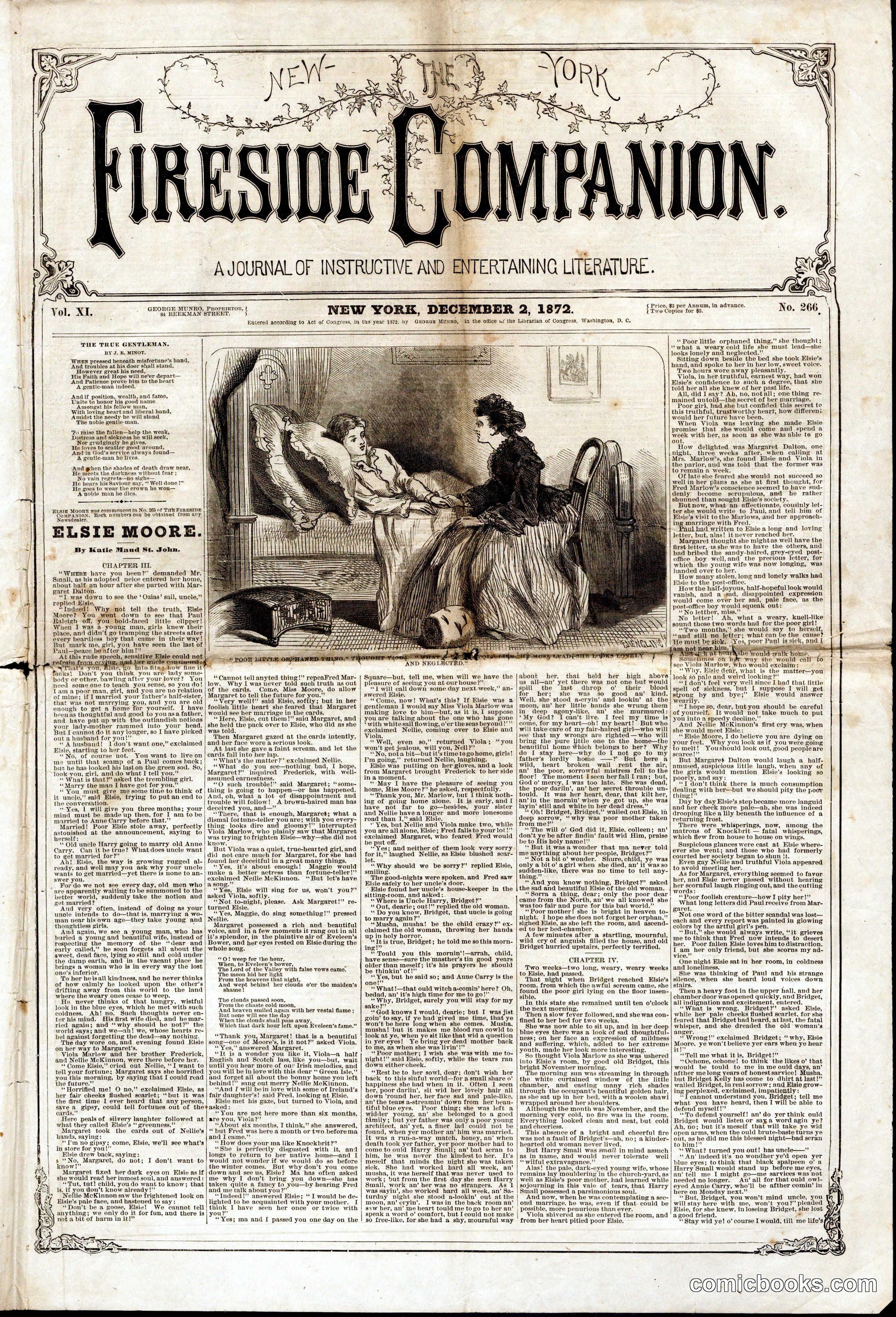
A woman in dark dress leans toward a bedridden man, her face animated in conversation or confession. The intimate domestic scene, rendered in dramatic crosshatching, anchors this week's serialized story "Elsie Moore."
Penny papers like this weekly reached working-class readers hungry for melodrama, crime, and sensation. Published cheaply and distributed widely, they serialized lurid narratives across multiple issues, keeping audiences invested week after week. Though dismissed by elites as lowbrow trash, these publications democratized fiction, offering urban laborers affordable escape and entertainment. The form's emphasis on visual drama and emotional intensity—evident in this intimate, charged moment—directly anticipates the visual storytelling conventions of twentieth-century comics.
About this artifact
- Date
- December 2, 1872
- Rights
- Public domain — free to view, share, and reuse.
- Restoration
- Digitally restored and hosted by comicbooks.com.
Part of our mission to preserve and restore the public-domain heritage of the medium.