
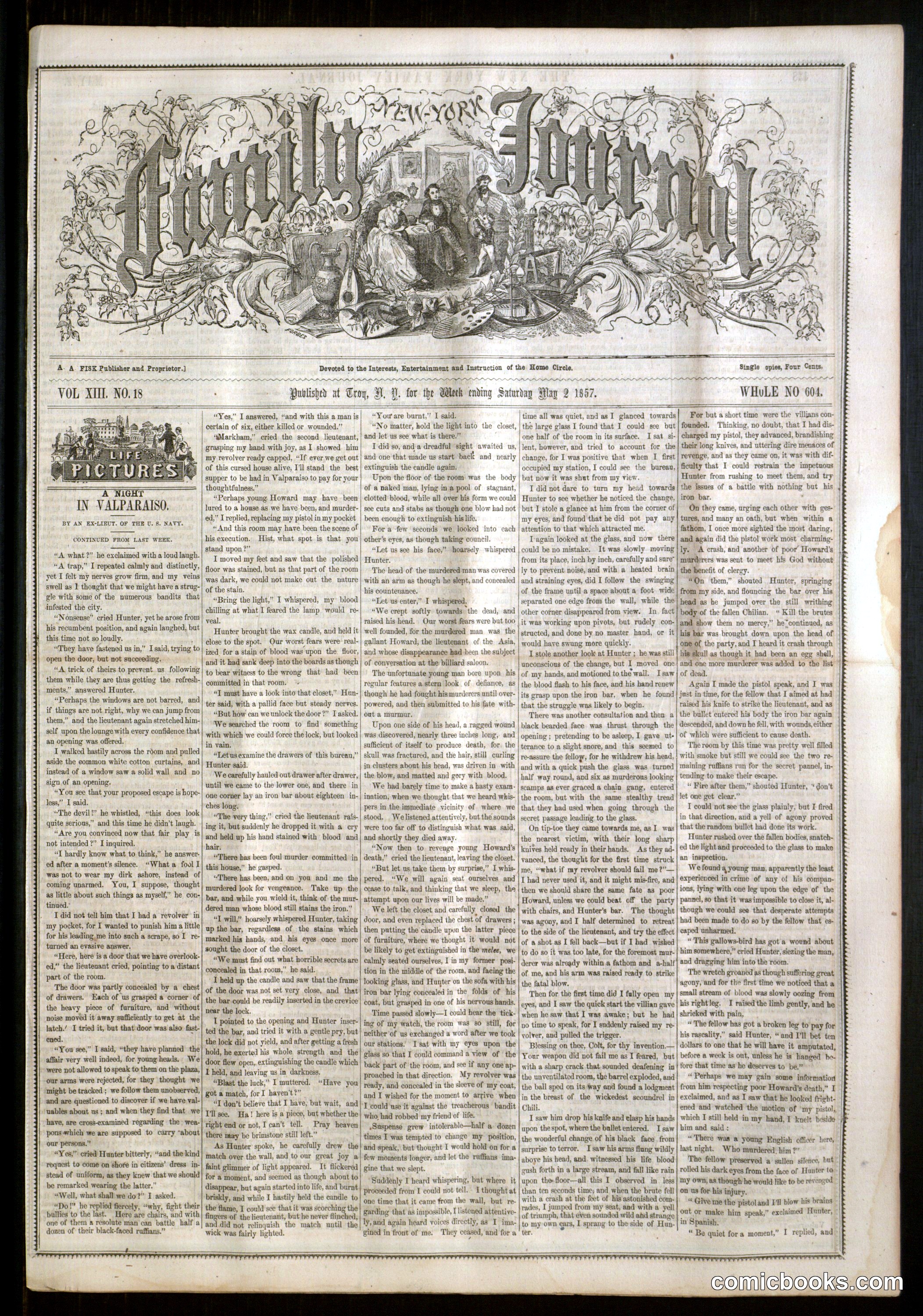
This penny weekly's ornate cover frames a domestic interior crowded with figures—a scene of melodramatic confrontation typical of serialized sensation fiction. Published at threepence to a penny, such papers reached working-class readers hungry for lurid plots of crime, betrayal, and moral outrage. These cheap serials, which began as "penny bloods" in the 1830s, featured stock characters and cliff-hanger narratives that kept readers buying successive issues. Their visual excess—elaborate lettering, dense illustration—and sensational matter anticipated modern comics' appetite for serial narrative, visual spectacle, and working-class entertainment. Though dismissed by moral reformers as corrupting, penny papers democratized fiction and established the template for pulp and, eventually, the comic book.
About this artifact
- Date
- May 2, 1857
- Rights
- Public domain — free to view, share, and reuse.
- Restoration
- Digitally restored and hosted by comicbooks.com.
Part of our mission to preserve and restore the public-domain heritage of the medium.